|
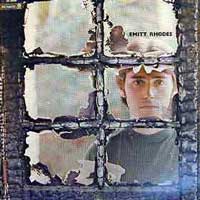
Although this probably wasn't meant to be, this album is Emitt Rhodes'
definitive statement. Soon after disbanding the Merry Go Round (of "Live"
fame) Rhodes scored a solo deal with Dunhill. Rather than recording with
a band or using studio musicians (which he did with his first "solo"
album American Dream), the multi-instrumentalist decided to build a small,
primitive home studio and record the entire affair there, "At Home."
The results are, in a word, staggering. Tracks such as "With My Face
on the Floor," "Someone Made For Me," and the entire album
as a whole showcase Rhodes' genius, and in the end, the songs are probably
what most Beatles-maniacs wanted to hear from Paul McCartney's debut album.
Rhodes' individuality shines through despite this; the album is a true
classic of the period.
(by Matthew Greenwald, All
Music Guide)
|
| I owe this to Wes Anderson. After the final credits rolled
on the director's The Royal Tenenbaums, I rushed from the theatre to the
record store across the street and picked up the soundtrack. Like the OST
to Anderson's Rushmore, it's a remarkable record, perfectly evoking the
film's eccentric melancholy. But even though the album was rich with great
songs by artists like Bob Dylan, Nico, and the Velvet Underground, there
was one track on the album that I had to hear again.
It was "Lullabye", a sad, gentle wisp of a song, sounding for
all the world like a McCartney track that had somehow been left off the
White Album. I'm ashamed to say that I had never heard of the performer,
Emitt Rhodes, even though I have made it my mission to own anything vaguely
considered Beatlesque. (This misguided quest has led me to make some fabulously
dubious purchases over the years, the worst being Enuff Z'Nuff's first
release . . . but I digress.) I set out to educate myself about Emitt
Rhodes immediately.
Rhodes recorded his self-titled debut solo album in 1970 after disbanding
his group, the Merry-Go-Round. A complete DIY project, Rhodes played all
the instruments himself, carefully laying everything down on a four-track
recorder. Yet while the album's analogue hiss and less-than perfect sound
quality reveal its humble roots, Emitt Rhodes is nothing like the half-baked
low-fi works of fellow Beatlephiles, Guided by Voices. Richly detailed
and meticulously crafted, Rhodes's first record offers pure pop heaven.
The opening track, "With My Face on the Floor", firmly establishes
Rhodes's MO: jaunty music hall piano, floppy drumming liberally spiked
with tambourine, crackling, simple guitar, and highly melodic bass lines.
Rhodes complements his pure tenor with tightly harmonized, multitracked
backing vocals. All are delivered with an infectious energy that invariably
leads to some serious toe tapping. (Listeners less repressed than I might
have a more exuberant reaction.) Rhodes doesn't burden his confections
with excess verbiage. His lyrics tend to be on the repetitive side, but
this isn't a drawback. The plain words become another hook in Rhodes's
arsenal. By the time you've listened to the record twice, you'll be singing
along. And, as with the best pop lyrics, the songs deal more with longing
and loss than love, tempering the sweetness with sadness.
There are a few exceptions that veer into banality; "Fresh as a
Daisy" sounds like it should be a feminine hygiene jingle, while
the attempts at motivational material in the well-intentioned "Live
Till You Die" ("You must "live 'till you die / You must
fight to survive") were perhaps best left unsaid. Pity the fool who
turns to pop songs for wisdom, anyhow. What Emitt Rhodes offers is more
valuable: a record for people who have played out the McCartney tracks
on their copies of Rubber Soul and the White Album. Occasionally, Rhodes
pulls from other Beatles sources -- the guitar in "You Take the Dark
Out of the Night" is straight out of "Octopus's Garden"
and it's honestly terrifying how much "You Should be Ashamed"
sounds like a Let It Be outtake, right down to its lazy drum fills and
soaring backup vocals that I swear are sung by George Harrison. The spirit
of Lennon even makes an appearance on the final track, "You Must
Have", in Rhodes's gently weary delivery and melancholy lullaby melody.
A true gem, Emitt Rhodes's self-titled album is all the more precious
because there's not much else by Rhodes that's available. Other solo albums
were released, but record company pressures meant that the careful craftsman
never got to lavish as much attention on another single recording. Eventually,
Rhodes fell silent and tumbled into obscurity. The songs on this record,
however, still chime as vividly and brightly as they did when they were
set to tape in that Hawthorne, California garage.
(by Rbert Hickey, PopMatters.com
20 January 2003
|
 Plattentipp


