| Mal Waldron Trio: "Free At Last" (ECM 1001, 24. Nov. 1969) |
 [Steig Aus (Embryo)]
|
| Circle: "Paris-Concert" (ECM 1018/19, 21. Feb. 1971) |


 Mehr ...
...das jetzt als Doppel-CD wiederveröffentlichte 'Paris-Concert' vom 21. Februar 1971. Das finde ich, trotz gelegentlicher Übersteuerungen heute noch aufregend: ein Jazz zwischen Bebop-Wurzeln und kollektiven Aufbrüchen, mit viel Raum und einem aberwitzig koboldhaften Katz-und- Maus-Spiel.
(M. Thiem in HiFiVision 2 / 91)
|
| Chick Corea: "Return To Forever" (ECM 1022, 03. Feb. 1972) |
 [Flora Purim]
Mehr ...
|
The legendary first lineup of Chick Corea's fusion band Return to Forever
debuted on this classic album (titled after the group but credited to
Corea), featuring Joe Farrell on soprano sax and flute, the Brazilian
team of vocalist Flora Purim and drummer/percussionist Airto Moreira,
and electric bass whiz Stanley Clarke. It wasn't actually released in
the U.S. until 1975, which was why the group's second album, Light as
a Feather, initially made the Return to Forever name. Nonetheless, Return
to Forever is every bit as classic, using a similar blend of spacy electric-piano
fusion and Brazilian and Latin rhythms. It's all very warm, light, and
airy, like a soft breeze on a tropical beach -- hardly the sort of firebrand
approach to fusion that Miles Davis, Tony Williams, and the Mahavishnu
Orchestra were exploring, and far less rooted in funk or rock. Corea also
bathes the album in an undertone of trippy mysticism, not only in the
(admittedly dated) lyrics, but in his cosmic keyboard wanderings, which
remain melodic and accessible through most of the record. There's one
genuine pop song in the groovy samba "What Game Shall We Play Today,"
and while "Sometime Ago" has similar elements, it's part of
an ambitious side-long medley that features a stream-of-consciousness
intro and a jubilant, Spanish/Mexican-style closing section called "La
Fiesta," complete with castanets and flamenco modes. The title track
is another multi-sectioned work, featuring Corea and Purim in wordless
unison on two different, catchy themes, plus breezy work from Farrell
and lots of Brazilian-flavored rhythmic interplay. And the dreamy, meditative
"Crystal Silence" is an underrated gem waiting to be rediscovered.
Certainly, this edition of Return to Forever wasn't inclined toward high-voltage
jazz-rock (as the next one was), but this group's two albums still stand
as some of the most imaginative and distinctive early fusion recordings.
(by Steve Huey, All
Music Guide)
|
|
| Gary Burton & Chick Corea: "Crystal Silence" (ECM 1024, 06. Nov. 1972) |

Mehr ...
|
Dieses Album der Pianisten Chick Corea und des Vibraphonisten Gary Burton
aus dem Jahr 1972 trug dazu bei, die Verbindung von moderner Kammermusik
und Jazz zu etablieren. Dank Coreas Wandlungsfähigkeit gehen Jazz-,
Folk- und Latin-Formen entspannt und nahtlos in klassische Komplexität
und Strenge über. In Burton findet er sein ideales Gegenüber.
Besonders bei "Señor Mouse" und "What Game Shall
We Play Today" wirken die beiden, als wäre ein Musiker an einem
einzigen, herrlich in sich vermischtem und akzentuiertem Instrument am
Werk. Corea steigt mit metallenem, eigenständig kristallinem Ton
und behutsamer Modulation in Höhen empor, und tollt dort herum, ohne
in die Banalität zurückzufallen. Burton agiert mit seiner außergewöhnlichen
Technik an vier Schlegeln zugleich musikalisch unmittelbar und herausragend.
Die Timbres und Klänge von Klavier und Vibraphon sind komplementär,
ebenso wie die freundschaftlichen Gemeinsamkeiten zweier unübertrefflicher
Musiker.
(Peter Monaghan, amazon)
|
|
|
Endlich gibt's den Klassiker auf CD. Jazz-Puristen lächeln zwar
über die dahinplätschernden Klänge des Duos - na und? Wie
Vibraphonist und Pianist die Kühle und Wärme ihrer Instrumente
kombinieren, wie sie ihre Soli gegenseitig untermalen, wie ihre Themen
ausschwingen, degradiert jegliches New Age.
© Audio
|
|
|
For Crystal Silence, the first of several partnerships between Chick Corea and vibraphonist Gary Burton in the 1970s, the two musicians selected an interesting array of material. The compositions on this record are all modern ones, either by Steve Swallow, Mike Gibbs, or Corea himself. It is a mostly down-tempo affair, which allows each player to stretch out and play highly melodic solos over the often difficult changes. In keeping with most ECM releases, there is a distinct presence of European elements to the improvisations. There are few overt blues or bebop phrases, Corea and Burton opting instead for modern melodies to fuel their improvisations. Burton has managed to internalize the Spanish and modal implications of Corea's tunes with little difficulty, and solos with joyful ease through such tracks as "Señor Mouse." Corea himself is absolutely burning. His solo contribution on the same track is both fiery and introspective, combining in one statement the poles for which he is best-known. The title track is also the centerpiece of the album, a nine-minute exploration of the Corea ballad that first appeared on his Return to Forever record in 1972. In keeping with the tradition of the great masters of the ballad form, time seems to disappear as Burton and Corea lovingly caress the song's simple melody and dance effortlessly around the chords, building intensity only to let it subside once more. Crystal Silence is a sublime indication of what two master improvisers can do given quality raw material, with the first side of this record being particularly flawless. Improvised music is rarely this coherent and melodic. Essential for fans of Corea, Burton, or jazz in general.
(Daniel Gioffre, All Music Guide)
|
|
| Ralph Towner with Glen Moore: "Trios Solos" (ECM 1025, Nov. 1972) |

|
| Dave Holland Quartet: "Conference Of Birds" (ECM 1027, 30. Nov. 1972) |

Mehr ...
Conference of the Birds, 1972 aufgenommen, war Dave Hollands erstes ECM-Album als alleiniger Leader. Voll treibendem progressivem Jazz, hat es historische Signifikanz als die erste Session, bei der Sam Rivers und Anthony Braxton, zwei der originellsten Saxophonisten des Genres, gemeinsam aufnahmen. Dieses Gipfeltreffen erntete Lobeshymen in der Presse: »Wenn Sie bisher Swing, Zusammenhang und Abwechslungsreichtum im neuen Jazz vermisst haben, dann hören Sie sich dieses Album an«, empfahl Downbeat in einer Fünf-Sterne-Rezension.
|
| Gary Burton: "The New Quartet" (ECM 1030, März 1973) |

Mehr ...
Not only does this LP feature a "new quartet," but it marks the beginning of Gary Burton's longtime association with ECM. In general, Burton's ECM dates were more introverted and laid-back than his more diverse Atlantic releases, but they always had their moments of interest. On this set, the vibraphonist, guitarist Mick (then known as Michael) Goodrick, bassist Abraham Laboriel, and drummer Harry Blazer perform numbers by Chick Corea ("Open Your Eyes, You Can Fly"), Keith Jarrett ("Coral"), Gordon Beck, Carla Bley, and Mike Gibbs, in addition to Burton's "Brownout." Intriguing if not essential music.
(by Scott Yanow, All Music Guide)
|
| Dave Liebman: "Lookout Farm" (ECM 1039, 10.-11. Okt. 1973) |
 [Eon (Richie Beirach)]
Mehr ...
For saxophonist/flutist David Liebman, the collective septet Lookout Farm earmarked him as an emergent band leader and conceptualist, not to mention top-of-the-heap unabashed improviser, especially on the soprano. With Richie Beirach on acoustic piano, identifying him as the post-Lennie Tristano disciple of the '70s, electric guitarist John Abercrombie, East Indian percussionists Badal Roy and Armen Halburian, drummer Jeff Williams, and underrated upright bassist Frank Tusa, Lookout Farm's sheer democracy in motion, for progressive modern jazz in a fusion era, defined how far artistically a group could go while retaining a distinct identity. Tack-on to that the stunning production values of ECM's Manfred Eicher, and you have a trend setting icon of a large ensemble for the ages. This one-of-a-kind band and recording set a high-water mark for far too few bands, even unto itself, to follow. This is worth searching for and savoring.
(by Michael G. Nastos, All Music Guide)
|
| Jan Garbarek - Bobo Stenson Quartet: "Witchi-Tai-To" (ECM 1041, 28. Nov. 1973) |

|
| Eberhard Weber: "The Colours Of Chloë" (ECM 1042, Dez. 1972) |

Mehr ...
Eberhard Weber's first record remains his most well-known and influential. An ambitious work of what might be called symphonic jazz, The Colours of Chloë helped to define the ECM sound — picturesque, romantic, at times rhythmically involved, at others minimalistic and harmonically abstruse. Weber at various points combines strings, choir, synthesizer, and small jazz ensemble. It's a brew that can bring to mind some of the progressive rock and fusion of the era, although Weber's vision is a good deal more idiosyncratic than that. The disc is comprised of only four tracks. First is the atmospheric, stage-setting "More Colours," followed by the title track, during which pianist Rainer Brüninghaus and drummer Ralf Hübner become active. Next is "An Evening With Vincent Van Ritz," featuring deft Rhodes chording from Brüninghaus and a flügelhorn solo by Ack van Rooyen. Finally, there's the nearly 20-minute "No Motion Picture" (this was originally side two of the LP), based on a fast, repetitive bass riff that keeps re-emerging throughout the course of the composition. People will disagree about whether The Colours of Chloë stands the test of time, but Weber's aesthetic played a significant role in the creative music of the '70s, attracting a fair share of emulators.
(by David R. Adler , All Music Guide)
|
| John Abercrombie: "Timeless" (ECM 1047, 21. Juni 1974) |

Mehr ...
Am intensivsten äußert sich dieser Jazz in den schnellen, am schönsten in den stillen Stücken da, wo die Klänge erregende Plastizität gewinnen.
(Die Zeit)
Allein der Auftaktsong ›Lungs‹ springt einen geradezu an. Den Bass übernimmt Hammer ganz cool mit den Orgelpedalen. Abercrombie spielt seine Elektrische wie ein Gott, aber auch wenn er zur Akustischen greift (mit Hammer am Piano), verlässt er selten die Himmelssphären. Doch das schönste Stück, und mit das schönste im gesamten ECM-Katalog, schuf er mit dem Titelsong. Zum Abheben in Räume außerhalb der Zeit.
(Good Times, Dezember 2016 / Januar 2017)
Es ist keine Übertreibung, dieses Album zum unverzichtbaren Bestandteil jeder guten Plattensammlung zu erklären.
(LP Magazin, 3 / 2017)
Guitarist John Abercrombie was one of the stars of ECM in its early days. His playing on this trio set with bassist Dave Holland and drummer Jack DeJohnette is really beyond any simple categorization. Abercrombie's improvisations are sophisticated yet, because his sound is rockish and sometimes quite intense (particularly on the nearly 11-minute "Sorcery 1"), there is really no stylistic name for the music. Holland contributed four of the six originals while DeJohnette brought in the other two (one of which was co-written with Abercrombie). The interplay between the three musicians is quite impressive although listeners might find some of the music to be quite unsettling. It takes several listens for one to digest all that is going on, but it is worth the struggle.
(by Scott Yanow, All Music Guide)
|
| Paul Motian: "Tribute" (ECM 1048, Mai 1974) |

Mehr ...
In der beliebten Reihe „What’s In My Bag“ der unabhängigen Plattenladenkette Amoeba Music war kürzlich der Gitarrist Nels Cline zu Gast, den man natürlich unter anderem auch für seine Arbeit bei Wilco kennt, auch wenn das nur die Spitze des Eisbergs ist – die Jazzalben mit den Nels Cline Singers, den Nels Cline 4 und jüngst dem Consentrik Trio lohnen sich alle, ganz zu schweigen von seinem „Lovers“-Album von 2016, auf dem er mit großen Ensemble beeinflusst vom Arrangeur Gil Evans Songs aus dem Great American Songbook, aber auch von etwa Stücke von Arto Lindsay und Sonic Youth als romantische Mood Music interpretiert. Jedenfalls ist Cline, der von 1976 bis 1986 im Plattenladen Rhino Music in West LA arbeitete, eine musikalische Enzyklopädie und zudem noch extrem geschmackssicher. Man kann ihm wirklich trauen. Und er stellte bei „What’s In My Bag“ das mir bisher unbekannte Album „Tribute“ des Schlagzeugers Paul Motian aus dem Jahr 1974 als „one of my favorite records of all time“ vor. Motian kennt man vielleicht durch seine Arbeiten mit dem Gitarristen Bill Frisell. „Tribute“ liefert dafür sozusagen die Grundlage, denn hier spielte Motian bereits mit zwei Gitarristen – Paul Metzke und Sam Brown – zusammen. Dazu – nicht weniger spektakulär – mit dem Saxofonisten Carlos Ward und dem Bassisten Charlie Haden, dessen „Song For Ché“ hier neben Ornette Colemans „War Orphans“ (beide auf Hadens Klassiker „Liberation Music Orchestra“ vertreten) und drei Motian-Originalen zu hören ist. Die Gitarren sind herrlich verspult (man hört sofort den Einfluss, den sie auf Nels Cline gehabt haben müssen), Ward, der nur bei zwei Stücken zu hören ist, spielt expressiv, Motian unberechenbar und impressionistisch, über und unter allem hört man Charlie Haden, der mit seinem reduzierten und klaren Spiel das Chaos ordnet. „Tribute“ ist eine wunderbare Entdeckung, die eigentlich viel zu roh und energisch klingt für eine Platte auf dem ECM-Label, das ja eher für einen unterkühlten Stil bekannt ist. Danke, Nels!
(Maik Brüggemeier, Rolling Stone Newsletter "Wohnzimmer", Folge 90:)
|
| Jan Garbarek/Keith Jarrett: "Belonging" (ECM 1050, 25. April 1974) |
 [The Köln Konzert]
Mehr ...
Die erste Aufnahme des "europäischen" Keith Jarrett-Quartetts featuring Jan Garbarek (Saxophone), Palle Danielsson (Bass) und Jon Christensen (Drums). "Belonging" ist in etwas ruhigeren Gefilden anzusiedeln als sie normalerweise mit dieser Besetzung assoziiert werden.
Die Kombination aus Garbareks direktem und vribatolosem Ansatz im Zusammenspiel mit Jarretts expressiven Piano, bringt gospelbeeinflusste Tracks wie "Long As You Know You're Living Yours" ebenso intensiv zur Geltung, wie modernen Jazz im Stile von "Spirial Dance".
Das1974er-Teamwork des sensiblen Pianisten mit dem kunstvollen Saxofonisten und den einfühlsamen Rhythmikern Palle Danielsson (Bass) & Jon Christensen (Drums) ergab eine der besten ECM-LPs überhaupt - und eine der schönsten der Jazz-Geschichte.
(Audio, Juli 2011)
|
| Steve Kuhn: "Trance" (ECM 1052, 11./12. Nov. 1974) |

Mehr ...
Trance, Steve Kuhn's second recording for ECM, was actually recorded a mere ten days after Ecstasy, his solo piano debut for the label. Trance features Kuhn playing both electric and acoustic piano, bassist Steve Swallow, drummer Jack DeJohnette, and percussionist Sue Evans. Two of the album's compositions, "Silver" and "Life's Backward Glance," are re-recordings of tunes appearing on Ecstasy. Adventurous and wide open, Trance is a mixed bag full of knots, twists, and turns. While firmly in the jazz idiom, Kuhn also draws on classical sources (check his solo in "Squirt"), drawing on Luciano Berio and Olivier Messiaen as well as Cecil Taylor. Performed on electric piano, "Silver" is a chugging, repetitive riff with a Latin rhythm, and Kuhn swings it like mad as Swallow's bass pops and spits along the melodic line as well as the rhythmic undertone. This is jazz that touches on fusion, modal, and the new spirit of the music as ECM came into the 1970s as a player. There is restlessness and calm, tempestuousness and serenity, conflict and resolution, and -- above all -- creativity and vision.
(by Thom Jurek, All Music Guide)
|
| Michael Naura: "Vanessa" (ECM 1053, Sept. 1974) |
 [Colors Of Chloë (Eberhard Weber)]
Mehr ...
Lithuanian-born Michael Naura is a German pianist, editor, and journalist. Capitalizing on a range of influences, from George Shearing to Horace Silver, his successful self-titled quintet LP of 1963 made him a household name in hard bop. If the benefit concerts arranged after his being diagnosed with polyserositis the following year are any indication, his brief absence caught many in its ripples. Central to Naura’s cadre in his formative years as recording artist was vibraphonist Wolfgang Schlüter, whose presence is keenly felt throughout Vanessa, his first and only album for ECM proper (he did release another, Country Children, as part of the label’s short-lived SP series). Even though last year saw Naura’s efforts recognized with a WDR Jazz Prize lifetime achievement award, this album remains etched in vinyl.
Naura’s set of six opens its eyes in the electric piano and marimba strains of “Salvatore.” The unmistakable electrobass of Eberhard Weber provides just enough ground for Klaus Thunemann’s stellar bassoon improvisations. This gorgeous opener sounds more like John Zorn’s Electric Masada on sleeping pills than anything else. The energy peters out over time and seems to trip on its own intentions, opening up a subtle improvisatory space in the process. From these murky depths arises the track’s thematic beginnings, passionately recapitulated with some superbly realized drumming from Joe Nay, amid a flanged wash of familiarity. “Hills” bustles like lunch hour in Burtonville, though it’s Weber’s nimble fingers that make it the album’s highlight. The next tune lumbers playfully like its titular “Baboon,” all the while emoting an intrinsic self-assurance. Thunemann adopts a vocal quality that is anything but primitive in a three-minute aside that’s sure to bring a smile to your prehensile lips. The title cut reaffirms Schlüter’s reign, billowing through the night like a curtain at an open window, where once wavered the silhouette of a love no longer here, and at which now stands the one left behind. Moments of synchronicity hint at a fleeting union shared under cover of neon and subterranean steam. The serrated contours of “Listen To Me” contrast alluringly with its straight-edged neighbors. Vibes thread the whole, culminating in a sustain-pedaled echo. Ultimately, the bassoon abstractions and soloing of the elegant “Black Pigeon” prove Thunemann to be the star performer of an altogether commendable group of musicians.
The only downside to the album is its sometimes weak recording mix. One can almost feel the marimba solo in “Salvatore,” for example, being tweaked into the foreground (compare this with the more equitably balanced “Listen To Me”). Should a reissue ever be in the works, as I hope it will be, a remastering will also be in order. Nonetheless, a keeper if you can track down one of these hot pink, fishnet sleeves.
|
| Richard Beirach: "EON" (ECM 1054, Nov. 1974) |
 [Lookout Farm (Dave Liebman)]
Mehr ...
Richie Beirach's well-programmed set begins with an intense reworking of Miles Davis' "Nardis." The introductory rhythm vamp, through its numerous reappearances, functions as an idee fixe, thereby allowing Beirach to fragment the tune's melodic and harmonic components so that space and the piano's overtonal timbres interact (along with melody and harmony) as co-equal musical elements. Dave Liebman's "Places" was a poignant solo essay capturing echoes and images of bittersweet remembrances. Throughout, Beirach was ably assisted by the excellent musicianship of his colleagues from Lookout Farm, bassist Frank Tusa and percussionist Jeff Williams.
(by Chuck Berg, All Music Guide)
|
| Ralph Towner & Gary Burton: "Matchbook" (ECM 1056, Juli 1974) |
 [Icarus (Paul Winter Consort) |
Distant Hills (Oregon) |
Solstice]
[Icarus (Paul Winter Consort) |
Distant Hills (Oregon) |
Solstice]
|
| Ralph Towner: "Solstice" (ECM 1060, Dez. 1974) |
 [Colors Of Chloë (Eberhard Weber) |
Distant Hills (Oregon) |
Jan Garbarek, Jon Christensen]
[Colors Of Chloë (Eberhard Weber) |
Distant Hills (Oregon) |
Jan Garbarek, Jon Christensen]
Mehr ...
When Ralph Towner burst onto the contemporary jazz scene in the mid-70s, listeners were well aware of his awesome talent as a member of Oregon. But when Solstice was issued on the ECM label, it took the brilliant guitarist's caché to a much higher level, especially as a composer. With the otherworldly curved soprano sax and flute playing of Jan Garbarek, the precise drumming of Jon Christensen, and unique bass sounds of Eberhard Weber, the music on this album lifted the ECM/Euro-styled jazz and improvised music to a new realm of pure expressionism. Simply put — this music is stunningly beautiful. The incredible "Oceanus" begins with Towner's cascading guitar, followed by the swelling and symphonic bass of Weber, a swinging drum line by Christensen with Garbarek's atmospheric and dramatic curved soprano layering contrasting timbres, symmetry, and unusual colors. "Nimbus" opens with some astounding technical harmonics from Towner, more so considering the acoustic nature of his instrument. A circular theme in implied 3/4 underneath 4/4 leads to overdubbed flutes from Garbarek, bowed bass, the curved soprano in 6/8 all identifying the pure ECM sound. "Piscean Dance" is a funky workout between Towner and Christensen, the earthiest track on the date, and an exercise of intuitive confluence. Other portions of the disc are space oriented like the loose, free and haunting "Red & Black," "Visitation" with multiple percussion sounds of flexatone and shakers under Weber's bowed bass and Garbarek's alien dragonfly flute, while Weber's "Sand" has the musicians staring at the Crab Nebula while firmly rooted in a strut later in the piece. Towner's wondrous piano is heard on "Drifting Petals," a pretty and pensive waltz with unison lines alongside Garbarek's flute, then Towner switches to guitar in a deeper discourse with the quartet. As cold as the Norwegian studio (Oslo) they were recording in, "Winter Solstice" is not so much profound as it is telepathic, as the players use stop-start techniques, again inserting a 3/4 rhythm into a 4/4 equation. Of the many excellent recordings he has offered, Solstice is Towner's crowning achievement as a leader fronting this definitive grouping of ECM stablemates who absolutely define the label's sound for the time frame, and for all time.
(by Michael G. Nastos , All Music Guide)
|
| John Abercrombie/Dave Holland/Jack DeJohnette: "Gateway" (ECM 1061, März 1975) |
 [Conference Of Birds (Dave Holland) |
Special Edition (Jack DeJohnette)]
[Conference Of Birds (Dave Holland) |
Special Edition (Jack DeJohnette)]
Mehr ...
Guitarist John Abercrombie was one of the stars of ECM in its early days. His playing on this trio set with bassist Dave Holland and drummer Jack DeJohnette is really beyond any simple categorization. Abercrombie's improvisations are sophisticated yet, because his sound is rockish and sometimes quite intense (particularly on the nearly 11-minute "Sorcery 1"), there is really no stylistic name for the music. Holland contributed four of the six originals while DeJohnette brought in the other two (one of which was co-written with Abercrombie). The interplay between the three musicians is quite impressive although listeners might find some of the music to be quite unsettling. It takes several listens for one to digest all that is going on, but it is worth the struggle.
(by Scott Yanow, All Music Guide)
Ende Oktober ist der Schlagzeuger Jack DeJohnette gestorben, der einst eine ziemlich entscheidende Rolle bei Miles Davis’ Hinwendung zum Fusion spielte, denn er verstand es auf den Alben „In A Silent Way“, „Bitches Brew“ und „Live Evil“, die treibenden Grooves der Rockmusik mit der Improvisation des Jazz zu verbinden. Später hat er auch im Trio mit Gary Peacock und Keith Jarrett geglänzt, aber für mich ist sein Zusammenspiel mit dem Gitarristen John Abercrombie und dem britischen Bassisten Dave Holland der Höhepunkt seines Schaffens. Hier höre ich DeJohnette am liebsten zu, weil man ihn in seiner ganzen Vielseitigkeit erlebt, als Impressionisten, der mit den Becken leichte Akzente setzt, als Expressionisten, der aus kleinen rhythmischen Gesten kleine unvermittelte Ausbrüche entwickelt, aber vor allem als Komponisten, der sein Instrument geradezu melodisch einsetzt. Die dynamische Eröffnung des 1975er-Albums „Gateway“, „Back-Woods Song“, und das abstrakte, formwandlerische Schlussstück „Sorcery I“ sind eine Offenbarung.
(Rolling Stone Wohnzimmer, Newsletter Folge 86, Nov. 2025
|
| Collin Walcott: "Cloud Dance" (ECM 1062, März 1975) |
 [Icarus (Paul Winter Consort) |
Distant Hills (Oregon) |
Solstice (Ralph Towner) |
Codona |
Gateway (John Abercrombie) |
Conference Of The Birds (Dave Holland) |
Special Edition (Jack DeJohnette)]
[Icarus (Paul Winter Consort) |
Distant Hills (Oregon) |
Solstice (Ralph Towner) |
Codona |
Gateway (John Abercrombie) |
Conference Of The Birds (Dave Holland) |
Special Edition (Jack DeJohnette)]
Mehr ...
The file texte/CollinWalcott-CloudDance.htm does not exist
|
| Enrico Rava: "The Pilgrim And The Stars" (ECM 1063, Juni 1975) |
 [Gateway (John Abercrombie) |
Belonging (Jan Garbarek) |
Blue Note]
[Gateway (John Abercrombie) |
Belonging (Jan Garbarek) |
Blue Note]
Mehr ...
Enrico Rava's debut for ECM, 1975's The Pilgrim and the Stars, is a stellar progressive jazz effort from the Italian trumpeter who was then just coming into his own. Previously, Rava had spent his formative years working with such artists as saxophonist Steve Lacy, trombonist Roswell Rudd, and pianist Carla Bley, and obviously took much to heart when approaching his own music. This is cerebral, atmospheric, often groove-oriented music that rests nicely in between such touchstones as late-'60s Miles Davis and Brown Rice-era Don Cherry with some obvious nods to the melodic jazz of ex-pat Chet Baker. To these ends, such tunes as the expansive title track and the reflective "Bella" begin with lyrical melodic statements from Rava and slowly build to more serpentine, post-bop segments that push toward free jazz but never quite go atonal. Buoying Rava is an adroit ensemble of guitarist John Abercrombie, bassist Palle Danielsson, and drummer Jon Christensen. A ceaselessy inventive guitarist, Abercrombie's knotty, fractured, and sometimes distorted playing is a perfect match for Rava and the two often intertwine their lines. Similarly, the moody slow funk of "By the Sea" finds Rava floating in a minor mode over Abercrombie's delay-laden guitar in a kind of dusky twilight raga. This is just the kind of contemplative and experimental Euro-jazz that ECM made its name on, but with some seriously cinematic post-bop guts. In that sense, The Pilgrim and the Stars sounds something akin to a soundtrack to a '70s neo-noir film — albeit a deliciously avant-garde one.
(by Matt Collar, All Music Guide)
|
| Keith Jarrett: "The Köln Konzert" (ECM 1065, 25.01.1975) |

Mehr ...
The file texte/KeithJarrett-Koeln.htm does not exist
|
| Eberhard Weber: "Yellow Fields" (ECM 1066, Sept. 1975) |
 [Watercolors (Pat Metheny) |
Passengers (Gary Burton) |
Solstice (Ralph Towner) |
Colours Of Chloë]
[Watercolors (Pat Metheny) |
Passengers (Gary Burton) |
Solstice (Ralph Towner) |
Colours Of Chloë]
Mehr ...
Mit Christensen am Schlagzeug nahm ein anderer Bassist, der Deutsche Eberhard Weber, "Yellow Fields" auf. Ein Klassiker im ECM-Katalog wurde diese Aufnahme, weil sie in unnachahmlicher Manier Jazzrock und Kammer- Jazz - die beiden wichtigsten Jazzströmungen jener Zeit - vereinte. Das Geheimnis dieser Diplomatie: Weber und Sopransaxophonist Charlie Mariano übten sich als melodisch expressive Wortführer, während Keyboarder Rainer Brüninghaus mit Christensen den rhythmisch-harmonischen Part übernahm. ** Klang: 08-09
(© Stereoplay)
|
| Kenny Wheeler: "Gnu High" (ECM 1069, Juni 1975) |
 [Köln Concert (Keith Jarrett) |
Conference Of The Birds (Dave Holland) |
Special Edition (Jack DeJohnette)]
[Köln Concert (Keith Jarrett) |
Conference Of The Birds (Dave Holland) |
Special Edition (Jack DeJohnette)]
Mehr ...
When Kenny Wheeler expatriated from his native Canada to England, it was not headline news. But upon the release of Gnu High, he became a contemporary jazz figure to be recognized, revered and admired. Playing the flugelhorn exclusively for this, his ECM label debut, Wheeler's mellifluous tones and wealth of ideas came to full fruition. Whether chosen in collaboration with label boss Manfred Eicher or by Wheeler alone, picking pianist Keith Jarrett, bassist Dave Holland and drummer Jack DeJohnette was a stroke of genius. They support the elongated and extended notions of Wheeler's in many real and important ways. What is also extant is a sense of self-indulgence, real for listeners with short attention spans. "Heyoke" is such a piece rife for this discussion at nearly 22 minutes. This lilting waltz is at once atmospheric and soulful, a fairly fresh and inventive style turned more dramatic near the finish of this magnum opus. It's all fueled by the reinvented swing of DeJohnette. Jarrett's vocal whining is kept in check, as his pretty pianistics buoy Wheeler's notions in Zen inspired time and eventually no time improvisations. "Gnu Suite" is similarly rendered in an unforced 4/4 rhythm, but Wheeler is more animated. There's a plus-plus solo from Holland before the group merges into a floating and flowing discourse again in free time. The special track is "Smatter" and at just under six minutes works better, not only for radio airplay, but also in its concise melodic construct by means of the regal and happy persona Wheeler portrays. Pure melody and a repeated anchoring seven-note phrase insert sets this tune apart from the rest. It also clearly identifies the warm and cool stance only Wheeler wields, making seemingly simple music deep and profound. Certainly this was an auspicious starting point, albeit long winded, for a magical performer whose sound and smarts captured the imagination of so many fellow musicians and listeners from this point onward.
(by Michael G. Nastos, All Music Guide)
|
| Gary Burton Quintet: "Dreams So Real" (ECM 1072, Dez. 1975) |
 [The New Quartet (Gary Burton Quartet) |
Bright Size Life (Pat Metheny) |
In Pas(s)ing (Mick Goodrick)]
[The New Quartet (Gary Burton Quartet) |
Bright Size Life (Pat Metheny) |
In Pas(s)ing (Mick Goodrick)]
Mehr ...
Performing the intricate music of Carla Bley is no mean feat, but if anyone is up for the challenge, it would be vibraphonist Gary Burton. Signifying a high watermark in his career in the mid-'70s, Dreams So Real teams Burton with his fellow professor at the Berklee College of Music Mick Goodrick, along with recently graduated student Pat Metheny. Add the peerless electric bass guitarist Steve Swallow and always proficient drummer Bob Moses, and you have the makings of a short-lived supergroup capable of playing Bley's memorable, melancholy music. While generally regarded as one of many Burton/Metheny pairings, it is Goodrick's individualism (it was he who primarily tutored Metheny) that needs more recognition. With Goodrick on electric six-string and Metheny on electric 12-string guitar, the sonorities they establish allow Burton to freely discourse on Bley's prickly angular melodies. The brittle and fractured combo track "Ictus/Syndrome" — closer to a three-piece suite — goes from a frantic neo-bop meter to straight-ahead swing with a clearly inspired Burton rambling into the bright signature rondo sound that Metheny and Swallow have always owned. "Syndrome" might also be familiar to Bley's fans as "Wrong Key Donkey." "Doctor" merges the vibes and guitars into a guided prognosis of hypertension within slowly elevated blood pressure levels. "Intermission Music," inspired by golden age films, is a beautiful waltz vehicle for the guitars rhythmically, and for Swallow and Moses melodically. With the bandmembers at their most passionate, the title track is a lighthearted but cerebral ballad, "Vox Humana" a simplified tango, while "Jesus Maria" evokes the delicate epic strains of Bley's personalized sound with Burton playing it alone. While the singing sound of Metheny is in its infant stages, it is easily recognizable and clearly realized. Generally regarded as one of Burton's top three recorded dates, it has stood the test of time. Perhaps some day, a complete collection of the vibist playing Carla Bley's many other compositions can be compiled to complement this surface-scratching but very important album.
(by Michael G. Nastos, All Music Guide)
|
| Pat Metheny: "Bright Size Life" (ECM 1073, Dez. 1975) |

Mehr ...
"Pat Metheny's debut studio album is a good one, a trio date that
finds him already laying down the distinctively cottony, slightly withdrawn
tone and asymmetrical phrasing that would serve him well through most
of the swerves in direction ahead. His original material, all of it lovely,
bears the bracing air of his Midwestern upbringing, with titles like "Missouri
Uncompromised," "Midwestern Nights Dream" and "Omaha
Celebration." There is also a sole harbinger of radical matters way
down the road with the inclusion of a loose-jointed treatment of Ornette
Coleman's "Round Trip/Broadway Blues," proving that Song X did
not come from totally out of the blue. Besides the debut of Metheny, this
CD also features one of the earliest recordings of Jaco Pastorius, a fully
formed, well-matched contrapuntal force on electric bass, though content
to leave the spotlight mostly to Metheny. Bob Moses, who like Metheny
played in the Gary Burton quintet at the time, is the drummer, and he
can mix it up, too."
(Richard S. Ginell, All Music Guide)
|
| John Abercrombie & Ralph Towner: "Sargasso Sea" (ECM 1080, Mai 1976) |

|
| Art Lande: "Rubisa Patrol" (ECM 1081, Mai 1976) |

Mehr ...
This recording, with the short-lived ensemble Rubisa Patrol, may someday be considered as one of the classic ECM recordings of all time. Some stunning compositions are present within a restrained, melodic concept, but please don't term it new age. While there is a spiritual quality present, it is not overbearing. Four of the pieces are written by acoustic pianist Art Lande, with the standout track "Corinthian Melodies" a thing of sheer opulent beauty. Trumpeter Mark Isham and Lande are the principal voices in this quartet, and the textures they conjure would set a precedent for what Isham would do for the bulk of his career in scoring for films. Bassist Bill Douglass and drummer Glenn Cronkhite are as sensitive a lower dynamic rhythmic team as can be. This is contemporary improvised music nonpareil, a relaxed, well-paced program that is here to soothe and reassure you.
(by Michael G. Nastos, All Music Guide)
|
| Egberto Gismonti: "Dança Das Cabeças" (ECM 1089, Nov. 1976) |

Mehr ...
This reissue of the album recorded in 1977 is a landmark of the careers of Gismonti and percussionist Naná Vasconcelos, his only accompanist here. Recorded in only three days, the album's concept is based on the history shared by both musicians, according to ismonti: two boys wandering through a dense, humid forest, full of insects and animals, keeping a 180-feet distance from each other. The album received several international awards, in England, U.S., Germany, and Brazil. It also, changed both artist's lives: Naná immediately became a disputed international artist, touring worldwide; Egberto returned to Brazil, decided to research Amazon folklore, which would be reflected in his later work. The music is pure and sensitive, challenging and sophisticated, with a broad dynamic range going from haunting, mysterious melodies to full-impact, energetic percussive sounds reminiscent of Brazilian Indians' batuque. Attention for the re-creation of "Fé Cega, Faca Amolada" (Milton Nascimento/Ronaldo Bastos), foretold with a motif several minutes before the presentation of the integral piece.
(by Alvaro Neder, All Music Guide)
|
| Gary Burton Quartet & Eberhard Weber: "Passengers" (ECM 1092, Nov. 1976) |
 [Bright Size Life (Pat Metheny) |
Colours Of Chloë (Eberhard Weber)]
[Bright Size Life (Pat Metheny) |
Colours Of Chloë (Eberhard Weber)]
Mehr ...
Guitarist Pat Metheny was a member of vibraphonist Gary Burton's group from 1974-1976, but although he had recorded with Burton twice previously, both of those dates also included guitarist Mick Goodrick. This particular set puts more of a focus on Metheny in a quintet that also includes drummer Danny Gottlieb and both Steve Swallow and Eberhard Weber on basses. Metheny contributed three of the six selections, which are joined by a song apiece from Swallow, Weber, and Chick Corea ("Sea Journey"). Although none of the individual songs caught on, the attractive sound of the post-bop unit and an opportunity to hear Pat Metheny in his formative period make this a CD reissue worth exploring.
(by Scott Yanow, All Music Guide)
|
| Steve Kuhn and Ecstasy: "Motility" (ECM 1094, Jan. 1977) |

Mehr ...
This is one of Steve Kuhn's more unusual studio sessions, which was recorded for ECM in 1977. At times, the pianist seems less like a post-bop musician and more like someone dabbling in new age music, especially in his opener, "The Rain Forest." But his formidable technique is quickly brought center stage, so the deceptively mellow setting, with Steve Slagle's birdlike flute and Michael Smith's sparse percussion, develops into something tantalizing, even though it seems unlikely that it could be played in a nightclub. The swirling theme of "Oceans in the Sky" suggests an intense summer downpour, while "Motility" is a wild vehicle swerving back and forth through several genres. Bassist Harvie Swartz contributed the exotic "Catherine" (a piece that never seems to go where one expects) and the Latin-flavored "Places I've Never Been." This long unavailable LP may be somewhat difficult to acquire.
(by Ken Dryden, All Music Guide)
|
| Ralph Towner Solstice: "Sound And Shadows" (ECM 1095, Feb. 1977) |
 [Soltice (1974) |
Colours Of Chloë (Eberhard Weber) |
Jan Garbarek, Jon Christensen]
[Soltice (1974) |
Colours Of Chloë (Eberhard Weber) |
Jan Garbarek, Jon Christensen]
Mehr ...
Ralph Towner is in fine form on this set of five tracks, the first of which, "Distant Hills," is an Oregon standard from the band's Vanguard period. Towner's compositions shine with their subtlety and grace. Towner's playing here, with a group of other ECM artists, is what made the label so noteworthy: it is full of elegance and aplomb and the musicians are as aware of space as they are of what fills it. There are no excessive solos in the improvisational sections no matter how long the tracks are. "Distant Hills" and "Balance Beam" are both over ten minutes in length but remain collaborative; compositional structure is given due consideration in the plot and expression of a particular player's solo. Towner, at least at this point in his career, and again much later, was a master of understatement. His sonic intentions were to allow his works to occur to the listener in process rather than be recognizable immediately. They develop, even the shorter pieces, over time and musical motif; modal structures seemingly appear from the ether though they had been in the making from the first measures. Also, rhythmic considerations are modular in Towner's works and Jon Christensen is the perfect drummer for executing them. Jan Garbarek's playing was just beginning to take on its melodic, contoured style incorporating folk melodies from his and other native lands into his playing -- though his tone was and is unchanged. And Eberhard Weber and Towner have near telepathic communication between them. His basslines and cello phrases hang like ghosts in the air unmoving in the stillness, allowing Towner's guitars to puncture them and move them along into different modes of expression and tonality. This is a very solid date by a group of musicians who could be nearly invisible as individuals in order to put a tune through its paces if that's what it took; a very fine effort.
(by Thom Jurek, All Music Guide)
|
| Collin Walcott: "Grazing Dreams" (ECM 1096, Feb. 1977) |
 [Distant Hills (Oregon) |
Timeless (John Abercrombie) |
Cloud Dance |
Codona |
Belonging (Jan Garbarek & Keith Jarrett) |
Witchi-Tai-To (Jan Garbarek & Bobo Stenson)]
[Distant Hills (Oregon) |
Timeless (John Abercrombie) |
Cloud Dance |
Codona |
Belonging (Jan Garbarek & Keith Jarrett) |
Witchi-Tai-To (Jan Garbarek & Bobo Stenson)]
Mehr ...
The file texte/CollinWalcott-Grazing.htm does not exist
|
| Pat Metheny: "Watercolours" (ECM 1097, Feb. 1977) |
 [Colours Of Chloë (Eberhard Weber) |
Pat Metheny Group]
[Colours Of Chloë (Eberhard Weber) |
Pat Metheny Group]
Mehr ...
Pat Metheny emerges on his second album, Watercolors, as an ECM impressionist, generally conforming to the label's overall sound while still asserting his own personality. As the title suggests, there are several mood pieces here that are suspended in the air without rhythmic underpinning, a harbinger for the new age invasion still in the future. Metheny's softly focused, asymmetrical guitar style, with echoes of apparent influences as disparate as Jim Hall, George Benson, Jerry Garcia, and various country guitarists, is quite distinctive even at this early juncture. Metheny's long-running partnership with keyboardist Lyle Mays also begins here, with Mays mostly on acoustic piano but also providing a few mild synthesizer washes. Danny Gottlieb is on drums, and ECM regular Eberhard Weber handles the bass. This is essentially the first album by the Pat Metheny Group per se, although the band had yet to find its direction in this somewhat diffuse showing.
(by Richard S. Ginell, All Music Guide)
|
| Kenny Wheeler: "Deer Wan" (ECM 1107, Juli 1977) |
 [Gateway (John Abercrombie) |
Batik (Ralph Towner) |
Conference Of The Birds (Dave Holland) |
Special Edition (Jack DeJohnette) |
Belonging (Jan Garbarek & Keith Jarrett)]
[Gateway (John Abercrombie) |
Batik (Ralph Towner) |
Conference Of The Birds (Dave Holland) |
Special Edition (Jack DeJohnette) |
Belonging (Jan Garbarek & Keith Jarrett)]
Mehr ...
Kenny Wheeler's beautiful sound on trumpet and his wide range are well-displayed on his four compositions, three of which are given performances over ten minutes long. With the assistance of ECM regulars Jan Garbarek (on tenor and soprano), guitarist John Abercrombie, bassist Dave Holland, drummer Jack DeJohnette and (on one song) guitarist Ralph Towner, Wheeler emphasizes lyricism and romantic moods on this fine set of original music.
(by Scott Yanow, All Music Guide)
|
| Terje Rypdal: "Waves" (ECM 1110, Sept. 1977) |

|
| "Pat Metheny Group" (ECM 1114, 1978) |
 [80/81 |
Rejoicing]
[80/81 |
Rejoicing]
Mehr ...
Nachdem sie kreuz und quer durch Amerika getourt waren
und etwa 250-300 Auftritte im Jahr hinter sich gebracht hatten, standen
ihr Sound und das Repertoire fest. Prompt bekam dieser Jazz-Fusion-Klassiker
von 1978 nach seinem Erscheinen Gold. Auf Pat Metheny Group findet man schon
all die vertrauten Zutaten, die die Band in den folgenden zwanzig Jahren
noch weiterentwickeln sollte: Methenys dunkler, halliger E-Gitarrensound
und seine anmutigen Akustikgitarren. Hinzu kam Pianist Mays Mixtur aus Kirchenklang,
Bill-Evans-Soundverschnitt und orchestralen Synthie-Effekten. Drummer Dan
Gottlieb steuerte seine rollenden Grooves bei. Schließlich rundete
Mark Egan das ganze noch mit seinen von Jaco Pastorius inspirierten, melodischen
Bassläufen ab.
Auf "San Lorenzo" und "Phase Dance" bot die Band
ein Beispiel ihres Stilmixes aus elektrischem Jazz, progressivem Rock
und ihren tiefen, amerikanischen Wurzeln. Das country-artige Intro zu
"Jaco", das romantisch-akustische "April Wind" und
die jähen Wechsel in der Jazz-Samba "Lone Jack" zeigen
den breiten musikalischen Horizont Methenys, seine Vorliebe für ausgedehntere
Stücke und seine hohe Improvisationskunst.
(Chip Stern, amazon)
Pat Metheny and his newly christened group (which now featured Mark
Egan on bass) returned to Oslo in the winter of 1978 to record his third
album, simply titled Pat Metheny Group. As often happens (and numerologists
can speculate among themselves), the third time was a charm for Metheny.
The album showcases the guitarist’s unique vision for jazz: the dreamy
textures that would soon be associated with New Age, the warm and lithe
melodies that now clearly display Latin fancies, the sense of soaring
in a vibrant landscape borne of a fond memory. Metheny was clearly working
toward this style on Watercolors, but that album was too literal an interpretation
of the elements, unable to conjoin the images of fire and water in a single
picture. From the opening “San Lorenzo,” it’s clear that
the Group has made leaps in comfort and ability. If “Watercolors”
felt like a warm bath, “San Lorenzo” is a simmering sea of expression.
On this track and the even better “Phase Dance,” Mark Egan’s
bass works under the radar, twisting the notes up and down like a gentle
prodding of the subconscious, while Metheny and Mays share the leads in
a subdued act of showmanship. In fact, their solos usually work as if
scratching the surface of a spice plant, releasing a fresh and stronger
wave of the same scent that’s been wafting in the air all along.
This allows the band to stretch their legs without straying from the original
melody, a trait common to smooth jazz that makes the listening experience
less daunting to fans of popular music. You could even make the case that
some of this is pop music; “Jaco” feels like a Steely Dan song,
while “Aprilwind” and parts of “April Joy” invite
comparison to the work of Steve Hackett. Metheny, Mays and company were
clearly crossing over into new territory here, bound to the traditional
technical accomplishments of jazz on the one hand, and drawn by the guitar’s
affinity for melodyspeak on the other. Throw into the mix a willingness
to incorporate elements of progressive rock and electronic music on occasion,
and you have a different sort of fusion that suited the electric guitar
extremely well. It’s ironic that such a popular instrument (the guitar)
had yet to gain a foothold in jazz, and this album goes a long way toward
correcting the omission by showing how it could sparkle in the right setting.
www.connollyco.com
The first recording by the Pat Metheny Group features the innovative guitarist along with keyboardist Lyle Mays, bassist Mark Egan, and drummer Dan Gottlieb. The music is quite distinctive, floating rather than swinging, electric but not rockish, and full of folkish melodies. The best known of these six Metheny-Mays originals are "Phase Dance" and "Jaco." This music grows in interest with each listen.
(by Scott Yanow, All Music Guide)
|
| Keith Jarrett: "My Song" (ECM 1115, Nov. 1977) |
 [Belonging (Jan Garbarek & Keith Jarrett)]
Mehr ...
The file texte/KeithJarrett-MySong.htm does not exist
|
| Egberto Gismonti: "Sol Do Meio Dia" (ECM 1116, Nov. 1977) |
 [Solstice (Ralph Towner) |
Cloud Dance (Collin Walcott) |
Belonging (Jan Garbarek & Keith Jarrett)]
[Solstice (Ralph Towner) |
Cloud Dance (Collin Walcott) |
Belonging (Jan Garbarek & Keith Jarrett)]
|
| Bill Connors: "Of Mist And Melting" (ECM 1120, Dez. 1977) |
 [Special Edition (Jack DeJohnette) |
Belonging (Jan Garbarek & Keith Jarrett)]
[Special Edition (Jack DeJohnette) |
Belonging (Jan Garbarek & Keith Jarrett)]
|
| Ralph Towner: "Batik" (ECM 1121, 1978) |
 [Music Of Another Present Era (1972) |
Special Edition (Jack DeJohnette) |
Out Of The Woods (1978)]
[Music Of Another Present Era (1972) |
Special Edition (Jack DeJohnette) |
Out Of The Woods (1978)]
Mehr ...
|
Guitarist Ralph Towner (who also plays a bit of piano) teams up with
the highly sympathetic bassist Eddie Gomez and drummer Jack DeJohnette
for five of his originals on this 1978 date. The music unfolds slowly
but logically, and Towner's quiet sound displays a lot of inner heat.
Highlights include "Waterwheel" and the 16-minute "Batik."
Well worth listening to closely, at a high volume.
(by Scott Yanow, All
Music Guide)
|
|
| "Terje Rypdal / Miroslav Vitous / Jack DeJohnette" (ECM 1125, Juni 1978) |
 [Waves (Terje Rypdal) |
Special Edition (Jack DeJohnette)]
[Waves (Terje Rypdal) |
Special Edition (Jack DeJohnette)]
|
| Pat Metheny: "New Chautauqua" (ECM 1131, Aug. 1978) |

Mehr ...
When Pat Metheny's New Chautauqua first appeared in 1979, it was his third album for ECM, and was greeted mainly on the strength of its title track, a euphoric, uptempo, multi-layered guitar and bass folk dance. His previous two outings for the label, Bright Size Life and Watercolors, showcased him in the company of other musicians: on the former with Bob Moses and Jaco Pastorius, on the latter with Lyle Mays, Danny Gottlieb, and Eberhard Weber. They'd both received critical acclaim and sold well in college towns across the United States and Europe. But this volume was his first true solo recording in that he played all the guitars and basses on the set. As wonderfully indicative of Metheny's signature as this title cut was, the rest of the date was a complete shock to fans. It's very sparse, spacious, and quietly contemplative. Produced by Manfred Eicher, New Chautauqua was, at the time, far more indicative of ECM's sound than it was the guitarist's. In 21st century retrospect, this first impression proves to be a mistake. Reconsidering the album upon its re-release in 2008 as part of the label's budget Touchstone series, it sounds more an extension of Metheny's complex, wide-ranging musical personality than anything else. His great debt to guitarists from Jim Hall to Pat Martino on the title cut and on "Daybreak," the closer, is balanced only by his impressionistic melodic sensibility that is informed as much by Paul Bley and Jimmy Giuffre ("Long Ago Child/Fallen Star") and latter day-John Lennon and Paul McCartney ("Hermitage") as it is by his mentor, Gary Burton ("Sueno con Mexico"). This is a very gentle and contemplative recording, but there is so much happening in the weave of six-, 12- and 15-string harp guitars and basses, it's easy to let it slip by in a dreamy reverie. If any of Metheny's early recordings deserves reconsideration, a real argument can be made for the skeletal, yet utterly beautiful New Chautauqua.
(by Thom Jurek, All Music Guide)
|
| Collin Walcott / Don Cherry / Nana Vasconcelos: "Codona" (ECM 1132, Sept. 1978) |
 [Music Of Another Present Era (Oregon) |
Cloud Dance (Collin Walcott) |
Sol Do Meio Dia (Egberto Gismonti & Nana Vasconcelos)]
[Music Of Another Present Era (Oregon) |
Cloud Dance (Collin Walcott) |
Sol Do Meio Dia (Egberto Gismonti & Nana Vasconcelos)]
Mehr ...
The file texte/Codona1-1979.htm does not exist
|
| John Abercrombie Quartet: "Arcade" (ECM 1133, Dez. 1978) |
 ["Timeless" |
"Gateway" |
Eon (Richie Beirach)]
["Timeless" |
"Gateway" |
Eon (Richie Beirach)]
|
| Tom van der Geld: "Path" (ECM 1134, Feb. 1979) |
 [Bill Connors]
|
| Mick Goodrick: "In Pas(s)ing" (ECM 1139, Nov. 1978) |
 [The New Quartet (Gary Burton) |
Dreams So Real (Gary Burton Quintet) |
Bright Size Life (Pat Metheny) |
Passengers (Gary Burton Quartet with Eberhard Weber) |
Special Edition (Jack DeJohnette) |
Invisible Threads (John Surman)]
[The New Quartet (Gary Burton) |
Dreams So Real (Gary Burton Quintet) |
Bright Size Life (Pat Metheny) |
Passengers (Gary Burton Quartet with Eberhard Weber) |
Special Edition (Jack DeJohnette) |
Invisible Threads (John Surman)]
Mehr ...
|
Guitarist Mick Goodrick once worked alongside Pat Metheny in Gary Burton's
band, and they have a similar sound, voicings, and eclectic approach.
Goodrick's 1978 debut as a leader was a strong set that had fusion, straight-ahead,
and even almost free pieces. He also headed a strong band, with English
saxophonist John Surman at his terse, animated best, plus bassist Eddie
Gomez and drummer Jack DeJohnette in fine form.
(by Ron Wynn, All Music
Guide)
|
|
| George Adams: "Sound Suggestions" (ECM 1141, Mai 1979) |
 [Conference Of The Birds (Dave Holland) |
Deer Wan (Kenny Wheeler) |
Eon (Richie Beirach) |
Special Edition (Jack DeJohnette) |
Cherry Bat (Heinz Sauer)]
[Conference Of The Birds (Dave Holland) |
Deer Wan (Kenny Wheeler) |
Eon (Richie Beirach) |
Special Edition (Jack DeJohnette) |
Cherry Bat (Heinz Sauer)]
Mehr ...
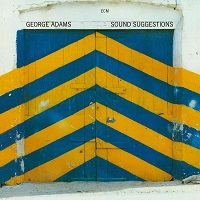
Tenor saxophonist George Adams' third recording as a leader (following two obscure releases for the Italian Horo label) is a little unusual in that the extroverted soloist is heard on the usually introverted ECM label. Adams is teamed with fellow tenor Heinz Sauer (who has a cooler sound), trumpeter Kenny Wheeler, pianist Richard Beirach, bassist Dave Holland and drummer Jack DeJohnette for five group originals. The playing is advanced but not as fiery as most of Adams' later sets.
(by Scott Yanow, All Music Guide)
Not only is this vintage George Adams, from a time when his playing was at its most fluent and inventive, but it is an example of Kenny Wheeler at his best as well – both as soloist and composer. On his opening composition ‘Baba’, Wheeler's flugelhorn creates dark, almost threatening, textures in the introductory section, a mood sustained by DeJohnette's atmospheric drumming behind Adams' thoughtful solo. As the band returns to the scored chart it moves towards an inexorable ensemble climax to usher in one of Wheeler's most dramatic high-note solos, maybe proof of the perfect balance between composition and improvisation in his work. Adams' own ‘Imani's Dance’ moves between metres and tempi, reminding us that he too was a fine creator of pieces, as well as a stellar soloist. Richie Beirach is a fine counterpart to the great rhythm section partnership of Holland and DeJohnette, and Sauer reminds us he too was a composer. His brooding ‘Stay Informed’ is the centerpiece for the set. Adams turns in a characteristically eccentric vocal on the raunchy ‘Got Somethin' Good For You’, before the band returns to what it does best – beautifully balanced, considered, slightly introspective explorations of a theme – in Wheeler's ‘A Spire’ that closes the disc. If you only know Adams' work from his Mingus or McCoy Tyner days, this album is a must-have.
(www.jazzwise.com)
|
| Double Image: "Dawn" (ECM 1146, Okt. 1978) |
 [Dreams So Real (Gary Burton) |
Happy Sad (Tim Buckley, 1969) |
Blue Afternoon (Tim Buckley, 1970) |
Dream Letter (Tim Buckley, live 1968)]
[Dreams So Real (Gary Burton) |
Happy Sad (Tim Buckley, 1969) |
Blue Afternoon (Tim Buckley, 1970) |
Dream Letter (Tim Buckley, live 1968)]
|
| Charlie Haden, Jan Garbarek & Egberto Gismonti: "Magico" (ECM 1151, Juni 1979) |
 [Codona |
Belonging (Jan Garbarek) |
Sol Do Meio Dia (Egberto Gismonti)]
[Codona |
Belonging (Jan Garbarek) |
Sol Do Meio Dia (Egberto Gismonti)]
Mehr ...
|
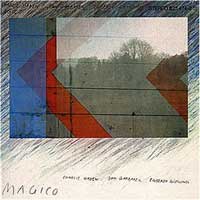
Perhaps it was the presence of bassist Charlie Haden, but this trio set
has more energy than one normally associates with the other members of
the group (Jan Garbarek on tenor and soprano and Egberto Gismonti doubling
on guitar and piano). The trio performs group originals and an obscurity
during the picturesque and continually interesting release; this combination
works well.
(by Scott Yanow, AMG)
|
|
| Jack DeJohnette: "Special Edition" (ECM 1152, März 1979) |
 [Arthur Blythe |
David Murray |
Blue Train (John Coltrane)
Out To Lunch (Eric Dolphy)]
[Arthur Blythe |
David Murray |
Blue Train (John Coltrane)
Out To Lunch (Eric Dolphy)]
|
| "OLd And New Dreams" (ECM 1154, Aug. 1979) |

Mehr ...
The second recording by Old and New Dreams was, like its first from three years earlier, named after the group. Trumpeter Don Cherry, tenor saxophonist Dewey Redman, bassist Charlie Haden, and drummer Ed Blackwell made for a mighty team, performing high-quality free bop in the tradition of the Ornette Coleman Quartet (of which they were all alumni). In addition to two of Ornette's tunes (including a lengthy exploration of "Lonely Woman"), the musicians each contributed an original of their own. Stirring music in a setting that always brought out the best in each of these musicians.
(by Scott Yanow, All Music Guide)
|
| Steve Kuhn / Sheila Jordan Band: "Playground" (ECM 1159, Juli 1979) |
 [Trance (Steve Kuhn) |
Portrait Of Sheila (Sheila Jordan, Blue Note)]
[Trance (Steve Kuhn) |
Portrait Of Sheila (Sheila Jordan, Blue Note)]
Mehr ...
After many years off records, Sheila Jordan began to become more active in jazz in the mid-'70s. Her two recordings as part of pianist Steve Kuhn's quartet, of which this was the first, gave her both a higher profile and a challenging vehicle for her improvised words and adventurous scat singing. With bassist Harvie Swartz and drummer Bob Moses completing the group, Jordan performs six of Kuhn's originals and lyrics (including "The Zoo" and the 10 1/2-minute "Deep Tango") as a member of the quartet, rather than as a dominant vocalist. Intriguing music.
(by Scott Yanow, All Music Guide)
|
| Charlie Haden, Jan Garbarek & Egberto Gismonti: "Folk Songs" (ECM 1170, Nov. 1979) |
 [Magico ]
Mehr ...
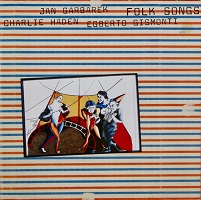
Dieses schillernde Nachfolgealbum von Magico ist ein weiteres gutes Beispiel für ECMs progressives Zusammenspiel. Die Kombination des Multiinstrumentalisten Egberto Gismonti mit dem Saxophonisten Jan Garbarek und dem Bassisten Charlie Haden scheint sowohl ein Geniestreich als auch eine unvermeidliche Kombination zu sein. Ein blauer "Folk Song" gibt den Ton für alle folgenden zarten Überlegungen an, die sich langsam zu einer Helix aus Atmosphären entwickeln. Gismonti streckt in "Bôdas De Prata" einen herrlichen Zug aus. In der offenen Schale von Garbareks schalenförmigem Tenor leuchtet er wie ein Glühwürmchen. Die rhythmische Schärfe von "Cego Aderaldo" reicht aus, um ein ansonsten träges Album zu stützen. Die 12-Saiten/Saxophon-Kombination hat etwas Besonderes an sich, das an die Solstice-Tage des Labels erinnert, und passt wunderbar zu "Veien", dem reaktionsfreudigsten Stück des Albums. Gismontis Unvergänglichkeit, Garbareks kristalline Phrasierungen und Hadens ermutigende Geometrien vereinen sich passenderweise in "Equilibrista". Diese Wiege aus rollendem Klavier und melodischen Überlagerungen fällt in einem melodiösen Taumel von ihrem Ast und landet auf den Füßen für das letzte Wort, das in Form von "For Turiya" kommt, einer weiteren balladenartigen Wippe aus Klavier und Bass, die auf dem Drehpunkt von Garbareks nächtlichem Flüstern ruht.
Jeder dieser wertvollen Musiker hat die Fähigkeit, mit den subtilsten Gesten die großartigsten Bilder zu malen. Diese Spannung zwischen Methode und Wirkung ist das Herzstück des ECM-Ethos. Bei solchen Projekten spürt man die konversationelle Präsenz und die lenkende Hand des Produzenten Manfred Eicher, die beide die Freude an der Schöpfung und am Teilen derselben nur erhellen können.
|
| Collin Walcott / Don Cherry / Nana Vasconcelos: "Codona 2" (ECM 1177, Mai 1980) |
 [Codona 1 (1979) |
Codona 3 (1983)]
[Codona 1 (1979) |
Codona 3 (1983)]
Mehr ...
Walcott adds tympani, cherry melodica, Nana talking-drum. More Coleman and Walcott compositions, a traditional African piece "Godumaduma", and Cherry's vital "Malinye." Absolutely uplifting.
(by Michael G. Nastos, All Music Guide)
|
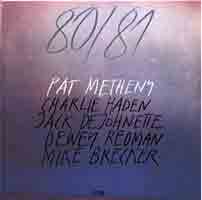
| Pat Metheny: "80/81" (ECM 1180/81, 29. Mai 1980) |
 [Special Edition (Jack DeJohnette) |
Offramp (Pat Metheny Group)]
[Special Edition (Jack DeJohnette) |
Offramp (Pat Metheny Group)]
Mehr ...
|
Auf diesem geistreichen Doppelalbum bekam Pat Metheny die Möglichkeit,
mit einigen Größen den Geschäfts zu arbeiten. Nachdem
er eine Reihe erfolgreicher Platten mit seiner jungen Band und dem Keyboarder
Lyle Mays eingespielt hatte, wurde Pat Metheny (ein früherer Sideman
von Gary Burton) in die erste Liga der jungen Jazz- und Fusion-Gitarristen
befördert. Als stilistisch sanfter Musiker mit harmonisch anspruchsvollem
Solospiel galt er bis dahin durch unbeschwerte Kompositionen als leicht
zugänglich für Gelegenheitshörer, täuschte aber über
die Komplexität vieler seiner musikalischen Einfälle hinweg.
80/81 ist Methenys musikalischer Offenbarungseid, eine Chance aufzusteigen
und unter die eingeschworene Oberschicht des Jazz gezählt zu werden.
Statt seiner üblichen Band von Altersgenossen, hatte er die Gelegenheit,
mit den angesehensten Alleskönnern der Szene zu spielen: dem Bassisten
Charlie Haden, dem Schlagzeuger Jack DeJohnette und den Saxophonisten
Dewey Redman und Michael Brecker. Haden und Redman waren ihrerseits lange
mit Ornette Coleman verbunden, was sich in einer überraschenden Coverversion
von Colemans Turnaround niederschlägt, die Methenys eigene Zusammenarbeit
mit der Altolegende (auf Song X ) vorwegnimmt. Kurz: Metheny ist der Bandleader
und die Gruppe spielt seine Musik
(Fred Goodman, Amazon.de-Redaktion)
|
|
|
Der Amerikaner Pat Metheny mit der sonnigen Art und dem Faible für
jazzige Road-Songs und brasilianische Klangfarben hat in der Reibung mit
dem europäischen Kunstmenschen Eicher seine faszinierendsten Aufnahmen
gemacht. Eine Sternstude Methenys in seiner ECM-Zeit war ohne Zweifel
"80/81". An der Seite von Bassist Charlie Haden und Drummer
Jack DeJohnette sowie der Tenorsaxophonisten Dewey Redman und Mike Brecker
unternahm der Gitarrist einen nonchalanten Balanceakt zwischen Folksong
und jazzigen Improvisationen. Aus der abgespeckten Einzel-CD-Version,
die ECM schon vor Jahren herausbrachte, ist nun ein Zweierset mit dem
vollständigen Programm geworden.
© Stereoplay
|
|
| Pat Metheny & Lyle Mays: "As Falls Wichita, So Falls Wichita Falls" (ECM 1190, Sept. 1980) |

Mehr ...
|
Gitarrist Pat Metheny und sein langjähriger Keyboarder und Alter
Ego Lyle Mays sahen in ihren ländlich-amerikanischen Wurzeln eine
mystische Verbindung zu einer ganz eigenen Welt des Sounds, und mit As
Falls Wichita, So Falls Wichita Falls begannen sie dieser Welt mit einem
ganz eigenen idiomatischen Folk Ausdruck zu verleihen.
Zusammen mit dem Meister-Percussionisten Nana Vasconcelos klappern sie
auf ihrem Titel-Track gleich zahlreiche musikalische Grenzposten ab, so
daß der Song das Schaurige und Atmosphärische von Weather Report
und das Bukolisch-Harmonische der Byrds verbindet, -- das Resultat sind
Echos von Kleinstädten, Einkaufsmeilen und einsamen Güterbahnhöfen,
von weiten, freien Flächen, die die bekannten Wurzeln von Lyle Mays
und Pat Metheny reflektieren und ihre endlosen Märsche entlang der
Interstates von College-Stadt zu College-Stadt und von One-Night-Stand
zu One-Night-Stand musikalisch nachzeichnen. Die Songs "Ozark"
und "It's for You" lassen die Grautöne erkennen, die sich
aus einer Verschmelzung der weißen amerikanischen Erfahrung mit
Afro-amerikanischer Music ergibt, und die der amerikanischen Nation ihre
musikalische Tiefe und Bandbreite verleiht. "September Fifteenth"
auf der anderen Seite, ist eine andächtige, grüblerische Reflexion
des Geistes ihres romantischen Ahnen, des Pianisten Bill Evans. -- Chip
Stern, Amazon.de-Redaktion
|
|
| Steve Eliovson / Collin Walcott: "Dawn Dance" (ECM 1198, Jan. 1981) |
 [Distant Hills (Oregon) |
Codona |
Sargasso Sea (Ralph Towner & John Abercrombie)]
[Distant Hills (Oregon) |
Codona |
Sargasso Sea (Ralph Towner & John Abercrombie)]
|
| "Gallery" (ECM 1206, Mai 1981) |
 [Distant Hills (Oregon) |
Double Image |
David Darling |
Icarus (Paul Winter Consort)]
[Distant Hills (Oregon) |
Double Image |
David Darling |
Icarus (Paul Winter Consort)]
|
| Pat Metheny Group: "Offramp" (ECM 1216, Okt. 1981) |

Mehr ...
If 1980's As Falls Wichita, So Falls Wichita Falls was defined by Pat Metheny's charisma, its less accessible but certainly rewarding successor, Offramp, finds him leaning more toward the abstract. But as cerebral as Metheny gets on such atmospheric pieces as "Are You Going with Me?" and "Au Lait," his playing remains decidedly lyrical and melodic. Clearly influenced by Jim Hall, the thoughtful Metheny makes excellent use of space, choosing his notes wisely and reminding listeners that, while he has heavy-duty chops, he's not one to beat everybody over the head with them. Even when he picks up the tempo for the difficult and angular title song, he shuns empty musical acrobatics. Throughout the CD, Metheny enjoys a powerful rapport with keyboardist Lyle Mays, who also avoids exploiting his technique and opts for meaningful storytelling.
(by Alex Henderson, All Music Guide)
|
| David Darling: "Cycles" (ECM 1219, Nov. 1981) |
 [Cloud Dance (Collin Walcott) |
Jan Garbarek |
Trance (Steve Kuhn) |
Soltice (Ralph Towner) |
Paul Winter Consort]
[Cloud Dance (Collin Walcott) |
Jan Garbarek |
Trance (Steve Kuhn) |
Soltice (Ralph Towner) |
Paul Winter Consort]
Mehr ...
The file texte/DavidDarling-Cycles.htm does not exist
|
| Collin Walcott / Don Cherry / Nana Vasconcelos: "Codona 3" (ECM 1243, Sept. 1982) |
 [Codona 1 (1979) |
Codona 2 (1981)]
[Codona 1 (1979) |
Codona 2 (1981)]
Mehr ...
The third Codona album is a sublimely beautiful release. The silent stillness of the exquisite opening to "Goshakabuchi" gives way to seemingly not much more than wisps of vibration in the air, but then Don Cherry's trumpet enters in full cry and Collin Walcott's dulcimer and other stringed things lead into a bracing and exciting section driven by Nana Vasconcelos' various percussive devices. The whole record is kind of like King Crimson's Larks' Tongues in Aspic without the wattage and with a little more introspection, and is a joyously stunning last testament for Walcott, who died not long after these recordings were completed.
(by Bruce Eder, All Music Guide)
|
| Pat Metheny: "Rejoicing" (ECM 1271, 29.-30. Nov. 1983) |

Mehr ...
Pat Metheny takes a vacation from his Group and performs advanced material with bassist Charlie Haden and drummer Billy Higgins. In addition to Horace Silver's "Lonely Woman," Haden's "Blues for Pat," and three Ornette Coleman tunes, the guitarist plays three of his originals here, including "The Calling," a lengthy exploration of sounds with his guitar synthesizer. Throughout this excellent set, Metheny and his sidemen engage in close communication and create memorable and unpredictable music.
(by Scott Yanow, All Music Guide)
|
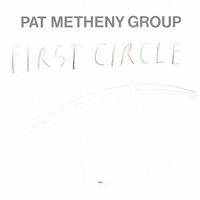
| Pat Metheny Group: "First Circle" (ECM 1278, 15.-19. Feb. 1984) |
Mehr ...
Metheny’s final ECM disc reflected a growing interest in South American rhythms and introduced Argentinean percussionist/singer Pedro Aznar to the group. Includes the popular “Yolanda, You Learn”.
In First Circle, the Pat Metheny Group settled into a lineup that lasted for quite a while -- with Metheny, keyboardist Lyle Mays, bassist Steve Rodby, and new drummer Paul Wertico forming the core quartet. The ever-restless Metheny also mixes up the music, not quite leaving the Brazilian glide behind but coming up with some fascinating permutations always affixed with his personal stamp. "Forward March", the album opener, is a bizarre parody full of detuned instruments and half-cocked trumpet from Mays; one wonders if this was directed at a few silly skirmishes of the day (Grenada? the Falklands?). "The First Circle" has Brazilian elements, but now in the service of a grander architectural context, while nothing could be simpler and yet more sophisticated than the delicate ballad "If I Could". "End of the Game" might be the best track on the record, equipped with a beautiful pop-flavored set of tunes and harmonies, with a rock beat fused to the floating ambience of South America as personified by the new Argentine percussionist/vocalist Pedro Aznar. "Praise", the closer, is an out-and-out rock tune, an affirmative flip side of "Forward March" and the last of a series of delightful surprises.
(by Richard S. Ginell, All Music Guide)
|
| Jack DeJohnette's Special Edition: "Album Album" (ECM 1280, Juni 1984) |
 [Special Edition (1980) |
David Murray]
[Special Edition (1980) |
David Murray]
|
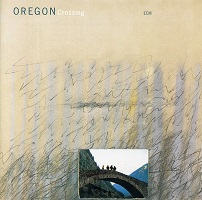
| Oregon: "Crossing" (ECM 1291, Okt. 1984) |
 [Trios / Solos (Ralph Towner & Glen Moore) |
Cloud Dance (Collin Walcott) |
Solstice (Ralph Towner)]
[Trios / Solos (Ralph Towner & Glen Moore) |
Cloud Dance (Collin Walcott) |
Solstice (Ralph Towner)]
Mehr ...
Ethereal playing with tremendous solos from Ralph Towner (on guitar and piano) and Paul McCandless (oboe/sax).
(by Ron Wynn, All Music Guide)
|
| Marc Johnson: "Bass Desires" (ECM 1299, Mai 1985) |

Mehr ...
The pairing of electric guitarists Bill Frisell and John Scofield had to be one of the most auspicious since John McLaughlin and Carlos Santana. Acoustic bassist Marc Johnson's stroke of genius in bringing the two together on Bass Desires resulted in a sound that demonstrated both compatibility between the guitarists and the distinctiveness of the two when heard in combination. Add drummer Peter Erskine and you had a bona fide supergroup, albeit in retrospect a short-lived one, before Frisell and Scofield would establish their own substantial careers as leaders. The guitarists revealed symmetry, spaciousness, and a soaring stance, buoyed by the simplicity of their rhythm mates. This is immediately achieved on the introductory track, "Samurai Hee-Haw," as hummable, head-swimming, and memorable a melody as there ever has been, and a definite signature sound. A perfect country & eastern fusion, the guitarists lope along on wafting white clouds of resonant twang, singing to themselves while also playing stinging notes, supported by the insistent two-note funk of Johnson and the rolling thunder of Erskine. The title track is a one-note ostinato from the bassist with a popping, driven drum rhythm and the guitars more unified in their lines, but broadening their individualistic voices. The light reggae funk of "Mojo Highway" sounds more conversational and jam-like, while "Thanks Again" is a relaxed, unforced waltz, again eschewing Asian-Missouri folkloric alchemy fired by Frisell's wah-wah and Scofield's stairstep strums. Ethereal and effusive sky church inflections lead to loose associations, especially from Frisell's moon-walking guitar synthesizer on "A Wishing Doll." There are three covers: a take on Elmer Bernstein's "A Wishing Doll;" "Resolution," the second movement from John Coltrane's A Love Supreme suite, with a more spiky bass and spacy lead melody played only once; and the standard "Black Is the Color of My True Love's Hair," floating and eerie, held together by silk and lace threads. One of two Bass Desires albums, this debut has stood the test of time -- it is priceless, timeless, and still far from being dated.
(by Michael G. Nastos, All Music Guide)
|
| John Abercrombie / Dave Holland / Jack DeJohnette: "Gateway: Homecoming" (ECM 1562, Dez. 1994) |

Mehr ...
The whole Gateway is an incredible thought of jazz rock, even by hitting the feathery gloss of a pragmatic essential quality (the first two albums are Abercrombie's classics, beyond most arguable feelings) rather than that of an incontestable strength and punditry, even by being produced by a master's personal guild, despite of a trio that masterly stands up with a profound texture and with several common artistic points that ravel everything in a natural way, and even considering the ideals of jazz-rock, rhythmic improvisation and dark melody beating out a tap, as oppose to John Abercrombie's other different styles, such as the color jazz, the sweet ambiances, the inner groove or the fashionable experimentations of tastes and sound. Breathing out all the differences, there is nonetheless a pleasure principle which, within the 70s Gateway, created beautiful jazz, rigorous excellent motives and contemplating steady emotions (from the very first notes, on some pieces), and which now, within these equally equitable 90s, makes out two more worthy, joyful or purely pleasant, interactive moments.
Gateway therefore surpasses expectations, pleases the mood, disguises art into joy, and poetry into jumping frets, it commodes the touch of jazz inside the nebulosity of plash rock, beats the odds of creativity since it doesn't weight more than a mild-paced work, and finally reflects the artists that are John Abercrombie (guitar, composer and mastermind), Dave Johnson (bassist and deep guru) and Jack DeJohnette (percussive artisan of outstanding, also outlandish maturity. Even if some other albums and creations might be more warm or more of a favorite taste, Gateway is put as a kind of a supreme expression, definitely of high standards, and is made out as an impression of happy music, sleepy art, kind charms and nebulous jazzy visions. It is an adventure of crunch-less class. In The Moment is deeply admirable, having obscurant moves, precise tastes, experimental moves. But Homecoming, which actually is the album that re-initiated the Gateway effort into the 90s, has an equally pleasant performance of ablative "pure jazz".
Close to a brilliant shape, a sliding interpretation, a moody mixture of sorrow and heavy notes and to different values being expressed in different ways, Gateway: Homecoming 's watery emphasis has strong reasons for which to be an unpredictable burst of jazz mastering and rock looping, the trio supplying some free skills and hard experienced jams, a good part of them being - in an actually relaxed color - intense. The best things that happen in the album are the moments of poetic music or virulent energy, attractive improvisations or calm coups of indifferent jazz tones. The guitar streaming is one of the fittest (but in The Moment it will have even better "pitches"), its motto purifying fade impressions, its cold color acting a smashing sound. The album is only a bit overlooked when it comes to truly powerful and original shapes, otherwise it has art, the old-recipe jazz trio fundament, and a reasonably subtle simplicity.
Even if it's probably not the frankest creation from the Gateway entire project, Homecoming's rust-modern jazz hasn't got the slightest of a jest within, it has a developing fruit of compassion, music and inner freshness. A good choice, an interesting listening, a deep concept right where it seems absent, a light of "new music" right where you think the classic Gateway gets too much related; well brought-up album, with crisp beliefs.
(www.progarchives.com)
The Gateway Trio is a cooperative in the greatest sense of the word, as guitarist John Abercrombie, bassist Dave Holland, and drummer Jack DeJohnette are all respected players, composers, and bandleaders on the jazz scene. Even though this only the third Gateway recording and the group's first in 17 years, each group member collaborates frequently with the others. As a result there is always a great sense of interplay between Abercrombie's sometimes-mellow-sometimes-distorted guitar, Holland's huge toned bass, and DeJohnette's dancing drums. All of the compositions are by the band members and are wide-ranging in scope. Highlights include the title track, which begins as a medium swinger but drifts into collective improvisation before coming back to medium swing, Modern Times, with its melody reminiscent of "Yesterdays" over a samba feel, the rockish "How's Never" and "7th D," what one might call a "free blues." This is a fine return to recording for a great group.
(by Greg Turner, All Music Guide)
|
| Anouar Brahem: "Thimar" (ECM 1641, März 1997) |
 [Conference Of Birds (Dave Holland)]
Mehr ...
A strikingly attractive "transcultural" project initiated by Tunisian oud virtuoso Anouar Brahem, who is both an innovator and a traditionalist in the deepest sense (he has been credited with "restoring the sovereignty of the oud" in Tunisian music). There is no glib fusion of traditions on Thimar but rather a coming together of three very distinctive musicians who sacrifice none of their individuality in the search for common ground. Arab classical music and jazz are the reference points here, but Anouar Brahem, John Surman and Dave Holland meet as improvisors not limited by genre definition.
Brahems Musik kommt zwar dezent und verspielt daher, fordert aber Konzentration - wofür sie reichlich belohnt, indem sie dem geduldigen Zuhörer einen spektakulären Zauber offenbart und nur für ihn die "Thimar" richtig aufblühen läßt. Die brillant transparente Aufnahme läßt das Dreier- Bouquet orchestral dicht und üppig klingen.
(W. Dulisch in stereoplay 8 / 98)
|
| Charles Lloyd: "Voice In The Night" (ECM 1674, Mai 1998) |
 [Conference Of Birds (Dave Holland) |
Gateway (John Abercrombie)]
[Conference Of Birds (Dave Holland) |
Gateway (John Abercrombie)]
Mehr ...
|
Charles Lloyd's sixth ECM album is both a departure and
a homecoming for the Memphis-born and California-based tenorist, introducing
new music and revisiting archive favourites (including the epic "Forest
Flower"), and featuring an all-star line-up. With his "Scandinavian"
band currently on hold,this is Lloyd's first all-American album in a long
while - Dave Holland qualifies as an honorary American by now - with all
the differences of cultural emphasis that this implies. ECM veteran John
Abercrombie and legendary drummer Billy Higgins are in great form throughout
as they lock in with Lloyd to tackle material ranging from Billy Strayhorn's
"A Flower Is A Lovesome Thing" to the Elvis Costello/Burt Bacharach-penned
"God Give Me Strength" or dig deep into the roots music of the
"Island Blues Suite".
|
|
| Robin Williamson: "The Seed-At-Zero" (ECM 1732, März 2000) |
 [The Incredible String Band |
The Iron Stone (2006)]
[The Incredible String Band |
The Iron Stone (2006)]
Mehr ...
Im Herbst, wenn die Bätter fallen, die Kälte durch die Kleider kriecht und sich ein angenehmes Frösteln über alles legt, wird diese Platte ein freund sein.
(Rolling Stone. 3 ½ Sterne)
Hier auf "The-Seed-Zero" singt und rezitiert der mittlerweile 57-jährige Texte des walisischen Poeten Dylan Thomas ("Unter dem Milchwald") und spielt dazu Gitarre, Harfe und Mandoline. Mehr ist nicht. Außer, dass in diesem musikalischen Irrgarten an jeder Ecke Entdeckungen machen lassen; dass man den Geist von Nick Drake zu sehen glaubt und den Schatten Syd Barretts; dass wie von Zauberhand Pete Seegers "The Bells Of Rhymney" erklingen; dass Robin Williamsons "For Mr. Thomas", einst von Van Morrison gesungen, zum Finale erstrahlt wie ein Regenbogen. Keine Frage: Mut und Muße sind gefragt bei Spoken-Word-Beiträgen, die "Can Y Gwynt" heißen, bei Songs, die Titel tragen wie "Hold Hard, These Ancient Minutes In The Cuckoo's Mouth"- und auch exakt so klingen: strapaziös, prätentiös auch, aber vor allem eines: fabulös. Welch wundervoller Trip.
(ME/Sounds. 5 Sterne)
This is an odd one. Robin Williamson one of the founders of the acid-drenched Incredible String Band, whose early recordings changed the face of British folk music forever, laying the ground for groups such as Steeleye Span and many others. Some 35 years later, he is breaking new ground with music that though forward is rooted deeply in the past. On his ECM debut, Williamson has taken upon himself the task of setting the work of his first inspiration, Dylan Thomas, to music. Along the way, he also soundtracks tomes by Llywarch Hen and Taliesen and Henry Vaughan. Yes, they are all Bards from the British Isles. In addition to this worthy task, Williamson dug into his own past for the strongest of his material and rearranged it for solo accompaniment, thereby situating himself in that noble tradition. And who better to do so? Williamson has been rock steady in his investigations of all things poetic and traditional -- no matter how wild the interpretation--since 1962. Musically this combination of words and music is stunning. Vaughan's "The World," is equal parts 18th century British folk and Indian raga, sung a cappella. The words do not falter in Williamson's reading; his singing voice is strong, full of emotion and fire, as if these words were his own. On Thomas' "The-Seed-at-Zero," the poet's own voice rings ghostly through Williamson's delivered in song, with all of its drama and pathos intact. But the truly shining example is "Holy Spring"/"To God in God's Absence." Here, Williamson reads Thomas' elegiac tome to loneliness, desolation, and death with a moan and shudder that sends chills down the spine before his guitar sounds and he sings his own tune as a coda: "I sing to send songs back to themselves/Seeking no sanctuary more than the world is home/What safety is there if we are not kin/With the killed and plentiful...." With this dedication to a god who may or may not be listening, Williamson uses the folk tradition to call life into question and affirm it at the same time, using music about death, birth, and prayer. The only seemingly odd inclusion here is "The Bells of Rhymney" by Idris Davies and Pete Seeger. It may seem to come out of late modernity, but it does not. If it is odd, it is because it predates -- at least lyrically-- almost all of the material here. Williamson ends this album with an homage to Thomas and the others that is completely free of artifice or guile. It is moving in that it is not so much a tribute to the work of such men, but is a statement on how timely, even now, their purpose and words are; a brilliant work.
(by Thom Jurek, All Music Guide)
|
| Miroslav Vitous: "Universal Syncopations" (ECM 1863, März 2003) |
 [Return To Forever (Chick Corea) |
Belonging (Jan Garbarek & Keith Jarrett) |
Special Edition (Jack DeJohnette)]
[Return To Forever (Chick Corea) |
Belonging (Jan Garbarek & Keith Jarrett) |
Special Edition (Jack DeJohnette)]
Mehr ...
Was für eine Besetzung: Chick Corea am Klavier, Jan Garbarek, Saxofon, Jack DeJohnette am Schlagzeug und John McLaughlin, Gitarre. Der Bandleader heißt Miroslav Vitous, ein Gigant am Kontrabass, ein exzellenter Komponist, ein Mann, der ebenso wie die anderen in der Band ein Stück Musikgeschichte mitgeschrieben hat. Vitous gründete 1970 zusammen mit Wayne Shorter und Joe Zawinul die erste Weather-Report-Formation. Das Debütalbum des Tschechen, Infinite Search (1969, mit John McLaughlin, Herbie Hancock, Joe Henderson und JackDe Johnette), galt damals als ein Meilenstein des zeitgenössischen Jazz.
Universal Syncopations knüpft an den Spirit dieser legendären Aufnahme an, nimmt nach über 30 Jahren den Faden wieder auf und spinnt ihn konsequent weiter. Alles klingt nach Vitous: intelligente Moderne, zwischen Swing und Freiheit, bombastischer Sound und sanfte Ansprache, Vitous begegnet Musik mit Zartheit und Respekt. Die Stücke bei Universal Syncopations sind häufig auf eine kurze thematische Idee und ein konstantes rhythmisches Feel reduziert. Danach kommen spontan entwickelte Teile und Soli, die meistens eng mit dem Kollektiv verwoben sind.
Jack DeJohnette ist einer, der im Mittelpunkt steht, präsent in der Abmischung, dezent (für seine Verhältnisse) in der Ausführung. Ein bisschen zu dezent werden Chick Corea und John McLaughlin behandelt, sie sind eigentlich kaum zu hören: Die Hauptprotagonisten heißen Jan Garbarek (ausnehmend brillant!) und Miroslav Vitous (niemals aufdringlich, aber immer da), sowie Jack DeJohnette. Ein süffiges Jazzalbum voller Reife ist entstanden, zweifellos, konzentrierte 60 Minuten geballter Musikalität.
(Katharina Lohmann, amazon.de)
|
| Robin Williamson: "The Iron Stone" (ECM 1969, Sept. 2005) |
 [The Incredible String Band |
The Seed-At-Zero (2000)]
[The Incredible String Band |
The Seed-At-Zero (2000)]
Mehr ...
The Iron Stone” is the third of Scottish singer / songwriter Robin Williamson’s explorations of sung poetry on ECM and follows “The Seed-At-Zero” (2000) and “Skirting the River Road” (2002), the first a meditation on Dylan Thomas and other Welsh writers, the second including settings of the visionary poetry of William Blake and Walt Whitman. The new album has a wider embrace, with verse of Walter Raleigh, Thomas Wyatt, John Clare and Ralph Waldo Emerson, plus traditional folk music, and improvisations – as well as Williamson’s own poetry and songs, including two titles he once sung with the Incredible String Band in their most creative period: “The Iron Stone” and “The Yellow Snake”, both from 1968.
Robin Williamson’s ISB, one of the most wildly original ensembles of its era, continues to be a touchstone for consecutive generation of musicians, currently cited as an inspiration by singers and groups of the new folk movement (which the mainstream press is variously calling psychedelic folk or freak folk) on both sides of the Atlantic. Williamson himself, though, has moved on – into increasingly fascinating collaborations with musicians from other idioms, particularly from the worlds of jazz and free improvised music, players fully capable of matching his wayward imagination to create songs in the moment or of joining him in the renewal of traditional forms (as on an extraordinary interpretation of the medieval Scots ballad “Sir Patrick Spens” here).
Recorded in Abergavenny, Wales, (in the loft of an 18th century mill house, maintained as a studio by folk musician – and assistant engineer here – Dylan Fowler), “The Iron Stone” continues the association begun with viola player Mat Maneri and multi-instrumentalist Ale Möller on “Skirting the River Road”, and adds to the group the great bassist Barre Phillips, who quickly gets to the heart of things.
Phillips and Mat Maneri have often worked together (as on their ECM discs with saxophonist Joe Maneri) and have developed a near-telepathic musical understanding. Interweaving their sounds and lines or framing the arpeggios of Williamson’s Celtic harp they develop the group as an improvising chamber ensemble with a reach from folk-baroque (“Even Such Is Time”, “Loftus Jones”) to ‘abstract’ spontaneous composition (“There Is A Music”, “Henceforth” and more). Ale Möller, meanwhile, is more than a colourist par excellence, a crafter of moods and atmospheres with his many flutes and whistles, his accordion, mandola and more...
Born in Edinburgh in 1943 Williamson has been a professional musician since he was 16 years old, and an innovator from the outset. He and Bert Jansch brought new impulses to British folk at the beginning of the 1960s. Then, with Clive Palmer and Mike Heron, Williamson founded the Incredible String Band whose songs, cross-referencing diverse cultures and with liberal use of ‘exotic’ instruments suggested a proto-‘world music’. The group’s most outstanding attribute was perhaps Williamson’s extraordinary melismatic vocals, at that time influenced by Arab and Indian singers as well as the great traditional folk singers of Scotland and Ireland. The ISB had several best-selling albums, including “The Hangman’s Beautiful Daughter”, a top 5 hit in the UK pop charts, and toured widely. After the group’s break-up in 1974 Williamson relocated to California where he published a novel, books of poetry and music instruction manuals, then resumed active music making as leader of the Merry Band. In the 1980s, back in Britain and now playing harp as his main instrument, he was a key figure in the storytelling revival. Through the 1990s he issued a number of albums on his own record label, Pigs Whisker Music, before coming to ECM. His recent live work has emphasized two duos, with his wife, singer Bina Williamson and with guitarist John Renbourn. He has also played a number of concerts with saxophonist Paul Dunmall.
Ale Möller (born 1955), grew up in Malmö in Southern Sweden. Once a jazz trumpeter and guitarist playing swing and bebop, he left for Greece to study the bouzouki and the roots of rembetika, finally penetrating Greek music so thoroughly that he became a part of Theodorakis’s ensemble. On returning to Sweden he spent a decade investigating Swedish indigenous music in the Dalarna region, ‘translating’many fiddle tunes for the mandola and in the process contributing powerfully to the Swedish folk revival. He has co-directed recordings on ECM with singer Lena Willemark (“Nordan”, “Agram”, “Frifot”) as well as appearing on Robin’s “Skirting The River Road”. His own multi-cultural World Heritage Orchestra has been widely acclaimed.
Mat Maneri was born in Brooklyn in 1969 and first began playing improvised music with his father, the inventive jazz saxophonist / clarinettist and microtonal composer / theorist Joe Maneri. Mat has appeared on five albums with Joe for ECM (“Three Men Walking”, “In Full Cry”, “Blessed, “Tales of Rohnlief” and “Angles of Repose”, the last two also featuring Barre Phillips), and also has a solo violin album, “Trinity” on the label. Other musicians with whom he has played recently include Cecil Taylor, Gary Peacock, Paul Motian, and Tomasz Stanko. Synthesising influences from Miles Davis and John Coltrane and from baroque music to Elliott Carter via the Schönberg / Berg / Webern Vienna School, Mat Maneri has become a uniquely expressive player. He continues to lead a number of bands of his own and has recently been emphasising a quartet with pianist Dave Burrell and drummer Randy Peterson.
Barre Phillips, born 1934 in California, has been at the forefront of developments in improvised music over the last four decades. Ornette Coleman set him on his path around 1960, and on his arrival in New York, Phillips was soon working the extremes of the New Thing – playing improvised chamber music with Jimmy Giuffre on the one hand and freely expressive 'fire music' with Archie Shepp on the other. In 1969 he co-founded the powerhouse group called The Trio with John Surman and Stu Martin, which also appeared on his 1975 “Mountainscapes” album for ECM. His first recording for the label, however, was the duo album “Music for Two Basses” with Dave Holland. After further ECM recordings with Surman, and with Terje Rypdal, and the solo “Call Me When You Get There”, Phillips experimented with music for bass, percussion and tape on “Aquarian Rain” and mediated between Evan Parker and Paul Bley on “Time Will Tell” and “Sankt Gerold”. Based in France since 1972, Phillips has played with all the leading musicians in European improvisation. His current priorities include a trio with saxophonist Urs Leimgruber and pianist Jacques Demierre, which recently released an album on Evan’s Parker’s PSI label. He hasn’t often worked with singer / songwriters, but did contribute to Daevid Allen’s historic 1969 recording “Magick Brother”.
he title track comes from Williamson’s years with the Incredible String Band but the mood on his third album for ECM is, like the austere cover landscape, the antithesis of hippy summer. Flitting between roles as storyteller, folk traditionalist, bard and experimental musician, Williamson offers up wintry meditations on mortality. The doomy Scots ballad ‘Sir Patrick Spens’ is here, along with Celtic harp settings for poems by Raleigh and Wyatt and a Betjemanesque reflection on early days. Set to inventive acoustic arrangements … it’s an album of flinty integrity from an old master.
(Neil Spencer, The Observer)
The Iron Stone finds nature out of tune with itself, man thrown against its iron hard landscapes alone, puny, cold. This, in Williamson’s own words is ‘wonderful and grim music’. Familiar traditional tunes like ‘Sir Patrick Spens’ are recast in coarse tunings, contemporary visions like ‘Political Lies’ are bitter, and even the love songs like ‘Verses At Ellesmere’ are the cries of a drowning man gripping tight the life raft. Moments of redemption are rare but the more striking for their scarcity … Grim but wonderful indeed.
(Andy Robson, Jazzwise)
Williamson, ein Meister der Phrasierung und Kenner traditioneller Folk-Gesangsstile, griff bei den unter dem Vorzeichen freier Improvisation stehenden Sessions vor allem zur keltischen Harfe und zu diversen Flöten. Das Ergebnis überzeugt erneut durch seine atmosphärische Dichte, Spielfreude und Experimentierfreudigkeit, ohne auch nur ansatzweise prätentiös zu wirken.
(Karl Gedlicka, Concerto)
Wie schon bei den ersten beiden ECM-CD singt Williamson teils improvisierte, teils ausgeschriebene Melodien. Dazu improvisieren Viola-Spieler Mat Maneri, Bassgeiger Barre Philipps und Multiinstrumentalist Ale Möller mit großem Feingefühl eigentümliche Klangsphären, aus denen unversehens urtümlich wirkende Melodien schimmern. ... Mit diesem Impro-Jazz-Folk pflügen Williamson und Konsorten eine frische Scholle.
(Hanspeter Künzler, Neue Zürcher Zeitung)
Seit einigen Jahren veröffentlicht Williamson auf ECM und hat eine komplexe und eigenständige Form von Folk-Jazz entwickelt, deren vorläufiger Höhepunkt nun mit The Iron Stone erreicht ist. Unterstützt wird Williamson dabei von illustren Begleitmusikern, die dafür sorgen, dass der Folk-Touch immer wieder durch (freie) Improvisationen aufgebrochen wird... Williamson, der hier Texte von Sir Walter Raleigh, Thomas Wyatt, Turlough O’Carolan oder Ralph Waldo Emerson mal als gewiefter Geschichtenerzähler, mal meditativ selbstversunken mit seiner unverwechselbaren, keltische, arabische und indische Einflüsse mischenden Stimme interpretiert, spielt Harfe und diverse Flöten. Und mit „Political Lies“ hat er sogar einen kleinen Hitsong im Repertoire.
(Ulrich Kriest, Stuttgarter Zeitung)
At the age of 63, poet, songwriter, composer and visionary Robin Williamson shows no signs of slowing down on The Iron Stone, his third set of recordings for ECM. The title, of course, comes from the song of the same name that Williamson and the Incredible String Band first recorded on the Big Huge album in 1969. "The Iron Stone" appears here with another of the ISB's classic tracks, "The Yellow Snake" from Big Huge's 1968 predecessor, Wee Tam. But this is no reinterpretation of ISB tunes, nor is it a summation of Williamson's career. If anything, The Iron Stone is a logical next step in the direction he has relentlessly pursued with ECM. Whereas his first disc for the label, 2001's The Seed-At-Zero, explored the work of Dylan Thomas and other Welsh writers in songs and improvisational poem songs that he performed solo, the second set, 2002's Skirting the River Road used William Blake and Walt Whitman as its muses, and employed the talents of Ale Möller, Mat Maneri, and Barre Phillips, as well as Paul Dunmall. Möller, Maneri and Phillips return here; and Williamson and Möller play all manner of flutes, concertinas, Mohan Vina, harps, whistles, jaw harps, and drums between them. The feeling of continuity remains as Williamson and his musical collaborators set the works of Sir Walter Raleigh, Ralph Waldo Emerson, Thomas, Wyatt and John Clare to music that is equally composed and improvisational. In addition, there are originals. Is this folk music? Yes and no. It is organic music, played upon folk instruments, and much of the source material comes from the lineage British Isles tradition.
The spirit of adventure is more prevalent here than it was on the two previous outings. Williamson has grown increasingly comfortable with t something approaching the free jazz idiom and its reliance on close listening, dynamic, and the uses of space and texture -- which, in its way, derives from poetry itself. The tenderness and gentleness of the songwriter's heart are ever present, as is his wondrous sense of humor, that comes as much from sound itself as it does centuries-old linguistic study. Whether it be in traditional songs such as "Sir Patrick's Spens," Turlough O'Carolan's "Loftus Jones," or the pastoral, wicked humor of "Political Lies" by the songwriter, the sense of centering around the music's thematic idea is paramount. Adventure is nigh on "Emerson's Baccus," with its Eastern motif and striated vocals, and"There Is a Music," with its dissonance. The two ISB tunes are done here very differently, yet contain their original strangeness and charm. The Iron Stone is the farthest afield of the artist's ECM records, but also the most focused and collaborative. Phillips and Maneri, who are improvisers by trade, and Möller, who began as a "folk" musician, have all been stretched by their experience with Williamson. In turn he has added depth and dimension to his already staggering musical background. Together they have extended the languages of folk and improvisational musics. In doing so they have created a work at once immediate and timeless, full of warmth, wonder and vision. It's hard to imagine any but the most cynical of listeners not being delighted by the wide array of colors, tones and textures on offer here. The Iron Stone is folk brought back to the hearthstone (perhaps it feels this way in part because it was recorded in an 18th century mill house) in order to embrace the future.
(by Thom Jurek, All Music Guide)
|
| Ralph Towner & Paolo Fresu: "Chiaroscuro" (ECM 2085, Okt. 2008) |
 [Oregon |
Sargasso Sea (Towner & Abercrombie) |
Matchbook (Towner & Burton))]
[Oregon |
Sargasso Sea (Towner & Abercrombie) |
Matchbook (Towner & Burton))]
Mehr ...
Spare and mournful, Sunday-morning coffee and croissants music from the duo of veteran guitarist and Oregon founder Towner and the superb Sardinian trumpeter Fresu, who also plays a mean flugelhorn.
There are a few moments when Towner’s nylonstringed, oh so sensitive noodling sounds too soft focus and New-Agey but Fresu – who one feels could cope with 10 times as many notes – is on great, soulful form. Their version of the Kind of Blue classic “Blue in Green” is the obvious stand out.
(Phil Johnson, 15.11.2009, www.independent.co.uk)
Since moving to Italy over a decade ago, guitarist/pianist Ralph Towner's output as a leader has been woefully infrequent, with only two discs released this decade—2001's Anthem and 2006's Time Line, both on the label that's been his home for over 35 years, ECM. It's not that he hasn't been busy; he continues to work and record regularly with Oregon, the group that he co-founded nearly 40 years ago, heard most recently on the Grammy Award-nominated 1000 Kilometers (Cam Jazz, 2007), and on From a Dream (Material, 2009), in a stellar guitar trio with Wolfgang Muthspiel and Slava Grigoryan.
If his solo albums are too few and far between, even scarcer are Towner-led albums in collaboration with others—his last one over a decade ago, the sublime A Closer View (ECM, 1998), in duet with bassist Gary Peacock. All of which makes Chiaroscuro a cause for celebration. It's always a good time for a new Towner record; but here, in duet with rising Italian trumpet star Paolo Fresu, Towner delivers a welcome set of largely original material—some new, some revisited—one standard and a couple of brief but compositionally focused in-the-moment creations.
As has been the case for the last 15 years, Towner focuses strictly on guitar, but this time adds baritone guitar to his arsenal of classical and 12-string acoustic guitars. The lower register instrument is featured on "Sacred Ground," a majestic solo piece that, with a brief reprise in duet with Fresu, bookends three tunes demonstrative of Towner's range. He's covered Miles Davis/Bill Evans' classic "Blue in Green" before, with vibraphonist Gary Burton on Slide Show (ECM, 1986); here it's an even freer interpretation, as Towner (on classical guitar) liberally stretches and compresses time while Fresu's muted trumpet is as spare as the late trumpet icon's, but with a lithe playfulness that's all his own.
"Doubled Up" is a new Towner composition, his baritone guitar creating an even richer landscape. His distinctive voicings—and a unique ability to be both implicit and direct with time, accompaniment, and counterpoint—support and interact deeply with Fresu's muted horn. The guitarist's ability to alternate between upper and lower registers, with passing chords suggestive of greater movement, creates an orchestral breadth that's deceptive and remarkable for an instrument with only six strings.
"Zephyr," first recorded with Oregon on Ecotopia (ECM, 1987), demonstrates how Towner can deconstruct music written as a solo vehicle into a multi-part arrangement, this time delegating the lyrical melody to Fresu, who sounds not unlike another trumpeter with whom the guitarist has collaborated, Kenny Wheeler on Old Friends, New Friends (ECM, 1979).
Towner's distinctively pianistic 12-string guitar is rarely used these days, making the dark improvisations that close the disc, "Two Miniatures" and "Postlude," all the more welcome. Towner may collaborate rarely, but his choices in partners have always been beyond astute, and with the intimate Chiaroscuro he introduces a new partner who, hopefully, will remain an active one on future recordings.
(John Kelman, 12.11.2009, allaboutjazz.com
|
| Lee Konitz: "Live At Birdland" (ECM 2162, 09./10. Dez. 2009) |
 [Oregon |
Sargasso Sea (Towner & Abercrombie) |
Matchbook (Towner & Burton))]
[Oregon |
Sargasso Sea (Towner & Abercrombie) |
Matchbook (Towner & Burton))]
Mehr ...
The file texte/Konitz-Birdland.htm does not exist
|
| Charles Lloyd Quartet: "Mirror" (ECM 2176, Dez. 2009) |
 [Pet Sounds |
A Love Supreme |
Conference Of Birds (Dave Holland) |
Voice In The Night]
[Pet Sounds |
A Love Supreme |
Conference Of Birds (Dave Holland) |
Voice In The Night]
Mehr ...

Der in Charles Lloyd beheimatete spirituelle Geist erhitzt seit nunmehr 45 Jahren die Gemüter und beflügelt gleichermaßen die musikalischen Seelen seiner unverbesserlichen Anhänger, unverbesserlichen Kritiker und unverbesserlichen Nachahmer. Der Mann aus dem wilden kalifornischen Big Sur gehört zu den Großen, den Godfathers, des Saxophons. Mit "Lift Every Voice" erreichte der ehemalige Mitstreiter Keith Jarretts vor einigen Jahren breit gefächerte Anerkennung, die auch über reine Jazzzirkel hinausging.
Sein nun erscheinendes Album "Mirror" bietet erneut dieses seltene Potential und präsentiert Lloyds junge Band feat. Jason Moran (Piano), Reuben Rogers (Bass) und Eric Harland (Drums) mit großer Klarheit als das was sie ist: Eines der aktuelle besten Jazzensembles der Welt.
"Mirror" bietet neben Lloyd-Originals Repertoire von Monk bis Brian Wilson und ist ein außergewöhnlich gelungenes Schaustück modernen Jazzs. Keine Frage, "Mirror" wird auch hierzulande die CD-Player und Bühnen im Sturm erobern und hat das Zeug zum Klassiker.
Mirror includes two new Lloyd originals, ‘Desolation Sound’ and the title track, reinterpretations of original tunes from the Water Is Wide album as well as two Monk pieces, three gospel-flavoured songs and the well known Brian Wilson song ‘Caroline No’ from the iconic Beach Boys album, Pet Sounds, a link that goes all the way back to when Lloyd contributed to the Beach Boys album Surf’s Up. In addition to tenor sax Lloyd puts in a rare appearance on alto and also contributes a spoken word meditation to ‘Tagi’.
(jazzwisemagazine.com)
Das Album enthält Stücke, die von dem Quartett auf der Bühne schon gespielt wurden, darunter zwei Kompositionen von Thelonious Monk, einige Traditionals und eigene Stücke von Charles Lloyd. Bei Lloyd muss man ständig Angst haben, dass er sich - nach wiederholten Anläufen - endgültig von der Musikbühne verabschiedet. Mit "Mirror" hat er seinem Spätwerk erst einmal einen weiteren "Meilenstein" hinzugefügt.
(ndr.de)
"Mirror" bietet neben Lloyd-Originals Repertoire von Monk bis Brian Wilson und ist ein außergewöhnlich gelungenes Schaustück modernen Jazzs. Keine Frage, "Mirror" wird auch hierzulande die CD-Player und Bühnen im Sturm erobern und hat das Zeug zum Klassiker.
(jazz-fun.de)
Auf dem Album "Mirror" erinnern Stücke wie "Monk's Mood" und "Ruby My Dear" an die Tradition, aus der Lloyd seine Musik entwickelt hat. Wenn der Saxophonist Balladen spielt, ist das herzzerreißend. Zärtlich fasst seine Musik den Hörer an und streichelt seine Seele. Das ist so schön, dass es fast ein bisschen weh tut.
(spiegel.de)
With Mirrors, master saxophonist Lloyd has created his most mature and most accomplished work yet. Though heavily atmospheric, it is not ambient music; rather, it is a multilayered musical opus to savor anew with each listen.
(allaboutjazz.com)
|
| Mathias Eick: "Skala" (ECM 2187, 2011) |
 [Motorpsycho |
Jaga Jazzist]
[Motorpsycho |
Jaga Jazzist]
Mehr ...
Der 30-jährige Trompeter Mathias Eick zählt zu den stilistisch flexibelsten Musikern der norwegischen Szene. Bevor er 2008 mit dem Album “The Door” bei ECM debütierte, hatte er schon mit dem Kultensemble Jaga Jazzist, Rockbands wie Motorpsycho und Turbonegro, aber auch internationalen Größen wie Chick Corea, Pat Metheny und Manu Katché (auf dessen hochgelobtem “Playground”-Album) zusammengespielt.
Jetzt hat Eick sein zweites Soloalbum “Skala” fertiggestellt, das im März bei ECM erscheint. Mit dem Trompeter (der hier auch Vibraphon, E-Gitarre und Kontrabass spielt) sind darauf Tenorsaxophonist Tore Brunborg, Pianist Andreas Ulvo, Keyboarder Morten Qvenild, E-Bassist Audun Erlien, die Schlagzeuger Torstein Lofthus und Gard Nilssen, sowie Harfenistin Sidsel Walstad zu hören.
Ist das jetzt Jazz oder Indie? Auf seinem neuen Album "Skala" spielt Mathias Eick seine Trompete so aufregend lasziv und abgehangen, dass Grenzen verwischen. Der Manu Katché-Sideman mag in Momenten an Nils Petter Molaver erinnern und doch bringt er den jungen beatlastigen Jazz Norwegens genauer auf den Punkt als jeder Musiker vor ihm. Unter der Aegide von Manfred Eicher verschmelzen melancholischer Pop, psychedelischer Rock, Elektronika und Jazz unter einem weiten Himmel zu atmosphärischen Klanglandschaften von leuchtender Intensität. Ab Anfang April ist Mathias Eick mit "Skala" und seiner herausragenden Band auf Deutschland-Tour!
Das ist Post-Molvaer-Sound mit einem Lächeln.
(stereoplay, 04 / 2011)
Sein von den Vorbildern Miles Davis und Nils Petter Molvaer geprägter Sound geht einem durch Mark und Bein. Gleichzeitig ist er ein Meister der Verwandlung - wenn er erst lyrische Melodien großräumig auskostet und plötzlich eine narkotische Jazzpop-Sogkraft entfaltet.
(sono, 04 / 05.2011)
|
| "Quercus" (ECM 2276, März 2006) |

Mehr ...
"Quercus" bedeutet im Lateinischen "Eiche" - und die Wurzeln dieses speziellen Baums reichen tief in die britische Folkmusik hinab, seine Zweige und Blätter aber richten sich aufwärts, um jazz-inspiriertes lyrisches Improvisieren zu umfassen.
Das Trio featured die geachtete englische Sängerin June Tabor, die mit ihrer dunklen Stimme die emotionale Essenz einer Ballade auf fast schon unheimliche Art zu verstärken vermag: "Je älter ich werde, desto mehr verstehe ich die Tiefe der Sorgen und Freuden, die einen Song ausmachen", hat sie einmal gesagt. Tabor, die kürzlich mit einem BBC Folk Award als Sängerin des Jahres ausgezeichnet wurde, arbeitet im Projekt Quercus mit dem walisischen Jazzpianisten und Komponisten Huw Warren und dem englischen Saxophonisten Iain Ballamy zusammen, die ECM-Hörern als Co-Leader der Band Food wohl vertraut sind. Dies ist das erste Quercus-Album, das Trio entwickelt seine einzigartige, idiomatische Musikmischung allerdings schon seit sieben Jahren.
Faszinierend, wie sich Ballamys weiches Tenorsaxofon an June Tabors Stimme schmiegt, wenn beide a cappella Shakespeare "singen", bis das Klavier einsteigt ("Come Away Death").
(Stereo, Juni 2013)
Frisch Komponiertes säumt den Weg, aber auch Klangkunst mit Jahrhunderte alten Wurzeln. ... die drei Feingeister aus Großbritannien haben die Harmonie nicht nur ganz oben auf ihre musikalische Werteskala gesetzt. Sie besitzen auch das Geschick, dieses Ziel mit Leben zu füllen. Ein Balladenprogramm von ungewöhnlichem, zeitlosen Zauber ist das Resultat.
(stereoplay, Juni 2013)
Folklore, Spätrenaissance, Romantik, Jazz und Pop fließen auf spektakulär unspektakuläre Weise zusammen. Diese Lieder sind einfach da und bedürfen keiner Erklärung. Sie sind einladend, hypnotisch und schön. Was will man mehr?
(Jazzthing, Juni - August 2013)
|
| Jakob Bro: "Gefion" (ECM 2381, Nov. 2013) |

Mehr ...
Der Klang der Göttin: »Gefion« mit dem Trio von Jakob Bro
Der dänische Jazz-Gitarrist Jakob Bro hat schon einige Alben als Leader eingespielt. Mit »Gefion« stellt er nun sein neues Trio vor. An seiner Seite spielen der kreative Bassist Thomas Morgan und Schlagzeuglegende Jon Christensen. Ungewöhnlich und doch typisch für den Jazz unserer Tage ist die Tatsache, dass Christensen so alt ist wie Bro und Morgan zusammen.
Überhaupt ist »Gefion« ein Album, auf dem es einen Leader gibt, auf dem man das jedoch zu keinem Zeitpunkt hört. Die elektrische Gitarre von Bro ist zwar klanglich dominanter als das entdeckungsfreudige Schlagzeug von Christensen und die erfindungsreichen Basslinien von Morgan, aber im Grunde führen sie demokratisches Trio-Spiel par excellence vor.
Auf seinem neuen Album »Gefion« liefert Bro ein zartes Geflecht aus Melodien, wie Sphärenklänge. Morgan und Christensen füllen es mit ihrer Vorstellungskraft aus. Gleichzeitig bleibt die Musik im ruhigen Fluss. Die großen musikalischen Bögen, die das Trio spannt, lassen genügend Luft für die Gedanken der Hörer. Diese Musik entzieht sich allen Kategorien, fällt aus gängigen Schemata und lässt sich doch auch von nicht geübten Jazz-Hörern gut erschließen.
Die Göttin »Gefion«, nach der Jakob Bro, Thomas Morgan und Jon Christensen das Album benannt haben, soll von Odin den Auftrag erhalten haben, ein schönes Land für die Menschen zu erschaffen. Diese Aufgabe stellt sich offenbar auch das Trio: Wer möchte, kann sich dieser Musik einfach hingeben, den schönen Klängen lauschen und sich daran erfreuen. Andererseits ist »Gefion« auch dazu geeignet, sich die Kunst dieses Trios intellektuell zu erschließen.
»Gefion« von Jakob Bro im Trio mit Thomas Morgan und Jon Christensen ist bester Jazz auf hohem Niveau und außerdem für Hörer geeignet, die ruhige Klangpoesie mögen.
Jakob Bro ist ein Mann der leisen, sparsamen Töne; ein Klangästhet, der mit Effekten spielt, dem Ton Zeit gibt, ihn schweben und ausschwingen lässt, Arpeggio- oder Picking-Techniken einbezieht.
(Fono Forum, März 2015)
|
| Jack DeJohnette: "In Movement" (ECM 2488, Okt. 2015) |

Mehr ...
Ein großes Stück Geschichte ist in dem neuen Trio von Jack DeJohnette konzentriert. Vor fünfzig Jahren spielte Jack DeJohnette als Gast des John Coltrane Ensembles mit den Vätern von Ravi Coltrane und Matthew Garrison, und auch das Programm von »In Movement« wird mit Coltranes erschütternder, unverändert relevanter Elegie »Alabama« eröffnet.
Ein weiterer Klassiker ist mit »Blue in Green« von Miles Davis und Bill Evans vertreten (Jack ist einer der wenigen Musiker, der in den Bands beider Männer spielte), genauso wie »Serpentine Fire« aus dem Repertoire von Earth, Wind and Fire – ein Tribut an Maurice White, mit dem Jack ebenfalls in frühen Jahren zusammenarbeitete.
Das Stück »The Two Jimmys« ist eine Hommage an die beiden Innovatoren Jimi Hendrix und Jimmy Garrison, »Rashied« ehrt den späten Rashied Ali, einen weiteren großartigen Schlagzeuger aus Coltranes Kosmos. Trotz all dieser Referenzen handelt es sich hierbei tatsächlich um eine Band in Bewegung, die die Musik unermüdlich weiterentwickelt.
Die Vertrautheit der Beteiligten sorgt für einen speziellen Flow der Inspiration ...
(Jazzthing, Juni - August 2016)
Over the past few years, Jack DeJohnette has had his storied jazz career -- now over six decades -- revisited in several ways. In 2013, he led a "dream band" at the Chicago Jazz Festival that included Roscoe Mitchell, Henry Threadgill, Muhal Richard Abrams, and Larry Guy, all of whom he'd played with in the Association for the Advancement of Creative Musicians during the early '60s. That performance was released in 2015 by ECM as Made in Chicago. Earlier this year, Resonance Records issued Some Other Time: The Lost Session from the Black Forest, which featured DeJohnette in Bill Evans' trio with Eddie Gomez in 1968.
In Movement finds the bandleader in a new trio with saxophonist Ravi Coltrane and bassist/electronicist Matthew Garrison. As a young drummer he had the opportunity to sit in with both their fathers, John Coltrane and Jimmy Garrison. This debut also looks at history, but through the gaze of the present. The set begins with Coltrane, Sr.'s classic Civil Rights-era composition, "Alabama." While it is instantly recognizable, the trio find their own form of liberty within it via Garrison's electric bass harmonics and economic use of electronics. Coltrane's tenor states the melodic frame solemnly while DeJohnette dances around the pair with quick accents and feints, juxtaposing circular rhythm and improvisation. Also present is Miles Davis' modal classic "Blue in Green." This drummerless reading with DeJohnette at the piano is more abstract. Ravi's soprano is beautifully lyrical inside the modes, while Garrison adorns both players in sparse layers of honeyed echo. The inclusion of Earth, Wind & Fire's "Serpentine" is not as out of place as it initially seems: DeJohnette played with the group's founder Maurice White in Chicago. The slow, unwinding funk is a showcase for Coltrane's phrasing and Garrison's groove-laden bass playing as the drummer adds tough, slippery breaks. This group showcases its collective prowess in the long title track. Commencing with an urgent single-chord piano and synth pulse, tapping cymbals, and syncopated hi-hat, Garrison employs a low-end chordal bass toward Coltrane's long, labyrinthine soprano melody. The tune unfurls, building to a stunning crescendo at the conclusion. "Two Jimmys" (for Hendrix and Garrison) offers a Middle Eastern modal center via synth and a treated bassline. Coltrane's tenor moves from the inside to out while DeJohnette's drums deliver a martial cadence that eventually splits the jam wide open. "Rashied" (in tribute to Coltrane, Sr.'s great last drummer Rashied Ali) is a wailing improv duet between DeJohnette and Ravi, exploring their own version of "interstellar space." DeJohnette contributes "Lydia" (an homage to his wife) as a post-bop ballad with gorgeous bassline lyricism from Garrison, and the lovely piano trio closer "Soulful Ballad." Historical (re)examinations aside, In Movement is a compelling first statement from a band who, despite generational differences, is connected through deep listening and harmonic intelligence. This group's future is rife with possibility.
(by Thom Jurek, All Music Guide)
|
| Jakob Bro: "Streams" (ECM 2499, Nov. 2015) |
 [Gefion]
Mehr ...
Der Klang der Göttin: »Gefion« mit dem Trio von Jakob Bro
Der dänische Jazz-Gitarrist Jakob Bro hat schon einige Alben als Leader eingespielt. Mit »Gefion« stellt er nun sein neues Trio vor. An seiner Seite spielen der kreative Bassist Thomas Morgan und Schlagzeuglegende Jon Christensen. Ungewöhnlich und doch typisch für den Jazz unserer Tage ist die Tatsache, dass Christensen so alt ist wie Bro und Morgan zusammen.
Überhaupt ist »Gefion« ein Album, auf dem es einen Leader gibt, auf dem man das jedoch zu keinem Zeitpunkt hört. Die elektrische Gitarre von Bro ist zwar klanglich dominanter als das entdeckungsfreudige Schlagzeug von Christensen und die erfindungsreichen Basslinien von Morgan, aber im Grunde führen sie demokratisches Trio-Spiel par excellence vor.
Auf seinem neuen Album »Gefion« liefert Bro ein zartes Geflecht aus Melodien, wie Sphärenklänge. Morgan und Christensen füllen es mit ihrer Vorstellungskraft aus. Gleichzeitig bleibt die Musik im ruhigen Fluss. Die großen musikalischen Bögen, die das Trio spannt, lassen genügend Luft für die Gedanken der Hörer. Diese Musik entzieht sich allen Kategorien, fällt aus gängigen Schemata und lässt sich doch auch von nicht geübten Jazz-Hörern gut erschließen.
Die Göttin »Gefion«, nach der Jakob Bro, Thomas Morgan und Jon Christensen das Album benannt haben, soll von Odin den Auftrag erhalten haben, ein schönes Land für die Menschen zu erschaffen. Diese Aufgabe stellt sich offenbar auch das Trio: Wer möchte, kann sich dieser Musik einfach hingeben, den schönen Klängen lauschen und sich daran erfreuen. Andererseits ist »Gefion« auch dazu geeignet, sich die Kunst dieses Trios intellektuell zu erschließen.
»Gefion« von Jakob Bro im Trio mit Thomas Morgan und Jon Christensen ist bester Jazz auf hohem Niveau und außerdem für Hörer geeignet, die ruhige Klangpoesie mögen.
Jakob Bro ist ein Mann der leisen, sparsamen Töne; ein Klangästhet, der mit Effekten spielt, dem Ton Zeit gibt, ihn schweben und ausschwingen lässt, Arpeggio- oder Picking-Techniken einbezieht.
(Fono Forum, März 2015)
|
| John Abercrombie Quartet: "Up And Coming" (ECM 2528, April-Mai 2016) |
 [Timeless |
Gateway]
[Timeless |
Gateway]
Mehr ...
Das entschleunigende zweite Album
2017 präsentiert John Laird Abercrombie sein neues Album »Up And Coming«.
Unterstützung erhält der US-amerikanische Jazzgitarrist darauf von seiner Band: dem Pianisten Marc Copland, dem Bassisten Drew Gress und dem Schlagzeuger Joey Baron. Alle sind bereits auf dem Vorgänger »39 Steps« zu hören.
Insgesamt acht Songs hat das Quartett für »Up And Coming« aufgenommen, darunter fünf Abercrombie-Originale, zwei Stücke von Copland und der Miles-Davis-Klassiker »Nardis« aus dem Jahr 1958.
Was die Musik auf dem neuen Album betrifft, so bleibt sich die Band treu. Leise Jazzballaden und feine Klangästhetik stehen im Mittelpunkt, Hektik kommt hier an keiner Stelle auf.
Das John Abercrombie Quartet macht 2017 dort weiter, wo es 2013 aufgehört hat. Zum Glück. Ihr neues Album »Up And Coming« ist ein musikalisch-lyrischer Hörgenuss mit Entschleunigungseffekt.
When pianist Marc Copland formally joined the John Abercrombie Quartet for 2013's wonderful 39 Steps, he brought with him the fruit of the musical relationship between himself and the guitarist that had been established some four decades earlier with Chico Hamilton, and in the fusion band Dreams. Their evolution continued the guitarist's participation on several of the pianist's albums, and as sidemen playing in the same bands with Kenny Wheeler and David Liebman. Bassist Drew Gress, who has worked with both men separately over the years, is a further link in the chain, while drummer Joey Baron has played with the guitarist often enough to be intimately familiar with his compositional and improvisational processes.
Abercrombie wrote five of these eight tunes, Copland contributed a pair, and the group offers a startling read of Miles Davis' nugget "Nardis." It's in the reinvention of the latter number where this band showcases its greatest strengths. While they remain faithful to the song's harmony and spirit, they open up its inner space a moment at a time, almost imperceptibly at first. Abercrombie parses his phrases, albeit fluidly, to reveal the hidden magic in Davis' nuances, as Copland follows through and around them to crystallize its striking chorus. There's a great deal of magic in the originals as well. Opener "Joy" commences with a poignant minor-lyric statement, picked up by Copland before the pair stagger the melody and begin a gradual yet emotive and inquisitive interplay. Gress accents the changes while Baron adds dimension and texture with his whispering cymbal work. The pianist's solo highlights each melodic fragment with canny lyricism. The guitarist's "Flipside" is brief, but its swinging tempo and tight changes spotlight the band breezing through post-bop with zest, humor, and chops to spare. A more complex side of that nature is expounded upon in Copland's "Silver Circle," providing an opportunity for Abercrombie to underscore the edges in a rounded yet knotty solo. The pianist's "Tears," with its processional yet lithe chord voicings, hushed cymbals, and muted tom-toms, is initially so gentle and tender, it momentarily distracts from the darkness within. Abercrombie's break caresses the melody's haunting frame; Gress picks apart its elements and exposes its spine reinforced subtly by Baron, and Copland opens the seam to expose drama, vulnerability, and loss. The set concludes with the guitarist's "Jumbles," a jocular, midtempo workout that juxtaposes angles and breezy harmony with a varying rhythmic palette. Up and Coming clocks in at under 50 minutes. Its compositional and improvisational economy is countered by the quartet's disciplined ability to colorfully and authoritatively illustrate an abundance of creative ideas without even hinting at compromise.
(by Thom Jurek, All Music Guide)
|
| Jakob Bro: "Taking Turns" (ECM 2543, März 2014 * Mix: Aug. 2024) |
 [Thimar (2013) |
Streams (2015)]
[Thimar (2013) |
Streams (2015)]
Mehr ...
»Taking Turns« wurde vor zehn Jahren im renommierten Avatar Studio in New York aufgenommen und zeigt den dänischen Gitarristen Jakob Bro mit einem generationsübergreifenden Team von hervorragenden Improvisationskünstlern, darunter Lee Konitz, Andrew Cyrille, Bill Frisell, Jason Moran und Thomas Morgan, die sich nicht auf die Fallen der All-Star-Bands, sondern auf die kollektive Harmonisierung konzentrieren. Bros Musik ist ein wahrer Klangraumerzeuger, der dazu anregt, neue Wege zu erkunden, die Atmosphären und Melodien miteinander verbinden.
|
| Anouar Brahem: "Blue Maqams" (ECM 2580, März 2017) |
 [Thimar |
Conference Of Birds (Dave Holland) |
Invisible Threads (John Surman) |
In Movement (Jack DeJohnette)]
[Thimar |
Conference Of Birds (Dave Holland) |
Invisible Threads (John Surman) |
In Movement (Jack DeJohnette)]
Mehr ...
Der Oud-Virtuose mit hochkarätigen Gästen
»Blue Maqams« heißt der neue, mittlerweile 13. Longplayer des tunesischen Oud-Virtuosen Anouar Brahem.
Neun Songs hat er dafür im Mai dieses Jahres in den New Yorker Avatar Studios aufgenommen. Die Produktion übernahm ECM-Gründer Manfred Eicher.
Neben Brahem an der arabischen Kurzhalslaute sind auf »Blue Maqams« drei weitere Jazzgiganten mit von der Partie: Pianist Django Bates, Schlagzeuger Jack DeJohnette und Dave Holland am Kontrabass. Mit Letzterem arbeitete der Oud-Spieler bereits vor 20 Jahren für sein Album »Thimar« zusammen.
Mit ihrem Album »Blue Maqams« zeigen Anouar Brahem und Gäste 2017 einmal mehr, wie gut Jazz und orientalische Klänge zusammenpassen.
Wie Sterne am Himmel über der Medina von Tunis leuchten die Klänge, die Brahem mit seinen drei Mitspielern Django Bates (Klavier), Dave Holland (Bass) und Jack DeJohnette (Drums) erzeugt.
(Stereo, November 2017)
|
| John Surman: "Invisible Threads" (ECM 2588, Juli 2017) |

Mehr ...
Der Saxophonist und Klarinettist John Surman wird oft als durch und durch englischer Improvisator und Komponist charakterisiert: Anklänge an Volksmusik und eine geradezu idyllische Atmosphäre haben sich zu Charakteristiken seiner Musik entwickelt – die sich in Alben wie The Road to Saint Ives oder Saltash Bells eindrücklich bemerkbar machten.
Doch auch mit Musikern aus anderen Ländern und Kulturkreisen arbeitet Surman seit langem zusammen, Musiker, die durch ihr Gefühl für Klänge jenseits aller Idiome innig verbunden sind. Während einer Tournee durch Südamerika traf Surman zunächst auf den Pianisten Nelson Ayres, der den Liebhabern von brasilianischem Jazz vor allem durch seine Zusammenarbeit mit Airto Moreira, Milton Nascimento und Banda Pau Brasil bekannt sein dürfte.
In Oslo lernte der Brite den aus den USA eingewanderten Vibraphonisten Rob Waring kennen und schätzen (bei ECM unlängst gemeinsam mit Mats Eilertsen vertreten). Im Juli 2017 fanden sich die drei Musiker schließlich im Osloer Rainbow Studio ein, um Werke von John Surman – inklusive Ayres' »Summer Song« – neu einzuspielen. Produziert wurde das Album von Manfred Eicher.
›Invisible Threads‹ ist für Zuhörer das perfekte Album, um runter zu kommen, um das hektische Alltagsleben mal für eine Stunde auszublenden.
(Jazzthing, Februar / März 2018)
|
| Terje Rypdal: "Conspiracy" (ECM 2658, Febr. 2019) |
 [Motorpsycho & Ståle Størlokken]
Mehr ...
Die gute Nachricht zuerst: Terje Rypdal legt nach mehr als zehn Jahren endlich wieder eine brandneue Aufnahme vor! Die bessere Nachricht: er hat für das Album eine aufregende neue Band zusammengestellt. Und die beste Nachricht: der 72-jährige improvisiert auf "Conspiracy" so kraftvoll rockig und einfallsreich, wie er es Mitte der 1970er Jahre auf seinen bahnbrechenden ECM-Alben "Whenever I Seem To Be Far Away", "Odyssey" und "Waves" tat, als er tollkühn das Klangpotenzial der E-Gitarre auslotete. Zur Erinnerung: Seine letzten Aufnahmen für ECM hatte Rypdal 2009 eingespielt. "Crime Scene" entstand im Mai jenes Jahres beim Nattjazz-Festival in Bergen und erschien 2010, während das 2013 veröffentlichte Album "Melodic Warrior" Aufzeichnungen aus den Jahren 2003 und 2009 enthielt. Danach wurde es still um Terje Rypdal. Jetzt zerreißt er diese Stille endlich mit "Conspiracy".
Für die gleichnamige Band, mit der er das Album unter der Regie von Manfred Eicher im Februar 2019 im Osloer Rainbow Studio eingespielt hat, fand er in Keyboarder Ståle Storløkken einen idealen Mitverschwörer.
Storløkken wirkte zuvor schon an den Rypdal-Alben “Vossabrygg” und “Crime Scene” mit. Am Schlagzeug sitzt Pål Thowsen, der in den 1970ern auf Bassist Arild Andersens ersten drei ECM-Alben getrommelt hatte und gut fünfzehn Jahre lang auch Ketil Bjørnstad begleitete. Komplettiert wird diese Band durch den jungen Bassgitarristen Endre Hareide Hallre.
Ein Manifest der Freaks.
(stereoplay, September 2020)
Ein Alterswerk? Noch immer Rausch!
(Jazzthing, September / Oktober 2020)
|
| Mathias Eick: "When We Leave" (ECM 2660, Aug. 2020) |
 [Skala]
Mehr ...
Das ausdrucksstarke Spiel des norwegischen Trompeters Mathias Eick, das laut New York Times einen »makellosen und durchdringenden Ton« ausstrahlt, wird von seinen begnadeten Mitmusikern auf bemerkenswerte Weise ergänzt. Der Geiger Håkon Aase, einer der herausragenden Improvisatoren seiner Generation, beschattet den Leader mit Linien, die sowohl auf Folk-Traditionen als auch auf den Jazz zurückgreifen.
Im Zuge des sich reflektierenden Austauschs zwischen den Schlagzeugern Helge Andeas Norbakken und Torstein Lofthus entfaltet sich ein Klangbild, das auf ungewöhnlich präzise Interaktion zurückzuführen ist. Dabei setzen Pianist Andras Ulvo und Bassgitarrist Audun Erliern ihre Akzente, indem sie im Zentrum des Geschehens Ideen zwischen Hauptstimmen und Rhythmusgruppe navigieren.
Bei mehreren Stücken fügt das zarte Anschwellen von Stian Carstensens Pedal Steel Guitar eine geheimnisvolle Dimension hinzu. When we leave wurde im August 2020 im Osloer Rainbow Studio aufgenommen.
Wären doch nur alle LPs so exzellent aufgenommen und so überragend laufruhig gepresst! ECM scheint die Qualitätsschrauben diesmal besonders fest angezogen zu haben. (...) Die exzellenten Musiker schaffen wunderbare Stimmungen, musikalisch ist hier nichts überfrachtet.
(›Klangtipp‹ in Audio, Mai 2022)
|
| John Scofield: "Swallow Tales" (ECM 2679, März 2019) |

Mehr ...
Gitarrist John Scofield feiert die Musik seines Freundes und Mentors Steve Swallow in einer lebendigen und geistreichen Aufnahme, die an einem Tag in New York im März 2019 gemacht wurde - »old school«, wie Scofield sagt, wobei er zugibt, dass mehr als vierzig Jahre der Vorbereitung dazu geführt haben.
John war ein 20-jähriger Student in Berklee, als er den Bassisten zum ersten Mal traf und mit ihm spielte, und sie haben seitdem weitergemacht. »Ich liebe diese Lieder«, sagt Scofield über die Auswahl der hier erforschten Swallow-Kompositionen - ein breites Spektrum, das Klassiker wie »Hullo Bolinas«, »Eiderdown«, »Falling Grace« und »Radio« sowie weniger bekannte Werke umfasst. Die Beziehung zwischen Scofield und Swallow ist in jedem Moment offensichtlich. John: »Manchmal, wenn wir spielen, ist es wie eine große Gitarre, die Bassstimme und mein Part zusammen.« Hinter dem Schlagzeug ist Bill Stewart, ein enger Mitarbeiter von Scofield seit den frühen 90er Jahren, wachsam gegenüber allen Auswirkungen der Interaktion. »Was Bill macht, ist mehr als ›Schlagzeug spielen‹«, sagt Scofield. »Er ist eine melodische Stimme in der Musik, die gleichzeitig richtig gut swingt.«
... drei Künstler, drei Freunde, die ihren Jazz einfach laufen lassen können.
(stereoplay, Mai 2020)
Der erdige, meist leicht verzerrte, bisweilen jauchzende Ton von Scofields Ibanez-Gitarre verleiht den alten Kompositionen Steve Swallows regelrecht Flügel. Ein ›beschwingtes‹ Album.
(›Empfehlung des Monats‹ in Fono Forum, Juli 2020)
|
| Mark Turner: "Return From The Stars" (ECM 2684, Nov. 2019) |

Mehr ...
Auf Return From The Stars, das in seiner Atmosphäre sowohl energetisch als auch nachdenklich wirkt, geben Mark Turners Kompositionen seiner Gruppe viel Raum für Bewegung. Die Soli fließen organisch aus den Arrangements heraus; neben dem umwerfenden Zusammenspiel von Turners Tenor und Jason Palmers Trompete können sich Bassist Joe Martin und Schlagzeuger Jonathan Pinson immer wieder frei entfalten.
Obwohl Turner bereits auf diversen ECM Aufnahmen zu hören war – darunter mit dem Billy Hart Quartet, als Teil des Fly Trios, sowie im Duo mit Ethan Iverson – handelt es sich bei Return From The Stars um sein erstes Quartett Album seit dem vielgelobten Lathe Of Heaven von 2014 und um einen unverzichtbaren Beleg seiner außerordentlichen Qualität als Konzeptualist, Instrumentalist und Komponist.
|
| John Scofield & Dave Holland: "Memories Of Home" (ECM 2860 , Aug. 2024) |

Mehr ...
Der Gitarrist John Scofield und der Bassist Dave Holland, zwei der zeitgenössischen Meister des Jazz, haben im Laufe der Jahre in verschiedenen Zusammenhängen zusammengespielt - darunter Projekte mit Herbie Hancock und Joe Henderson sowie eine energiegeladene Gruppe mit Joe Lovano und Al Foster.
»Memories of Home« ist nun ihr erstes Duo-Album, letztes Jahr nach ausgiebigen Tourneen in den NRS Studios in Catskill, New York, aufgenommen. John Scofield: »Die Platte enthält, genau wie unsere Live-Shows, Stücke, die jeder von uns komponiert hat, einige neu, einige alt. Wir teilen jahrzehntelange gemeinsame musikalische Bezugspunkte. Die Gemeinsamkeiten und Unterschiede in unseren Herangehensweisen machen die Zusammenarbeit, wie ich finde, umso spannender.«
Das Album enthält Scofields Songs »Icons at the Fair«, »Meant to Be«, »Mine Are Blues«, »Memorette« und »Easy for You« sowie Hollands »Mr. B«, »Not for Nothin'«, »You I Love« und »Memories of Home«.
|

(2010-06-04)