| "The Doors" (Elektra, Jan. 1967) |


 Mehr ...
»The Doors« erschien ursprünglich bereits am 4. Januar 1967. Mit Songs wie »Light My Fire«, »Break On Through« und »Back Door Man« war es das Sprungbrett zum Erfolg der jungen Psychedelic-Rock-Band. Bis heute gehört es zu den einflussreichsten Rockalben der Musikgeschichte. Das Magazin Rolling Stone listet es auf Platz 42 der 500 besten Alben aller Zeiten.
After blowing minds as the house band at the Whisky-a-Go-Go, where they were fired for playing the Oedipal drama "The End" (which was too explicit for even the Sunset Strip), the Doors were ready to unleash their organ-driven rock and Jim Morrison's poetic aspirations on the world. "On each song we had tried every possible arrangement", drummer John Densmore said, "so we felt the whole album was tight." "Break On Through (to the Other Side)", "Twentieth-Century Fox" and "Crystal Ship" are pop-art lighting for Top Forty attention spans. But the Doors hit pay dirt by editing one of their jamming vehicles for airplay: "Light My Fire", written by guitarist Robbie Krieger when Morrison told everybody in the band to write a song with universal imagery. (Rolling Stone)
Total album sales: 3,406,000 - Peak chart position: 2
|
| Cannonball Adderley Quintet: "Mercy, Mercy, Mercy! Live At 'The Club'" (Capitol, Feb. 1967) |

Mehr ...
Das Cover dieses 1966er Albums brüstet sich mit "Live At the Club".
Das erwies sich jedoch als Lüge, wie die Original Liner-Notes eher
nebenbei erwähnen. Mercy, Mercy, Mercy wurde nicht auf einer Chicagoer
Bühne, sondern in den Capitol Studios von Los Angeles aufgenommen.
(Der Kniff war ein Gefallen für den Besitzer des Clubs). Das johlende
Publikum bestand aus geladenen Gäste und war durch freien Alkohol entsprechend
stimuliert worden.
Immerhin, die Begeisterung der Menschen war tatsächlich sehr berechtigt,
da der Altsaxophonist Cannonball Adderley und seine Band eine packende
Mischung postboppiger Freiübungen und soul-jazziger Grooves präsentierte.
Das berühmte Titelstück von Joe Zawinul wurde mit seiner hypnotischen,
gospelverwurzelten Funk-Stimmung ein Top 10 Hit in den Pop-Charts, ebenso
wie eine verblüffende Exerzizie der Zurückhaltung für Zawinul,
der, wie auch immer, dem Drang widerstand, in sein E-Piano ordentlich
reinzuhauen. Statt dessen entschied er sich für eine tiefe, sanfte
Stimmungslage. Der Rest des Album aber kocht mit Cannonball, seinem Bruder
Nat am Kornett und Zawinul, und gleicht die fehlende prickelnde Atmosphäre
aus. ( Marc Greilsamer , Amazon)
|
|
| Cannonball Adderley's most popular album, Mercy, Mercy,
Mercy wasn't actually recorded "Live at 'The Club'," as its subtitle
says. The hoax was meant to publicize a friend's nightclub venture in Chicago,
but Adderley actually recorded the album in Los Angeles, where producer
David Axelrod set up a club in the Capitol studios and furnished free drinks
to an invitation-only audience. Naturally, the crowd is in an extremely
good mood, and Adderley's quintet, feeding off the energy in the room, gives
them something to shout about. By this point, Adderley had perfected a unique
blend of earthy soul-jazz and modern, subtly advanced post-bop; very rarely
did some of these harmonies and rhythms pop up in jazz so saturated with
blues and gospel feeling. Those latter influences are the main inspiration
for acoustic/electric pianist Joe Zawinul's legendary title cut, a genuine
Top 40 pop hit that bears a passing resemblance to the Southern soul instrumentals
of the mid-'60s, but works a looser, more laid-back groove (without much
improvisation). The deep, moaning quality and spacy texture of "Mercy,
Mercy, Mercy" stand in contrast to the remainder of the record, though;
Nat Adderley contributes two upbeat and challenging originals in "Fun"
and "Games," while Zawinul's second piece, "Hippodelphia,"
is on the same level of sophistication. The leader's two selections -- the
gospel-inflected "Sticks" and the hard-swinging, bluesy bop of
"Sack O' Woe" (the latter of which became a staple of his repertoire)
-- are terrific as well, letting the group really dig into its roots. Adderley's
irrepressible exuberance was a major part of his popularity, and no document
captures that quality as well -- or with such tremendous musical rewards
-- as Mercy, Mercy, Mercy. -- Steve Huey (AMG) |
|
| The Byrds: "Younger Than Yesterday" (Columbia, Feb. 1967) |
 [Gene Clark With The Gosdin Brothers (1967)]
Mehr ...
|
Younger than Yesterday was somewhat overlooked at the time of its release
during an intensely competitive era that found the Byrds on a commercial
downslide. However, time has shown it to be the most durable of the Byrds'
albums, with the exception of Mr. Tambourine Man. Crosby, McGuinn, and
especially Hillman come into their own as songwriters on an eclectic but
focused set blending folk-rock, psychedelia, and early country-rock. The
sardonic "So You Want to Be a Rock 'n' Roll Star" was a terrific
single; "My Back Pages," also a small hit, was the last of their
classic Dylan covers; "Thoughts and Words," the flower-power
anthem "Renaissance Fair," "Have You Seen Her Face,"
and the bluegrass-tinged "Time Between" are all among their
best songs. The jazzy "Everybody's Been Burned" may be David
Crosby's best composition, although his "Mind Gardens" is one
of his most excessive. (by Richie Unterberger, AMG)
|
|
|
Two years after being hailed as America's answer to the Beatles, these
folk-rock pioneers were unraveling, commercially and internally -- a situation
Roger McGuinn and Chris Hillman addressed with this album's rousing, ironic
opener, "So You Want to Be a Rock 'N' Roll Star." David Crosby,
whom McGuinn would later fire, contributed a ravishing noir ballad, "Everybody's
Been Burned," and Hillman bloomed as a writer, simultaneously reviving
the Byrds' early magic and foreshadowing their adventures in country rock
with "Time Between." "My Back Pages," the obligatory
Dylan cover, is the album's elegiac centerpiece. (Rolling Stone)
Total album sales: Under 500,000
Peak chart position: 24
|
|
| Jefferson Airplane: "Surrealistic Pillow" (RCA/Grunt, Feb. 1967) |
 [Moby Grape]
Mehr ...
|
Psychedelic scholars have long tried to pin down just what the Grateful
Dead's Jerry Garcia did on this album (he is credited as "musical
and spiritual adviser"). But the real trip is the Airplane's concise
sorcery, a hallucinatory distillation of folk-blues vocals, garage-rock
guitar and crisp pop songwriting. The effects were felt nationwide. Grace
Slick's vocal showcases, "White Rabbit" and "Somebody to
Love," made Surrealistic Pillowa commercial smash during San Francisco's
Summer of Love, and Marty Balin's spectral "Today" is still
the greatest ballad of that city's glory days.
(Rolling Stone)
Total album sales: 500,000 / Peak chart position: 3
|
|
| Charles Lloyd: "Forrest Flower" (Atlantic, Feb. 1967) |
Mehr ...
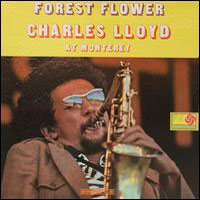
When Charles Lloyd brought his new band to Monterey in 1966, a band that included Keith Jarrett on piano, Jack DeJohnette on drums, and the inimitable -- though young -- Cecil McBee on bass, no one knew what to expect. But they all left floored and this LP is the document of that set. It is difficult to believe that, with players so young (and having been together under a year), Lloyd was able to muster a progressive jazz that was so far-reaching and so undeniably sophisticated, yet so rich and accessible. For starters, the opening two title tracks, which form a kind of suite (one is "Forest Flower-Sunrise," the other "Sunset"), showcased the already fully developed imagination of Jarrett as a pianist. His interplay with DeJohnette -- which has continued into the 21st century in a trio with Gary Peacock -- is remarkable: whispering arpeggios surrounded by large chords that plank up the drumming as DeJohnette crosses hands and cuts the time in order to fluctuate the time. Lloyd's own solos are demonstrative of his massive melodic gift: his improvisation skirted the edges of what was happening with Coltrane (as everyone's did), but his own sense of the deep wellspring of song and the cross-pollination of various world musics that were happening at the time kept him busy and lyrical. Elsewhere, on Jarrett's own "Sorcery," his linking front-line harmonics with Lloyd is stellar -- this isn't communication, it's telepathy! Jarrett's angular solo is buoyed up by Lloyd's gorgeous ostinato phrasing. By the time the band reaches its final number, a sky-scorching version of Brooks Bowman's "East of the Sun," they have touched upon virtually the entire history of jazz and still pushed it forward with seamless aplomb. Forest Flower is a great live record.
(by Thom Jurek, All Music Guide)
|
| Love: "Da Capo" (Elektra, Feb. 1967) |
 [Forever Changes (Nov. 1967) |
Aftermath (The Rolling Stones, 1966)] |
| Aretha Franklin: "I Never Loved A Man The way I Love You" (Atlantic, März 1967) |

Mehr ...
|
Auf diesem Album fand Aretha ihre Stimme. Zwar hatte sie zuvor bereits
für ein anderes Label gesungen, den Sound, über den sie sich
im weiteren Verlauf ihrer Karriere definierte, entdeckte sie jedoch auf
diesem erstmals für Atlantic Records aufgenommenen Album. Die Trackliste
liest sich dabei wie eine Sammlung ihrer größten Hits: "Respect",
"Do Right Woman, Do Right Man", "Dr. Feelgood", "Baby,
Baby, Baby", "A Change Is Gonna Come", dazu noch der Titelsong.
Auf diesem Album zeigt sich Aretha entweder vor Soul strotzend oder auf
der Suche nach neuem Material. Ein Klassiker.
(Robert Gordon, Aus der Amazon.de-Redaktion)
|
|
| Sixties-Soul für audiophile Goldgräber: Mit diesem
Werk verdiente sich Aretha Franklin 1967 zum ersten Mal Edelmetall in den
internationalen Bestseller-Listen. Die amerikanische Illustrierte Ebony
kürte den Titel Respect gar zur "schwarzen Nationalhymne".
Jedenfalls bediente die Queen Of Soul ihren Hofstaat vorzüglich, was
das heiser-kehlige Timbre ihrer Stimme und die gefühlvollen, mit bluesigem
Piano verzierten Arrangements anging. Im güldenen MFSL-Gewand gewinnen
die elf Songs zwischen Kirchenschiff und Kaschemme deutlich an Dynamik.
© Audio
|
|
|
Franklin's Atlantic debut is the place where gospel music collided with
R&B and rock & roll and became soul. The Detroit-born preacher's
daughter was about $80,000 in debt to her previous label, Columbia, when
Atlantic producer Jerry Wexler signed her in 1966. "I took her to
church," Wexler said, "sat her down at the piano and let her
be herself." She immediately cut the album's title hit, a slow fire
of ferocious sexuality, while her storefront-church cover of Otis Redding's
"Respect" -- Franklin's first Number One pop single -- became
the marching song for the women's and civil-rights movements. (Rolling
Stone)
Total album sales: 500,000 / Peak chart position: 2
|
|
| "The Grateful Dead" (Warner, März 1967) |
Mehr ...
|
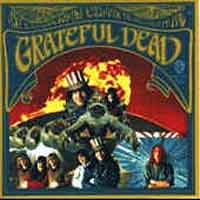
Most Deadheads pan the band's debut, saying it sounds nothing like their
'classic' sound and they hadn't yet grown into their unique style. This
is true, and definitely the main reason for me liking it quite a bit.
See, when the Grateful Dead formed out of several different shards and
smithereens of their former bands, they weren't exactly driven together
by the will to experiment and come up with a radically new type of music.
They were nothing but a bunch of cool Californian guys with some playing
experience behind their backs - Garcia with more of a folky background;
Lesh, if I'm to believe the liner notes, from "electronic music"
background, which pretty much makes him the only 'experimental' element
back then; and the others from various rock bands. And at this point,
the band's musical direction was primarily indicated by Pigpen, with his
love for blues and R'n'B and cool Hammond organ tone which is actually
more audible on this particular record than Jerry's guitar.
And I like it. It is definitely untrue that the album sounds nothing like
their further stuff. Well, it definitely sounds nothing like the subsequent
two studio albums, where the Dead plunged headlong into lethargic psychedelia.
But many of the tunes on here aren't that far removed from their country/folk
"retro-fication" on Workingman's Dead and later on; not to mention
that more than half of the songs on here made it into the regular Deadshow,
and stayed there at least until the passing of Pigpen, and some even further.
The crucial difference is they rock, and they rock much more than anything
the Dead have created ever since.
The very opening of the record, those distorted electric chords and the
slightly fuzzy organ tone of 'The Golden Road (To Unlimited Devotion)',
show that pumping up the energy level was by no means a technique unknown
to the Dead in those early days. In fact, when two rocking guitars, a
rocking organ, and loud, almost "brawny", harmonies all join
together, it results in a wall-of-sound effect that is radically opposed
to the 'classic' thin, wimpy Deadsound. You can find similar melodies
all over their career, but a similar sound? Only on a particularly energetic
live night, I guess.
Another thing is that on this record, they're no sworn enemies of fast
tempos. 'Beat It On Down The Line' is lively, friendly, and toe-tappy
all over, and still rendered quite "Deadly" because of Pigpen's
identifiable organ playing. And I totally dig their reworking of 'Sitting
On Top Of The World', here turned into a fast, frantic shuffle which makes
its point in a breathtakingly short span of two minutes, replete with
a nimble solo from Mr Garcia (I presume), shining in all of its Chuck
Berry-ish glory. 'Cold Rain And Snow' and 'New New Minglewood Blues' are
slightly less involving in terms of power, but more interesting from a
melodic point of view, especially the former with its optimistic organ
'interludes' and stuff - no wonder it readily made it back into their
concert set when they started moving away from psychedelia.
Of course, the record isn't free of some of that "sterile" approach
to the blues that is already rearing its ugly head in the Deadcamp. 'Good
Morning Little Schoolgirl' is much shorter here than it is on any of the
band's live records, but actually feels longer than some of the better
live versions, because it emphasizes Pigpen strutting his stuff rather
than tight interplay between the band members. And their rendition of
the folkie ballad 'Morning Dew' I find myself respecting much more than
actually falling for - which supposedly means they don't manage to capture
the song's tragic essence, even if they try to. Heck, I'll take the Rod
Stewart, or even the inventive-as-hell Nazareth version of the song, over
the Dead version any day.
That said, the best treat comes at the end in the form of the ten-minute
'Viola Lee Blues'. Now that's a real monster of a jam if there ever was
one. Go ahead Deadheads and crucify me, but the Dead never, and I repeat,
never did a more murderous instrumental sequence in their entire career
than the steam-raising crescendo in the middle of this tune. It doesn't
hint at much when it begins, just a standard riff-driven blues-rocker
with an occasional "initiation of a rock solo" that quickly
dissipates into oblivion, but then somewhere around the fourth minute
the Dead are starting to exercise in "math-rock", gradually
pushing up the valves and handles and spinning up the dials and blowing
up the pistons and increasing the tempo and playing more notes per second
and zooping up the bass fretboards and crashing the cymbals and inserting
splinters of funky rhythms and suddenly pushing Pigpen's psychedelic organ
riffs to the top of everything and then making Garcia solo with even more
aggression on top of these riffs and then Pigpen starts rising the volume
even higher and then Garcia breaks into an ass-kicking repetitive rock'n'roll
phrase and they start hitting higher and higher "stingey" chords
and going into trills and barrages of chords and then poof! - it is over.
Yeah, believe it or not, I just described (as best as I could) an actual
Grateful Dead jam which is not a 'Dark Star' or a 'The Eleven' by any
means.
Which leads us to the obvious conclusion - if you hate the Dead more than
filling in tax declarations, this is the only album of theirs that can
possibly impress you. But if you love the Dead more than the living, you
will probably be ready to join the chorus of those who are always ready
to point out how it is not a "true" Dead album. In fact, I'm
not even sure if they were stoned while recording it. And besides, it's
the only Grateful Dead album where you'll find a clean-shaven Jerry Garcia
looking at you from the front cover. If that ain't a reason for exchanging
your entire collection of dried butterflies for something musically-related,
I don't know what is.
(by George Starostin,
Only Solitaire)
|
|
| Gene Clark: "... With The Gosdin Brothers" (Columbia, April 1967) |
 [White Light (1971) |
No Other (1974)] |
| Jimi Hendrix Experience: "Are You Experienced?" (Polydor, Mai 1967) |

Mehr ...
|
"This is what Britain sounded like in late 1966 and early 1967:
ablaze with rainbow blues, orchestral guitar feedback and the highly personal
cosmic vision of black American emigre Jimi Hendrix. Rescued from dead-end
gigs in New York by ex-Animal Chas Chandler, Hendrix arrived in London
in September 1966, quickly formed the Experience with bassist Noel Redding
and drummer Mitch Mitchell and, in a matter of weeks -- when he wasn't
touring the country or jamming in clubs -- was recording the songs that
comprised the original, differing U.K. and U.S. editions of his epochal
debut. The incendiary poetry of Hendrix's guitar was historic in itself,
the luminescent sum of his chitlin-circuit labors with Little Richard
and the Isley Brothers and his melodic exploitation of amp howl. But it
was the pictorial heat of his composing and the raw fire in his voice
in "Manic Depression," "The Wind Cries Mary" and "I
Don't Live Today" that established the transcendent promise of psychedelia.
Hendrix made soul music for inner space. "It's a collection of free
feeling and imagination," he said of the album. "Imagination
is very important." Drugs were not. Widely assumed to be about an
acid trip, "Purple Haze," the opening track on the '67 U.S.
LP, had "nothing to do with drugs," Hendrix insisted. "
'Purple Haze' was all about a dream I had that I was walking under the
sea." (Rolling Stone)
Total album sales: 4 million // Peak chart position: 5
|
|
| The Beatles: "Sgt. Pepper's Lonely Hearts Club Band" (EMI/Parlophone, Juni 1967) |

Mehr ...
|
Sgt. Pepper's Lonely Hearts Club Band is the most important
rock & roll album ever made, an unsurpassed adventure in concept, sound,
songwriting, cover art and studio technology by the greatest rock & roll
group of all time. From the title song's regal blasts of brass and fuzz
guitar to the orchestral seizure and long, dying piano chord at the end
of "A Day in the Life," the thirteen tracks on Sgt. Pepper's Lonely Hearts
Club Band are the pinnacle of the Beatles' eight years as recording artists.
John Lennon, Paul McCartney, George Harrison and Ringo Starr were never
more fearless and unified in their pursuit of magic and transcendence.
Issued in Britain on June 1st, 1967, and a day later in America, Sgt.
Pepper's Lonely Hearts Club Band is also rock's ultimate declaration of
change. For the Beatles, it was a decisive goodbye to matching suits,
world tours and assembly-line record-making. "We were fed up with being
Beatles," McCartney said decades later, in Many Years From Now, Barry
Miles' McCartney biography. "We were not boys, we were men . . . artists
rather than performers." At the same time, Sgt. Pepper formally ushered
in an unforgettable season of hope, upheaval and achievement: the late
1960s and, in particular, 1967's Summer of Love. In its iridescent instrumentation,
lyric fantasias and eye-popping packaging, Sgt. Pepper defined the opulent
revolutionary optimism of psychedelia and instantly spread the gospel
of love, acid, Eastern spirituality and electric guitars around the globe.
No other pop record of that era, or since, has had such an immediate,
titanic impact. This music documents the world's biggest rock band at
the very height of its influence and ambition. "It was a peak," Lennon
confirmed in his 1970 Rolling Stone interview, describing both the album
and his collaborative relationship with McCartney. "Paul and I definitely
were working together," Lennon said, and Sgt. Pepper is rich with proof:
McCartney's burst of hot piano and school-days memoir ("Woke up, fell
out of bed . . . ") in Lennon's "A Day in the Life," a reverie on mortality
and infinity; Lennon's impish rejoinder to McCartney's chorus in "Getting
Better" ("It can't get no worse"). "Sgt. Pepper was our grandest endeavor,"
Starr said, looking back, in the 2000 autobiography The Beatles Anthology.
"The greatest thing about the band was that whoever had the best idea
-- it didn't matter who -- that was the one we'd use. No one was standing
on their ego, saying, 'Well, it's mine,' and getting possessive." It was
Neil Aspinall, the Beatles' longtime assistant, who suggested they reprise
the title track, just before the grand finale of "A Day in the Life,"
to complete Sgt. Pepper's theatrical conceit: an imaginary concert by
a fictional band, played by the Beatles. The first notes went to tape
on December 6th, 1966: two takes of McCartney's music-hall confection
"When I'm Sixty-Four." (Lennon's lysergic reflection on his Liverpool
childhood, "Strawberry Fields Forever," was started two weeks earlier
but issued in February 1967 as a stand-alone single.) But Sgt. Pepper's
real birthday is August 29th, 1966, when the Beatles played their last
live concert, in San Francisco. Until then, they had made history in the
studio -- Please Please Me (1963), Rubber Soul (1965), Revolver (1966)
-- between punishing tours. Off the road for good, the Beatles were free
to be a band away from the hysteria of Beatlemania. McCartney went a step
further. On a plane to London in November '66, as he returned from a vacation
in Kenya, he came up with the idea of an album by the Beatles in disguise,
an alter-ego group that he subsequently dubbed Sgt. Pepper's Lonely Hearts
Club Band. "We'd pretend to be someone else," McCartney explained in Anthology.
"It liberated you -- you could do anything when you got to the mike or
on your guitar, because it wasn't you." Only two songs on the final LP,
both McCartney's, had anything to do with the Pepper character: the title
track and Starr's jaunty vocal showcase "With a Little Help From My Friends,"
introduced as a number by Sgt. Pepper's star crooner, Billy Shears. "Every
other song could have been on any other album," Lennon insisted later.
Yet it is hard to imagine a more perfect setting for the Victorian jollity
of Lennon's "Being for the Benefit of Mr. Kite!" (inspired by an 1843
circus poster) or the sumptuous melancholy of McCartney's "Fixing a Hole,"
with its blend of antique shadows (a harpsichord played by the Beatles'
producer George Martin) and modern sunshine (double-tracked lead guitar
executed with ringing precision by Harrison). The Pepper premise was a
license to thrill. It also underscored the real-life cohesion of the music
and the group that made it. Of the 700 hours the Beatles spent making
Sgt. Pepper (engineer Geoff Emerick actually tallied them) from the end
of 1966 until April 1967, the group needed only three days' worth to complete
Lennon's lavish daydream "Lucy in the Sky With Diamonds." "A Day in the
Life," the most complex song on the album, was done in just five days.
(The oceanic piano chord was three pianos hit simultaneously by ten hands
belonging to Lennon, McCartney, Starr, Martin and Beatles roadie Mal Evans.)
No other Beatles appear with Harrison on his sitar-perfumed sermon on
materialism and fidelity, "Within You Without You," but the band wisely
placed the track at the halfway point of the original vinyl LP, at the
beginning of Side Two: a vital meditation break in the middle of the jubilant
indulgence. The Beatles' exploitation of multitracking on Sgt. Pepper
transformed the very act of studio recording (the orchestral overdubs
on "A Day in the Life" marked the debut of eight-track recording in Britain:
two four-track machines used in sync). And Sgt. Pepper's visual extravagance
officially elevated the rock album cover to a Work of Art. Michael Cooper's
photo of the Beatles in satin marching-band outfits, in front of a cardboard-cutout
audience of historical figures, created by artist Peter Blake, is the
most enduring image of the psychedelic era. Sgt. Pepper was also the first
rock album to incorporate complete lyrics to the songs in its design.
Yet Sgt. Pepper's Lonely Hearts Club Band is the Number One album of the
RS 500 not just because of its firsts -- it is simply the best of everything
the Beatles ever did as musicians, pioneers and pop stars, all in one
place. A 1967 British print ad for the album declared, "Remember Sgt.
Pepper's Lonely Hearts Club Band Is the Beatles." As McCartney put it,
the album was "just us doing a good show."
The show goes on forever. Total album sales: 11.7 million
Peak chart position: 1 (Rolling Stone)
|
|
| Kaleidoscope: "Side Trips" (Epic, Juni 1967) |
 [El Rayo X (David Lindley, 1981)]
Mehr ...
Although the Bay Area may have seemed to corner the market on the psychedelic "Summer of Love", the equally bountiful Los Angeles scene was the breeding ground for one of the more inventive units of the mid- to late-'60s. The incipient incarnation of Kaleidoscope synthesized rock & roll with roots and world music, first yielding Side Trips (1967), arguably the most diverse effort of 1967. Their ten-track outing features multi-instrumentalists David Lindley (guitar/banjo/fiddle/mandolin), Solomon Feldthouse (saz/bouzouki/dobro/vina/oud/dombek/dulcimer/fiddle/guitar/vocals), Chester Crill (aka Fenrus Epp and Max Buda) (violin/viola/bass/keyboards/harmonica), Chris Darrow (bass/guitar/mandolin/vocals) and John Vidican (percussion). The combo evolved fromLindley's string band interests, Darrow's love of the Beatles' early records and Feldthouse's exotic-sounding Eastern excursions. After being signed by Epic, they initially wanted to operate under the surreal moniker of the Neoprene Lizards with Barry Friedman (aka Frazier Mohawk) collaborating from the producer's chair. Further galvanizing Kaleidoscope and Side Trips is the strength of the original material. The mid-tempo ballad "Please" was picked as the single, while the album's overall mood and cerebral vibe are front and center on Darrow's trippy "If the Night" and "Keep Your Mind Open." Feldthouse's suitably surrealistic "Egyptian Gardens" concisely demonstrates his distinct contributions, as does the Lindley composition "Why Try." From the other side of the pop spectrum are the layered vocal harmonies of "Pulsating Dream" and the overt jug band influence heard on Cab Calloway's signature "Minnie the Moocher," as well as the traditional tunes "Come on In" and "Hesitation Blues." Enthusiasts and collectors should note the three-disc Pulsating Dream anthology, as it not only contains Kaleidoscope's four Epic LPs, but also hard-to-find sides, such as "Elevator Man" and "Little Orphan Nannie" circa Side Trips.
(by Lindsay Planer, All Music Guide)
|
| "Moby Grape" (Columbia, Juni 1967) |

Mehr ...
|
"Moby Grape's career was a long, sad series of minor disasters,
in which nearly anything that could have gone wrong did (poor handling
by their record company, a variety of legal problems, a truly regrettable
deal with their manager, creative and personal differences among the band
members, and the tragic breakdown of guitarist and songwriter Skip Spence),
but their self-titled debut album was their one moment of unqualified
triumph. Moby Grape is one of the finest (perhaps the finest) album to
come out of the San Francisco psychedelic scene, brimming with great songs
and fresh ideas while blessedly avoiding the pitfalls that pock marked
the work of their contemporaries -- no long, unfocused jams, no self-indulgent
philosophy, and no attempts to sonically recreate the sound of an acid
trip. Instead, Moby Grape built their sound around the brilliantly interwoven
guitar work of Jerry Miller, Peter Lewis, and Skip Spence, and the clear,
bright harmonies of all five members (drummer Don Stevenson and bassist
Bob Mosely sang just as well as they held down the backbeat). As songwriters,
the group blended straight-ahead rock & roll, smart pop, blues, country,
and folk accents into a flavorful brew that was all their own, with a
clever melodic sense that reflected the lysergic energy surrounding them
without drowning in it. And producer David Rubinson got it all on tape
in a manner which captured the band's infectious energy and soaring melodies
with uncluttered clarity, while subtly exploring the possibilities of
the stereo mixing process. "Omaha," "Fall on You,"
"Hey Grandma," and "8:05" sound like obvious hits
(and might have been if Columbia hadn't released them as singles all at
once), but the truth is there isn't a dud track to be found here, and
time has been extremely kind to this record. Moby Grape is as refreshing
today as it was upon first release, and if fate prevented the group from
making a follow-up that was as consistently strong, for one brief shining
moment Moby Grape proved to the world they were one of America's great
bands. While history remembers the Grateful Dead and Jefferson Airplane
as being more important, the truth is neither group ever made an album
quite this good."
(by Mark Deming, All
Music Guide)
|
|
|
What a beautiful mess Moby Grape were, and what an amazing noise they
made on their debut album, a stunning artifact of San Francisco rock at
its '67 peak. Jerry Miller, Peter Lewis, Don Stevenson, Bob Mosley and
Skip Spence all sang like demons and wrote crisp pop songs packed with
lysergic country-blues excitement. And the band's three guitarists --
Miller, Spence and Lewis -- created a network of lightning that made songs
such as "Omaha," "Changes" and "Hey Grandma"
shine and sizzle. Columbia hyped this album to near death (issuing five
singles at once), but the music is just as thrilling now as it was in
'67. This is genuine hippie power pop.
(Rolling Stone)
Total album sales: Under 500,000 // Peak chart position: 24
|
|
| The Incredible String Band: "The 5000 Spirits Of The Layers Of The Onion" (Elektra, Juli 1967) |
 [The Hangman's Beautiful Daughter (März 1968) |
Wee Tam & The Big Huge (Okt. 1968)]
Mehr ...
For their second album, the ISB officially reduced to the duo of Mike Heron and Robin Williamson. Lumped in with the psychedelic movement, that categorization was probably more due to the trippy cover graphics, the occasional Indian influences, and the whimsical, sometimes fantasy-ridden lyrical images than the music. It's more like a slightly cosmic version of traditional British folk than psychedelic rock. Although their next album, The Hangman's Beautiful Daughter, is usually considered their most adventurous, some listeners may find this to be the more accessible effort. It also featured what is probably Williamson's best-known song, "First Girl I Loved" (also familiar via Judy Collins' cover version, "First Boy I Loved").
(by Richie Unterberger , All Music Guide)
|
| Pink Floyd: "Piper At The Of Dawn" (EMI/Harvest, Aug. 1967) |
 [The Madcap Laughs (Syd Barrett, 1970)] |
| The Beach Boys: "Smiley Smile" (Capitol, Sept. 1967) |
 [Pet Sounds (1966)]
Mehr ...
After the much-discussed, uncompleted Smile project -- which was supposed to take the innovations of Pet Sounds to even grander heights -- collapsed, the Beach Boys released Smiley Smile in its place. (To clarify much confusion: Smiley Smile is an entirely different piece of work than Smile would have been, although some material that ended up on Smiley Smile would have most likely been used on Smile. Also, much of Smiley Smile was in fact recorded after the Smile sessions had ceased.) For fans expecting something along the lines of Sgt. Pepper (and there were many of them), Smiley Smile was a major disappointment, replacing psychedelic experimentation with spare, eccentric miniatures. Heard now, outside of such unrealistic expectations, it's a rather nifty, if rather slight, effort that's plenty weird -- in fact, often downright goofy -- despite Brian Wilson's retreat from both avant pop and active leadership of the group. "Wind Chimes," "Wonderful," "Vegetables," and much of the rest is low-key psychedelic quirkiness, with abundant fine harmonies and unusual arrangements. The standouts, nonetheless, were two recent hit singles in which Brian Wilson's ambitions were still intact: the inscrutable mini-opera "Heroes and Villains," and the number one hit "Good Vibrations," one of the few occasions where the group managed to be recklessly experimental and massively commercial at the same time. A 1990 Capitol CD combines this and Wild Honey onto one disc, adding previously unreleased in-progress versions of "Good Vibrations" and "Heroes and Villains," the a cappella B-side "You're Welcome," a 1967 version of "Their Hearts Were Full of Spring," and an excellent outtake, "Can't Wait Too Long."
(by Richie Unterberger, AMG)
The album that replaced 'Smile'. 'Smile' was to have been an impossibly brilliant triumph, the album that would have been the perfect pop/rock album and also the record that would have ended the career of the likes of The Beatles. Of course, it was never completed or released. The reasons are numerous and too complex to go into in the space of this review. Much of it was probably hype but now we'll never know in any case. 'Heroes And Villains' opens things, and even in this imperfect form is still very very special. The lyrics are fast paced, beautiful and meaningless fun. 'Vegetables' is a little silly thing but does contain wonderful vocal parts. 'She's Goin Bald' is just downright stupid. At this point you are probably wondering what the hell is going on. Perseverance reaps it's own rewards. 'Little Pad' features possibly the most beautiful harmonic humming you are ever likely to hear. 'Good Vibrations' is, well, it's 'Good Vibrations'! Little needs to be said about this particular perfect masterpiece that hasn't already been said. 'With Me Tonight' is the best of the songs not originally scheduled to appear on 'Smile'. It sounds like it was recorded in a church and Carl sings so well it will make you shiver and cry. That's a promise, by the way. 'Wind Chimes' is a spooky different version of a 'Smile' song, 'Gettin' Hungry' a bit too simplistic - very raw production wise. In fact, it's a bit out of place here altogether. 'Wonderful' is a superb heartbreaking ballad and 'Whistle In' a short little coda to what's gone before.
'Smiley Smile' is in-fact a highly regarded and influential album in it's own right. Some of the vocal parts sound truly otherworldly and are unlikely to ever be surpassed. This otherworldliness may in part be due to all the strange things the guys were smoking at the time, but still! No, this isn't 'Smile', but we should be thankful the group continued and gave us music as good as this to remember them by.
(Adrian Denning)
|
| The Beau Brummels: "Triangle" (Warner, Okt. 1967) |
 [Randy Newman
(1968)]
Mehr ...
|
Das `67er Album gehört sich zu den besten Platten dieser an Highlights
nicht armen Phase. Die Kombination von Sal Valentino´s hoher Stimme,
Ron Elliott´s mystischem Folk-Psychedelic Songwriting und Van Dyke
Parks Orchesterarrangements verzauberte so manchen Hörer. Ein echtes
Juwel, das mit den früheren Beau Brummels musikalisch nichts gemein
hatte.
Their 1967 album got critical raves (Lillian Roxon called it “the
album that astonished everyone and blew a million minds”) for its
artful blend of orchestration (from Van Dyke Parks) and the strength of
Ron Elliott’s songwriting. A haunting, beautiful record.
(Glitterhouse)
|
|
|
The jewel in the Beau Brummels' crown, Triangle was an unexpected departure
from the band's earlier hit-making formula -- and demonstrated Ron Elliott's
growing maturation as a songwriter. All the band's signature styles (folk,
country swing, and Brit-pop) are still heard in the mix, but the tunes
here assume an added aura of mysticism. Buried commercially by the likes
of Sgt. Pepper, Triangle shared its premise of songs loosely united by
a common theme -- in this case, a ruminative dream cycle (though to call
Triangle a concept album might be overstating the case). The exquisite
"Magic Hollow," graced by Van Dyke Parks' delicate harpsichord,
was surely the LP's highlight. Plucked as a single, it barely dented the
charts, yet remains one of the most beautiful tunes in the entire Brummels
canon. The album's first five songs -- "Are You Happy," "Only
Dreaming Now," "Painter of Women," "Keeper of Time,"
and "It Won't Get Better" -- form a surprisingly coherent and
cohesive whole despite marked differences. "Dreaming"'s accordion
transports the listener to Paris' Montmartre, while "Painter"
suggests the shifting sands of the Middle East. Elliott's lyric imagery
in these tunes and a third track -- "The Wolf of Velvet Fortune"
-- is particularly striking, and Sal Valentino's richly expressive voice
elevates all three to sublime heights. Too long ignored by rock cognoscenti,
Triangle is (all hyperbole aside) a fine album which deserves to be heard
by a wider audience. In late 2002 Collector's Choice increased the odds
of this occuring by reissuing the album on CD.
(by Stansted Montfichet, All
Music Guide)
|
|
| Antonio Carlos Jobim: "Wave" (A&M/CTI, Okt. 1967) |
 [Getz/Gilberto]
Mehr ...
By the time this album was released, Antonio Carlos Jobim was already an international superstar. Having recently won a Grammy (1965) for "The Girl From Ipanema", by 1967 all the big name stars from up north were breaking down his door to work with the new "Gershwin of Brazil." In fact, Jobim had just finished working on an album with Frank Sinatra when he went into the studio to record this album. Recorded in 1967, Wave is actually one of the lesser known masterpieces of Brazilian music, and undoubtedly one of Jobim's greatest. Here Jobim and the great Claus Ogerman lead a top-flight cast on hidden classics like Batidinha, Triste and Wave.
|
| Buffalo Springfield: "Again" (Atlantic, Nov. 1967) |
 [Buffalo Springfield (1966)]
Mehr ...
Buffalo Springfield boasted three major songwriters: Stephen Stills, Neil Young and Richie Furay. That's one reason they were already splitting apart when they made their second record (another was Young's distaste for "groupies, drugs, shit"). Again has masterful L.A. folk rock (Stills' "Bluebird"), pioneering country rock (Furay's "Child's Claim to Fame") and raw R&B rock (Young's "Mr. Soul"). It ends with Young's suitelike "Broken Arrow," a hint of how brilliant and odd his solo career would be. He called the song "the end of something -- and the beginning." Less than a year later, the band called it quits.
Total album sales: Under 500,000
Peak chart position: 44
(Rolling Stone)
|
| Johnny Cash & June Carter: "Carrying On With ..." (Columbia, Nov. 1967) |

|
| Love: "Forever Changes" (Elektra, Nov. 1967/Feb. 1968) |
 [Head, Hands & Feet]
Mehr ...
|
"When I did that album," singer Arthur Lee said,
"I thought I was going to die at that particular time, so those were
my last words." Lee is still alive -- and currently playing this
entire record live, with strings and horns. It's about time: Love's third
record is his crowning achievement. A biracial cult band from L.A. that
rarely gigged out of town in its 1960s heyday, Love were Lee's vehicle
for a pioneering folk-rock -- paranoid, punky, like the Byrds morphing
into the Doors -- turned into elegant armageddon with the symphonic sweep
and mariachi-brass drama of "Alone Again Or," "Andmoreagain"
and "You Set the Scene." And Lee -- recently released from prison
-- now brings extra pathos to "The Red Telephone" onstage when
he sings "Served my time, served it well." (Rolling Stone)
Total album sales: Under 500,000, Peak chart position: 154
|
|
| Captain Beefheart & His Magic Band: "Safe As Milk" (Buddah, Nov. 1967) |

Mehr ...
|
by Richie Unterberger (AMG)
Beefheart's first proper studio album is a much more accessible, pop-inflected
brand of blues-rock than the efforts that followed in the late '60s --
which isn't to say that it's exactly normal and straightforward. Featuring
Ry Cooder on guitar, this is blues-rock gone slightly askew, with jagged,
fractured rhythms, soulful, twisting vocals from Van Vliet, and more doo
wop, soul, straight blues, and folk-rock influences than he would employ
on his more avant-garde outings. "Zig Zag Wanderer," "Call
on Me," and "Yellow Brick Road" are some of his most enduring
and riff-driven songs, although there's plenty of weirdness on tracks
like "Electricity" and "Abba Zaba."
|
|
| Cream: "Disraeli Gears" (Polydor, Nov. 1967) |
 [Grabbelkiste]
Mehr ...
| Fresh Cream, das Album, das diese Supergruppe in den Vereinigten
Staaten bekanntmachen sollte, war vielleicht noch zu blueslastig, um den
Vorabwirbel ("Clapton ist Gott!") zu rechtfertigen. Immerhin waren
zwei der drei bekanntesten Tracks darauf Bluescovers.
Erst mit Disraeli Gears wurde Cream zur Supergruppe. Mit ganzer Seele
verfolgten sie die psychedelischen Ideale jener Zeit, (die LP-Hülle
ist heute noch beispielgebend für das Coverdesign der 60er Jahre).
Sie schafften es, den Psychedelic-Rock und ihre Vorliebe für den
Blues zu einer genialen Pop-Mixtur zusammenzumischen. Von den elf Songs
schafften es ganze vier ("Tales Of Brave Ulysses", "SWLABR",
"Strange Brew" und vor allem naürlich "Sunshine Of
Your Love"), in allen Radiostationen gespielt zu werden. Das war
ohne Zweifel Creams größte Leistung und machte sie mit Recht
zur Legende.
(Bill Holdship, amazon.de-Redaktion)
|
|
|
Was das Triumvirat Jack Bruce, Ginger Baker und Eric Clapton 1967 in
nur drei Tagen im psychedelischen Schaffensrausch kreierte, hat ohne Patina
überdauert: explosive Energie, überzeugend in ihrer handwerklichen
Kunstfertigkeit, verpackt in intelligente Songs.
© Audio
|
|
|
Disraeli Gears is the most pop-savvy of the British supertrio's studio
LPs. Producer Felix Pappalardi harnesses the blues-jazz prowess of Eric
Clapton, Jack Bruce and Ginger Baker to colorful, concise songs: "Strange
Brew" (slinky funk), "Dance the Night Away" (trippy jangle),
"Tales of Brave Ulysses" (a wah-wah freakout written by Clapton
with Martin Sharp, who created the kaleidoscopic cover art). The hit single
"Sunshine of Your Love" nearly didn't make the record; the band
had trouble nailing it until engineer Tom Dowd suggested that Baker try
a Native American tribal beat, an adjustment that locked the song into
place. (Rolling Stone)
Total album sales: 1 million // Peak chart position: 4
|
|
| The Doors: "Strange Days" (Elektra, Nov. 1967) |
 [The Doors (Jan. 1967) |
L.A. Woman (1971)]
Mehr ...
|
Though it lacks a song as captivating as "Light My
Fire," the Doors' second album is nearly as strong as their debut,
The Doors, released earlier the same year. A mood of alienation, evident
on "Strange Days" and "People Are Strange," carries
through to the lengthy closer, "When the Music's Over." (Rolling
Stone)
Total album sales: 1,477,000 // Peak chart position: 3
|
|
| The Moody Blues: "Days Of Future Passed" (Decca/Deram, Nov. 1967) |
 [In Search Of The Lost Chord
(1968) |
To Our Children's Children's Children's (1969)] |
| Tim Buckley: "Goodbye And Hello" (Elektra, Dez. 1967) |
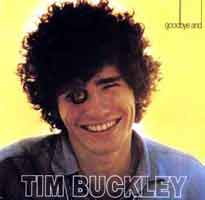
Mehr ...
|
Bevor sich Tim Buckley in den 70igern von Jazz Rhythmen davonreißen
lies, machte er zutiefst ergreifenden Folk-Rock, der seine unglaubliche
Stimmbreite und nachdenklichen Texte voll zur Geltung brachte, sowie auch
seine gelegentliche Vorliebe für überraschend souligen, schwarzen
Groove und ansteckende Jangle-Pop-Melodien. Goodbye and Hello, sein zweites
Album (aufgenommen 1967 mit zarten 20 Jahren) liefert die ganze Bandbreite.
Buckley deutet den Aufschrei der Sinne an, der in den 70ern aufkommen
sollte ("I Never Asked to Be Your Mountain", "Pleasant
Street", "Hallucinations"). In einigen seiner Songs kommt
zwar ein wenig der Hippie-Dichter-Denker durch, allerdings überwiegen
eindeutig seine hervorragenden Folk-Soul Tracks.
Lorry Fleming (Amazon)
|
|
|
Endlich gibt es die zweite LP des feinfühligen Songpoeten aus Los
Angeles auf CD. 1967 war diese LP eine Sensation. Noch nie zuvor hatte
man eine der- art wandlungsfähige Stimme gehört. Doch auch die
Songs - teilweise mit dem Dichter Larry Beckett verfaßt - boten
Folkrock der Spitzenklasse, Morning Glory nahmen später Blood, Sweat
& Tears auf. Keine Frage: Mit dieser CD liegt ein Meilenstein vor.
© Audio
|
|
|
Knapp zwanzig Jahre alt war er, als er dieses zweite, durchweg geniale
Album aufnahm. Es gelangen ihm wundervolle Folk-Pretiosen von ungeahnter
Tiefe, mit Seele und bezwingenden Melodien, inspiriert von seinem Idol
Fred Neil. Von den Jazz-Einflüßen der späteren Platten
war hier nichts zu spüren, erste Kostproben des charakteristischen
Stimmumfangs gab es aber schon.
(Glitterhouse)
|
|
|
Often cited as the ultimate Tim Buckley statement, Goodbye and Hello
is indeed a fabulous album, but it's merely one side of Tim Buckley's
enormous talent. Recorded in the middle of 1967 (in the afterglow of Sgt.
Pepper), this album is clearly inspired by Pepper's exploratory spirit.
More often than not, this helps to bring Buckley's awesome musical vision
home, but occasionally falters. Not that the album is overrated (it's
not), it's just that it is only one side of Buckley. The finest songs
on the album were written by him alone, particularly "Once I Was"
and "Pleasant Street." Buoyed by Jerry Yester's excellent production,
these tracks are easily among the finest example of Buckley's psychedelic/folk
vision. A few tracks, namely the title cut and "No Man Can Find the
War," were co-written by poet Larry Beckett. While Beckett's lyrics
are undoubtedly literate and evocative, they occasionally tend to be too
heavy-handed for Buckley. However, this is a minor criticism of an excellent
and revolutionary album that was a quantum leap for both Tim Buckley and
the audience.
(by Matthew Greenwald, All
Music Guide)
|
|
| Bob Dylan: "John Wesley Harding" (Columbia, Dez. 1967) |
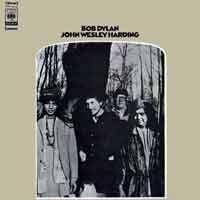 [Electric Ladyland (Jimi Hendrix, 1968)] |
| Jimi Hendrix Experience: "Axis: Bold As Love" (Polydor, Dez. 1967) |
 [Are You Experienced? |
Electric Ladyland (1968)]
Mehr ...
| Als 1967 das erste Hendrix-Album Are You Experienced? erschien,
stand die Musikwelt und vor allem die Jugend Kopf. Die E-Gitarre war urplötzlich
zu einem gefährlichen, unberechenbaren Instrument geworden, das nicht
nur extreme Gefühle ausdrücken, sondern auch einfach nur einen
Höllenlärm veranstalten konnte. Die einzigartige Spieltechnik
von Hendrix und sein unerreichtes Blues-Feeling machten ihn quasi über
Nacht berühmt und ließen Millionen von Fans sehnsüchtig
auf den zweiten Streich warten.
Axis: Bold As Love von 1967 präsentiert den Wah-Wah-Zauberer etwas
weniger exzessiv als auf dem Debütalbum, aber keinen Deut schlechter.
Obwohl das Album nicht einen einzigen Single-Hit enthält, ist es
ausnahmslos mit zutiefst gefühlvollen, perfekt ausgearbeiteten Kompositionen
bestückt, bei denen Jimis Kollegen Noel Redding (b.) und Mitch Mitchell
(dr.) den idealen Boden für seine einzigartigen Vocals und Gitarrenparts
bereiten. Der Sechs-Saiten-Wizard präsentiert sich zwischendurch
auch mal von seiner jazzigen und funkigen Seite und legt eine Hammer-Performance
aufs Parkett, die auch nach über 30 Jahren noch jedem aufstrebenden
Gitarristen zeigt, wo es lang geht. Diese Scheibe sollte man genauso besitzen
wie das Debüt und absoluten Überflieger Electric Ladyland (1968).
(Michael Rensen, amazon.de)
|
|
|
Some of the studio effects on Hendrix's second album have not aged well,
and the mix on Side One was redone in a single night because he left the
original masters in a taxi. But Axis is a leisurely, bluesy jewel; Hendrix
slowed down on "Little Wing" and "If 6 Was 9" to allow
his guitar space to breathe as well as burn. " 'Little Wing' is like
one of these beautiful girls that come around sometimes," he said.
"They might be spaced, they might be kinda strung out. But everybody
has a right to . . . their beliefs, if they want to believe that a star
is purple, or whatever." Like Hendrix, Axis was cryptic and bewitching.
(Rolling Stone)
Total album sales: 1 million, Peak chart position: 3
|
|
| Jefferson Airplane: "After Bathing At Baxter's" (RCA/Grunt, Dez. 1967) |
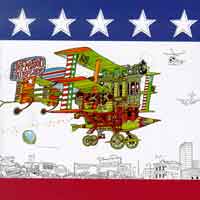
Mehr ...
The Jefferson Airplane opened 1967 with Surrealistic Pillow and closed it with After Bathing at Baxter's, and what a difference ten months made. Bookending the year that psychedelia emerged in full bloom as a freestanding musical form, After Bathing at Baxter's was among the purest of rock's psychedelic albums, offering few concessions to popular taste and none to the needs of AM radio, which made it nowhere remotely as successful as its predecessor, but it was also a lot more daring. The album also showed a band in a state of ferment, as singer/guitarist Marty Balin largely surrendered much of his creative input in the band he'd founded, and let Paul Kantner and Grace Slick dominate the songwriting and singing on all but one cut ("Young Girl Sunday Blues"). The group had found the preceding album a little too perfect, and not fully representative of the musicians or what they were about, and they were determined to do the music their way on Baxter's; additionally, they'd begun to see how far they could take music (and music could take them) in concert, in terms of capturing variant states of consciousness.
Essentially, After Bathing at Baxter's was the group's attempt to create music that captured what the psychedelic experience sounded and felt like to them from the inside; on a psychic level, it was an introverted exercise in music-making and a complete reversal of the extroverted experience in putting together Surrealistic Pillow. Toward that end, they were working "without a net," for although Al Schmitt was the nominal producer, he gave the group the freedom to indulge in any experimentation they chose to attempt, effectively letting them produce themselves. They'd earned the privilege, after two huge hit singles and the Top Five success of the prior album, all of which had constituted RCA's first serious new rock success (and the label's first venture to the music's cutting edge) since Elvis Presley left the Army. The resulting record was startlingly different from their two prior LPs; there were still folk and blues elements present in the music, but these were mostly transmuted into something very far from what any folksinger or bluesman might recognize. Kantner, Jorma Kaukonen, and Jack Casady cranked up their instruments; Spencer Dryden hauled out an array of percussive devices that was at least twice as broad as anything used on the previous album; and everybody ignored the length of what they were writing and recording, or how well they sang, or how cleanly their voices meshed. The group emerged four months later with one of the rawest, most in-your-face records to come out of the psychedelic era, and also a maddeningly uneven record, exciting and challenging in long stretches, yet elsewhere very close to stultifyingly boring, delightful in its most fulfilling moments (which were many), but almost deliberately frustrating in its digressions, and amid all of that, very often beautiful.
The album's 11 songs formed five loosely constructed "suites," and it didn't ease listeners into those structures. Opening "The Ballad of You and Me and Pooneil" (a Kantner-authored tribute to Fred Neil) amid a cascading wash of feedback leading to a slashing guitar figure, the band's three singers struggle to meld their voices and keep up. A softer, almost folk-like interlude, highlighted by Slick's upper-register keening, breaks up the beat until the guitar, bass, and drums crash back in, with a bit of piano embellishment. Then listeners get to the real break, an almost subdued interlude on the guitars, and a return to the song at a more frenzied pitch, the guitar part dividing and evolving into ever more brittle components until a crescendo and more feedback leads to "A Small Package of Value Will Come to You, Shortly." This brilliantly comical and clever percussion showcase co-authored by Spencer Dryden and the band's manager, Bill Thompson, is a million miles beyond any drummer's featured number in any popular band of that era, and it leads into Marty Balin's "Young Girl Sunday Blues," the most rhythmically consistent song here and one of a tiny handful of moments that seem to slightly resemble the band's past work. The aforementioned tracks comprise just the first suite, designated "Steetmasse."
"The War Is Over" suite opens with "Martha," the album's folk-style interlude, almost a throwback to the group's original sound, except that the listener suddenly finds himself in the midst of a psychedelic delirium, heralded by the dissonant accompaniment and a high-energy fuzztone guitar solo (spinning out sitar-like notes) coming out of nowhere and a speed change that slows the tempo to zero, as though the tape (or time, or the listener's perception of it) were stretching out, and the pounding, exuberant "Wild Tyme," a celebration of seemingly uninhibited joy. "Hymn to the Older Generation" is made up of Kaukonen's "The Last Wall of the Castle," an alternately slashing and chiming guitar pyrotechnic showcase that rivaled anything heard from Jimi Hendrix or the Who that year, and Grace Slick's gorgeous "Rejoyce," a hauntingly beautiful excursion into literary psychedelia, whose James Joyce allusions carry the Lewis Carroll literary allusions of the previous album's "White Rabbit" into startlingly new and wonderful (if discursive) directions and depths. "How Suite It Is" opens with the album's single, the lean, rhythmic "Watch Her Ride," whose pretty harmonies and gently psychedelic lyrics persuaded RCA that this was their best shot at AM airplay and, true to form on an album filled with contradictions, it leads into "Spare Chaynge," the crunching, searing, sometimes dirge-like nine-minute jam by Kaukonen, Dryden, and Casady that wasn't ever going to get on AM radio — ever — and, indeed, might well initially repel any Airplane fan who only knew their hit singles. "Shizoforest Love Suite" closes the album with Slick's "Two Heads," with its vocal acrobatics and stop-and-go beat, and "Won't You Try"/"Saturday Afternoon," the latter Kantner's musical tribute to the first San Francisco "Be-In" (memorialized more conventionally by the Byrds on "Renaissance Fair"); it features many of the more subdued, relaxed, languid moments on the record, divided by a killer fuzz-laden guitar solo.
Needless to say, this is not the album by which one should start listening to this band — "Spare Chaynge" remains an acquired taste, a lot more aimless than, say, the extended jams left behind by the Quicksilver Messenger Service, though it did point the way toward what Kaukonen and Casady would aim for more successfully when they formed Hot Tuna. But most of the rest is indisputably among the more alluring musical experimentation of the period, and Kantner's "The Ballad of You and Me and Pooneil" and "Watch Her Ride," as well as Balin's "Young Girl Sunday Blues," proved that the group could still rock out with a beat, even if not so prettily or cleanly as before.
(by Bruce Eder, All Music Guide)
|
| Traffic: "Mr Fantasy" (Island, Dez. 1967) |

Mehr ...
|
Aus der Amazon.de-Redaktion
Als Stevie Winwood im April 1967 mit Dave Mason, Jim Capaldi und Chris
Wood die Band Traffic gründete, hatte der junge Keyboarder und Vokalist
von knapp 20 Lenzen schon mehr an Erfahrung gesammelt, als so mancher
auch dem Alter nach "alter Hase" —- mit der Spencer Davis
Group und Hits wie "Keep On Running" oder "I'm A Man".
Als Hit-Band von eigenen Gnaden war sein neues Quartett ebenfalls binnen
kurzem etabliert: In fixer Folge schoben Traffic die Singles "Paper
Sun", "Hole In My Shoe" (beide als Boni hier dabei) und
"Here We Go Round The Mulberry Bush" in die Top Ten der britischen
Charts, ehe dann im Dezember '67 das Debüt-Album Mr. Fantasy folgte.
Der Titeltrack "Dear Mr. Fantasy" zeigt dabei eine der Essenzen
von Traffic: bluesig grundiertes Rock-Gerüst, umkränzt von Winwoods
seelenvoller Stimme, der Rhythmus zunächst verschleppt, dann rockig
gesteigert; das zwischen forciertem Tempo und Woods lyrischer Flöte
pendelnde "Dealer" bietet eine weitere wesentliche Komponente
des Traffic-Sounds. Was im Falle des Briten-Quartetts nicht heißt,
das vom psychedelischen Zeitgeist inspirierte, von Masons Sitar getragene
komplexe "Utterly Simple" sei untypisch; ebensowenig die feine
Ballade "No Face, No Name, No Number", von Hair-Actrice und
Mick-Jagger-Gespielin Marsha Hunt gecovert.
Egal ob Beatles, Small Faces oder Cream, in jenen Zeiten zählte
auch ein Nonsens-Stück zum guten Ton; Traffic lieferten ihren Beitrag
mit "Berkshire Poppies". "House For Everyone" würde
sich durchaus unter Kurt Weills Theatermusik gut machen, und das jazzige
"Giving To You", bei dem Winwoods B3-Hammondorgel, Woods Flöte
und Mason an der Gitarre die Soliplätze tauschen, zeigt einmal mal
ihre Spiel- und Experimentierfreude. Während die originalen zehn
Songs im Stereo-Sound imponieren, kommt das Dutzend Bonus-Tracks —-
fast alle Album-Originale plus unter anderem "Hole In My Shoe"
oder das von Blood, Sweat & Tears gecoverte "Smiling Phases"
—- in Mono daher; dafür bringt die "Island Remasters"-Serie
die Oldie-Goodies aber auch durch die Bank klanglich deutlich auf Vordermann.
--Claus Böhm
|
|
| Donald Byrd: "Slow Drag" (Blue Note, 1967) |

Mehr ...
Slow Drag was one of trumpeter Donald Byrd's final hard bop dates. Teamed with altoist Sonny Red, pianist Cedar Walton, bassist Walter Booker and drummer Billy Higgins (who takes a surprise vocal on the title cut), this quintet outing features originals by Byrd, Walton and Red along with the standards "Secret Love" and "My Ideal." The music in general finds Byrd looking both backwards toward the blues and forwards toward modal music and hints of the avant-garde. A fine effort.
(by Scott Yanow, All Music Guide)
|
| Tim Hardin: "Tim Hardin 2" (Verve, 1967) |

Mehr ...
|
Probably his best single album, on which he eschewed blues nearly entirely
and forged a distinctive, folk-rock voice, occasionally embellished by
tasteful full arrangements. "Lady Came From Baltimore," "Red
Balloon," and especially "If I Were a Carpenter" rank among
his best and most famous songs.
(by Richie Unterberger, All
Music Guide)
|
|
| Thelonious Monk: "Straight, No Chaser" (Columbia, 1967) |
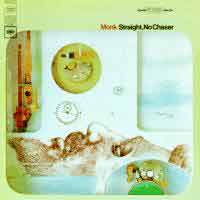
Mehr ...
|
This is the sixth studio album cut by Thelonious Monk under the production/direction
of Teo Macero for Columbia and as such should not be confused with the
original motion picture soundtrack to the 1988 film of the same name.
The original disc only included six performances, half of which were edited
due to the stringent time constraints of vinyl. The 1996 CD not only restores
all of the previously abridged performances, but also adds a trio of sides,
two of which ("I Didn't Know About You: Take 1" and "Green
Chimneys") are issued here for the first time. The band featured
here includes: Monk (piano), Charlie Rouse (tenor sax), Ben Riley (drums),
and Larry Gales (bass). This would be the final quartet Monk would assemble
to record with in the studio. While far from being somber, this unit retained
a mature flavor which would likewise place Monk's solos in a completely
new context. At times, this adaptation presents itself more subtly than
others. For instance, Monk's extended solo in "Locomotive" never
reaches beyond itself due in part to the tempo-laden rhythm section. The
contrast of styles, however, appreciates the caliber of this particular
solo, including an obvious assertion by Monk which leads the band, albeit
temporarily, into playing double-time. Other recommended quartet selections
on this disc include a liberated version of the title track, which not
only highlights some stellar interaction between Monk and Rouse, but is
heard on the CD reissue in its original performance length. The same can
be said for "We See," which now includes nearly three missing
minutes and features the hardest bop on the album. In addition to the
quartet sides, Straight, No Chaser contains two unaccompanied piano solos:
"Between the Devil and the Deep Blue Sea" and "This Is
My Story, This Is My Song." (by Lindsay Planer, AMG)
|
|
| "Quarteto Novo" (EMI/Odeon, 1967) |
 [Hermeto Pascoal]
Mehr ...
|
The sole album by the legendary Quarteto Novo was released by the Odeon label in 1967 and was accorded various coveted Brazilian artistic prizes, including the Troféu Roquette Pinto and the Troféu Imprensa. The band was made up of four now legendary Brazilian musicians: percussionist Airto Moreira; bassist, guitarist, and violinist Theo de Barros; guitarist, violinist, violist, and sometimes banjo player Heraldo do Monte (these three musicians all being members of the previous Trio Novo); and later arrival Hermeto Pascoal. Coming from the northeastern part of the nation, all of these men were intimately familiar with baião music, the danceable rhythmic style comprised of a syncopated 2/4 time signature that could be played on the double-skinned zabumba drum and harmonic and melodic structures written around a Lydian flat seventh scale; it is derived from the tuning of the pífano flute, which has a raised fourth and flattened seventh. The chord structure is based on a dominant seventh. And while the style is not well-known outside Brazil, it nonetheless influenced a host of popular songwriters in America, England, and Europe, who scored hits with tunes utilizing the style's elements. (A couple of examples are the Burt Bacharach tune "Do You Know the Way to San Jose?" and "Save the Last Dance for Me," written by Doc Pomus and Mort Schulman and recorded by the Drifters.) Quarteto Novo — and their patron and songwriting collaborator Geraldo Vandré — had a deep, some would say obsessional, interest in American bebop; combine them and you have something very special indeed. Though in many ways, these eight songs sound somewhat quaint to undisciplined in the 21st century, the opposite is actually quite true. This meld of styles and the deep interest in subtle yet innovative rhythmic interplay, counterpoint, and taut song structures are to this day quite revolutionary.
The soulfulness at the heart of this music is a far cry from the breeziness of bossa nova, and there are no lyrics. Instead, on tunes like "Fica Mal com Deus," a 12-string guitar, a nylon-string guitar, and the pífano flute of Pascoal all enter in a head line like a bop composition. Within a chorus, the flute moves to a different melody, guitars accent two different parts of the rhythm, and Airto allows timekeeping and rhythmic invention to flow toward the melody instead of framing its outside. The listener is completely caught up in the joy and drama of the tune — this also goes for the much more intricate and haunting "Canto Geral," which begins much more slowly but quickly weaves a pair of melodic intricacies together and frames them with a samba feel, which is stretched and cast off as three voices wordlessly create a third melody in the middle as a bridge, followed by a minor seventh interlude that is utterly forlorn before the pastoral open country feel returns. Amazing! The set closes with the popping "Vim de Sant'Ana," where piano, double bass, nylon-string guitars, and Airto's percussion magic are woven inseparably with a contrapuntal Wes Montgomery swinging soul-styled melody. Over its five minutes the track changes considerably, moving from one mode to another with seamless transitions until the listener is left breathless by its end. This record is difficult to find at times, and keeps getting reissued on CD in small batches. Look for it. One can hear so many things in this music that deserve a place on the sacred shelf. One can think of producers like Creed Taylor and his original idea for CTI and know he heard this music; one can hear the very foundation of Egberto Gismonti's music inside this record; and it can also be credited with much of the killer '70s jazz and Brazilian fusions that occurred on records by everyone from Joe Farrell and Chick Corea to Gary Burton and Freddie Hubbard. And then there are those brilliant albums by Airto, Dom Um Romão, Flora Purim, and so many others that came directly from the sounds displayed here so generously and ingeniously.
(by Thom Jurek, All Music Guide)
|
|
| Tim Rose: "Tim Rose (Morning Dew)" (Columbia, 1967) |
 [Tim Buckley |
Tim Hardin |
The Grateful Dead |
Jimi Hendrix]
Mehr ...
Rose's self-titled debut was a fairly strong singer-songwriter set, divided about equally between originals and imaginative covers, showing strong blues and folk leanings as well as forays into orchestrated pop-rock. Includes "Morning Dew" and "Hey Joe."
(by Richie Unterberger, All Music Guide)
|
| "Frank Albert Sinatra & Antonio Carlos Jobim" (Reprise, 1967) |
 [Antonio Carlos Jobim]
Mehr ...
|
"Das Talent des brasilianischen Musikers Antonio Carlos
Jobim wurde der Welt im Jahre 1959 offenbart, als er und Luis Bonfa die
Musik zu dem Film Orfeo Negro komponierten. Titel wie "A Felicidade"
und "Desafinado" riefen die Bossa-Nova-Bewegung der frühen
60er hervor, die zum Beispiel auch Stan Getz, Charlie Byrd und Miles Davis
inspirierte. Auf diesem Album findet man Jobim und Sinatra, die zusammen
Stücke wie "The Girl From Ipanema" und "How Insensitive"
singen.
Drei Standards -- "Change Partners" von Irving Berlin, "I
Concentrate On You" von Cole Porter und "Baubles, Bangles, And
Beads" von Robert Wright, George Forrest und Alexander Borodin --
runden das Programm der sieben Jobim Stücke ab. Diese CD bietet einen
wunderbaren Einblick in lateinamerikanische Melodien und Rhythmen, die
von zwei Meistern des lockeren Swings dargeboten werden." (Stanley
Booth, Amazon.de)
"Das kühlste und zugleich kürzeste Album
Sinatras ist das von Claus Ogerman arrangierte Treffen "Francis Albert
Sinatra & Antonio Carlos Jobim". Die superben Bearbeitungen Ogermans
bilden den idealen Rahmen für das elegante Songmaterial, das vorwiegend
aus der Feder des brasilianischen Erfolgskomponisten Jobim stammt, der
auch als Sänger mitwirkt." (Stereoplay)
|
|
| The Youngbloods: "Earth Music" (RCA/Racoon, 1967) |
 [Jesse Colin Young]
Mehr ...
|
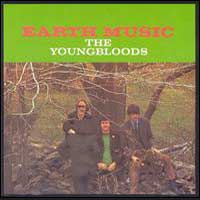
The Youngbloods' second long-player built on the strength of their self-titled debut by once again creating a blend of captivating songwriting with an infectiously fun delivery. Although the album failed to produce a definitive single -- as "Get Together" had done on their previous effort -- there are a handful of equally definitive sides scattered throughout Earth Music (1967). Featuring Jesse Colin Young (guitar/bass/vocals), Jerry Corbitt (lead guitar), Joe Bauer (drums), and Lowell "Banana" Levinger III (piano/guitar), the Youngbloods recall the uptempo good-time sound of their East Coast contemporaries, the Lovin' Spoonful, on the opening cover of the Holy Modal Rounders' "Euphoria." The first of several stellar compositions from Young follows with the laid-back "All My Dreams Blue." In addition to the affective songcrafting, Banana's upfront piano fills provide a jazzy counterpoint to the interlocking Bauer/Young rhythm section. This refined power trio would become the mainstay of their later post-Corbitt recordings. "Dreamer's Dream" highlights Corbitt's inimitable contributions to the band with a highly affective melody as well as his unencumbered vocals, which effortlessly intertwine with Young. The countrified interpretation of the traditional "Sugar Babe" is a precursor to the direction that the band's sound would take after their relocation to the West Coast. The track became an international hit no doubt due to its inclusion in the Michelangelo Antonioni film Zabriskie Point (1970). Other standout tracks include the high-steppin' "Wine Song" and one of the better revisitations of Tim Hardin's "Reason to Believe."
(by Lindsay Planer, All
Music Guide)
|
|
 Das Album des Jahres
 weitere Highlights ...